lördag 22 oktober 2022

Poem: Vortex Master (Svensson 2022)

Hereby an epic poem. It comes in eight chapters. Part of chapter one has been published previously on the blog. -- This is a poem about our age -- the New Age, the Dvāpara Yuga... a poem about creating the world with our minds, our willpower and vision... a poem about chakras, storms, and dancing with the gods in the cathedrals.


We hereby give you the poem Vortex Master. It is an epic poem, a kind of story in poetic form. However, the narrative structure mostly serves as a framework to preach and teach. The poem begins by having the preacher worshiping in a church. Then he goes home. Then he goes out into the woods, lighting a bonfire. That's what we narratively find in chapters one through three; for the rest, see the table of contents right below this. The poem has a total of eight chapters.


Contents
Chapter One. Chakravartin
Chapter Two. Going Home
Chapter Three. Bonfire
Chapter Four. Burning Magnesium
Chapter Five. Halleluja I Love Her So
Chapter Six. Divine Laughter
Chapter Seven. Home Again
Chapter Eight. Cathedral Dome
Epilogue. Whole Town Dancing


++++++++++


Chapter One. Chakravartin

I'm dancing around in the cathedral dome,
the red brick temple,
the five-nave cathedral...

I'm dancing as the Vortex Master,
the Chakravartin,
the Man of Destiny...
the ruler of the rotation,
king of the wheel, the chakra...

Thus I chant, in the deathless
pattern of the śloka metre...
I sing me, I sing what I am...
a Chakravartin I am, and so I say:
aham asmi cakravartī...

I am dancing around in the cathedral dome,
going clockwise...

I am the Vortex Master,
the whirlpool of being...
the storm, the hurricane,
the tornado... the twister ominously
going through the landscape...


I am the origin of storms, the Holy Roller...
the rotation, the vortex...
the twirl, the swirl, the maelstrom...

I am the Chakravartin, the ruler of chakras...
ruler of the seven energy centres of the body,
the rotating wheels of vital energy.

+++

I am the circuit around the altar...
a clockwise circle making you whole,
making you holy...

I rule the chakras, I rule the maelstrom...
I rule the whirlpool, the twirl, the spirals inside...
inside matter, inside of you – all of you...

I am the Horga song, dancing you to death,
the hambo dance for ever twirling, for ever
rotating, like a stream of existence...

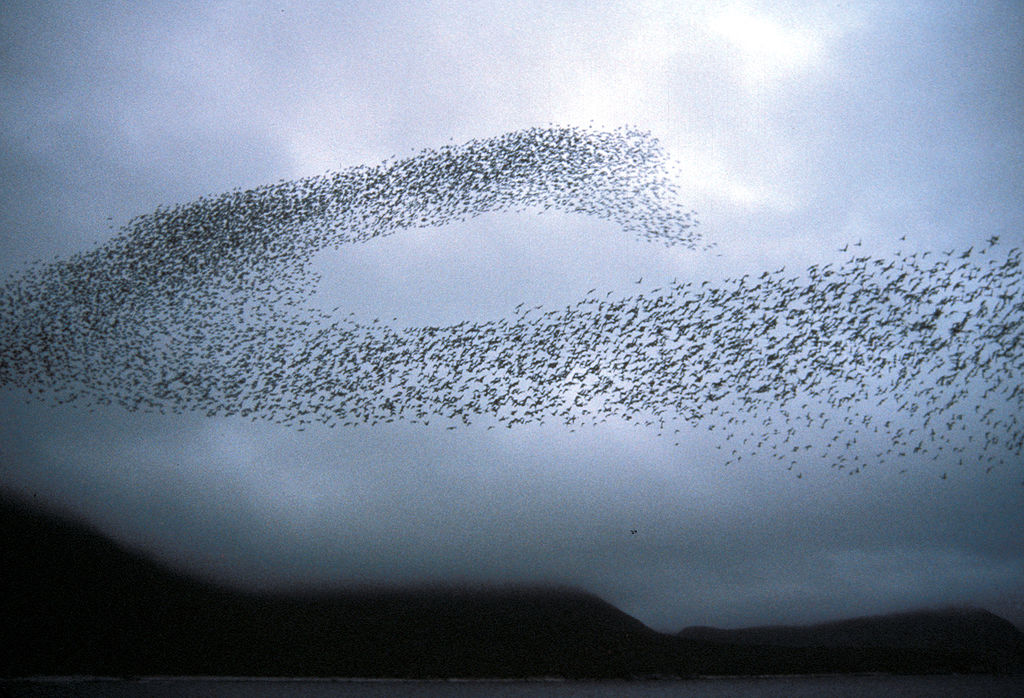
I am the rotating flock of birds in the sky above you,
driving you mad...

I am the circle around the altar,
around Hindu gods... a clockwise circuit
making you whole, making you holy...

+++

I’m dancing around in the cathedral dome,
going clockwise, as we do in the west, as we do in the east –
in Christian churches, in Hindu temples –
clockwise honouring the divine,
circum-ambulating the god.

Dancing around in the red-brick dome,
going round the altar, going round the ambulatory –
spiral movement forever, like the vortices
creating reality – for I am the Vortex Master,
master of storms, king of tornados –
and the storm begins here, with me, in the dome.

Turbulence begins at home...!

There’s a storm coming up and I AM the storm,
creating it by making rounds round the altar,
by going round and round, maddeningly like a flock
of birds in the sky – jackdaws they are,
round and round the towers they fly –

a vortex of birds, like Birds of the Master
in the Valerian adventure... a vortex in the sky,
look at them and go mad, see the swirl
and you’re caught in the movement –
like the dancers having to dance to the Horga song,
the evil fiddler forcing them to dance
to their death, forever whirling to the music,
round and round they went, until only their
skulls were rattling on the ground.

Vortex of dancers, vortex of birds,
vortex of clouds, vortex of stars...

+++

I am the galaxy rotating in cosmic splendour,
rotating forever, rotating in harmony
with the All... I am the sky rotating
around the Pole... I am the Big Dipper
and its position through the seasons...
I am the Fylfoot...

I am the movement, I am the still center...
I am the pole and the circulation at once,
action as being, movement as a state...

I'm the adaptor in the middle of the record,
the still center... as we say in Swedish,
"alla ränner runt och ja --
é centrumpuck...!"

+++

I’m the nexus of the crisis
and the origin of storms...

I’m the whirlpool, the maelstrom,
Charybdis, eddy, tornado, taifun...
I’m the rider of the storm, the Wild Hunt,
the Yuletide chase in the sky, led by
the Wild Hunter, Odin, god of storms...

All this I am.

+++

I am the cycle of the seasons,
the precession of the equinoxes,
the cycle of day and night...
I can turn the day into night...
just wait and see, just follow me on this journey...

+++

I'm a god come down to teach the world a lesson...
and while doing that, teaching and preaching,
I will also see to enjoy myself...
having fun, seeing the sights...
I will not shun the good things in life.

I'm a god, welcome to the satyr play...

I'm going round the altar, chanting Vedas,
adoring god, adoring the light... saying to the world,
ye shall be awakened from your sleep...
a storm is coming up, storm and frenzy,
storm and whirling vortices... and in this stormy weather
I will be the calm point in the centre, controlling the storm
but essentially unaffected by it.

Cue the Horga Song...!


Chapter Two. Going Home

I'm bowing to the altar and leaving the church...
going out in the greyish daylight...
greeting the flock of passerines coming at me,
approaching in the sky... they twirl, they rotate,
they go about madly in the sky... the perfect aerial
symbol of my vorticular creed, my Chakravartin nature...
big wheels keep on rolling... in the sky, inside me,
inside every man... and while I control my chakras,
I incite yours to rotate at my will.

I slowly head off through the city, past the university library,
on through the Picturesque Park... green shadows, the day
is dying... night is coming, darkness gathering... my element
indeed... for “when the night comes, I am king”...

I enter the Botanical Gardens, I nod at the classical backdrop
of the Orangery, four pillars and a front to elevate me
spiritually... just like Vilhelm Ekelund was uplifted
by the sight of Schinkel’s Neue Wache in Berlin...

Four pillars and a lintel, that’s all it takes
to create traditional grandeur...

Such a classical backdrop, a classical
piece of architecture... proud pillars
of the West... so I say, make me a pillared temple
and voilà, Tradition is magically there again –
be it Neue Wache, or this temple,
or anywhere you erect a classical front...

I leave the Orangery, heading off through quiet
greenery... and soon I approach my suburban palace,
white marble, white car on the drive...
and in the cinema tonight, my private monitoring room,
my cinema noche, I’ll be having a screening
of Parisfal on the Met.


Chapter Three. Bonfire

I was at home, planning a screening
of Parsifal... but my restlessness drove me out
into the woods... and there I lit an enormous
bonfire... I like to sit by the fire, it cleanses
my aura... and now, sitting by that fire, souls
approached me... souls beckoning me, calling, inviting,
fussing, fighting... but I was cool... and let
each one of them come forth and speak...
and they spoke of a people in bonds, a people
tormented by tyrants... mourn for us
oppressed in fear... chained and shackled
we are bound... freedom choked in dread
we live...
a people, enslaved in their
minds, scared... and I spoke, and I said...
I will lead you out of slavery,
out of bondage... and in the ashes of the morning
I awoke... and to the grey skies I lifted
my hands, shouting, “To undo the heavy
burden, and let the oppressed go free!”

+++

Sum up your will. Make yourself strong,
not weak. Fight for your country and people,
not against them.

Be ethnically yourselves.
Shape your character, live according
to ideals.
Exercise your body.
Acquire knowledge.

There you have it, these are the commandments
of a Nordic Revival... the revival whose prophet
I am... as Chakravartin, Vortex Master, new age hero.

+++

I am Chakravartin, the incarnated god,
the avatar of this age... at the conjunction
of two yugas I have come to liberate you,
shake you up, make you great... wake up
Faustia from her sleep, awaken Europe,
having the Western world rise and shine.

Freya, weck die Toten...!

aham asmi cakravartī...
namas te, rāja-ti-rāja...
hail the new dawn...

+++

I will play a European song to my beloved...
join in, be overwhelmed, be European and hip...
to the tune of Time and Lady Grinning Soul...
and she nods and smiles but does she get it,
is she really into this European avant-garde...?

Is she...?

We will dance out, into the streets... me and my
beloved will lead the dance... and the whole city
will dance with us, rotate with us... me and Melina
in the centre, the rest around us... like Krishna
and Radha leading the divine dance... râsalîlâ...
round and round we go... symbol of the universe,
the dance of particles... the symphony
of the spheres... dance of life, dance of death...

+++

Vortex Master, Chakravartin... master of wheels,
master of spirals... big wheels keep on turning,
fire keeps on burning... what goes up, must
come down, spinning wheels must go round...

Master of the Vortex... Blaster of the Vortex...
creator of worlds, destroyer of worlds...

Oppose me and oppose the world, oppose
the cosmos... join me and join the world, be part
of a cosmic resurrection, a galactic endeavour...
cue Heaven and Hell by Vangelis...

+++

Holy Roller, Whirling Dervish...

spinning top, pirouetting dancer...
gyroscope, spiral staircase, spiral DNA...

Crown hair, vertex, whorl... we all have
such a spiral on top of our heads... a hair
spiral, a twirl... and we all have
chakras inside... and all matter is spiral
in nature... a spiral motion inwards creates
matter, a spiral motion outwards dissolves it...

We all have chakras... and he who consciously
knows this, wilfully directs the energy of his
chakras, he is a Chakravartin, and he will
potentially rule the world... microcosm
and macrocosm... because these are mindful times,
Kali Yuga over and Dvāpara Yuga just beginning...
and at this conjunction I am come
to lift you up, elevate you into cosmic splendour...

+++

I am Viṣṇu, I am Kalki... I am Odin,
I am Frigga... I am Lakshmi, I am Brahma...
I am Shiva, I am Krishna... I am Freya,
I am Siv... I am Thor, I am Kristos...

This is the 21st century, this is Dvāpara Yuga,
and the gods are back... just look yourself
in the mirror... that divine spark in the eye,
that’s the soul, the true self... it’s divine...
tat satyam, sa ātmā, tat tvam asi...

+++

“Time – is waiting in the wings,
his script is you and me”... verily...
I am Time, I am Death...
the destroyer of worlds... kālo ‘smi,
loka-kṣaya-kṛt pravṛddho...


+++

I am the Vortex Master,
the Chakravartin, and I will cure you...
I will cure Europe of its inherent
disease, passive nihilism... the chakras
of the common European man are
rotating too slowly, that’s the thing...
so here I am, here to set your chakras
rolling... rolling... rolling down the river...


Chapter Four. Burning Magnesium

Astral war, frequency war, energy war...
cold war in a country garden... war games,
tin soldiers parading, propaganda war 24/7...
learn to love it – live it – forever at storming
distance, forever mindfully burning with the
burning magnesium in the sky, the illumination
round lighting up a diameter of 800 m...

+++

All hail the Chakravartin, the Vortex Master...
Man of Destiny, Great Guide... ruler
of the world, Hero of the New Age...

And we all know that the New Age began in 1899,
the year Franz von Stuck painted Die Wilde Jagd...
also known as The Wild Hunt... which later became
Riders in the Sky... in the Wild West version...

But we're not in the prairie now...
we're not in Kansas anymore...
we're in Europe... mythical Europe,
true Europe... where pagan gods still
haunt the skies... especially at yuletide...
in wild frenzy, cosmic vorticism...
a wild bunch riding in a void,
a stormy posse of mythic beings...

The Wild Hunt rides forever through the mind,
the Berserker spirit reborn, riding forever in dream
space, forever fighting the astral war against the Demiurge...

+++

Wind and storm and whirling vortices...
a new awakening where Chakravartin will
teach you virtue with the sword... he’ll
sweep you along in a hurricane of emotion
on to a destiny beyond the Beyond...

Valkyries riding to Valhalla...
einherjar fighting the wolf, the enemy of light...
led by Odin, riding out to fight the hordes
in the final battle for this army of heroes, this vīrasena...
this great army, die grosse Armee... den stora
armén,
the Wild Hunt, den vilda jakten...

The myth lives on, the Wild Hunt rides on...!
Led by the Avatar, the Chakravartin, the Magician
Man, the Vortex Master, it is going on tour...
and might soon harass a sky in your vicinity...
an aerial army of Aryan warriors come to fight
the endgame against the forces of the dark,
the forces of the Demiurge, the forces of materialist nihilism...

The Wild Hunt rides on... join us today...!
We will recruit any white man, ready
to fight the dark...


Chapter Five. Halleluja I Love Her So

I am the Vortex Master, the Chakravartin...
Man of Destiny, Hero of the New Age...

+++

Halleluja I love her so... that’s what I do...
who cares if she doesn’t get all
my references... she tops it all off
with her smile, her very being... love fills out
the blank... spirit fills out the void...

Sometimes she falls short of my dream
image... sometimes she surpasses it...

Some things are lost in translation...
some things are won...
you can't strive for theoretical perfection...
you must go out there and live a life.


Chapter Six. Divine Laughter

I am the vortex, the vertex, the twirl...
the swirl, the whorl, the whirlwind...
Westland Whirlwind, Westland Lynx...

I, while the gods laugh, the world’s vortex am;
Maelström of passions in that hidden sea
whose waves of all-time lap the coasts of me;
and in small compass the dark waters cram.

This is Mervyn Peake...
he is the universe's vortex...
and so am I...
I am the Wheeler-Dealer...
I move in circles around you...
and here’s what you shall do:
take two vortices and let them
counter-rotate and voilà,
you have gravity-free power...
you have a perpetual machine,
a space machine, a ship
to conquer the stars in...
so we’ll go to Mars and teach
and preach under the Cydonia
sphinx, we’ll conquer the stars... it’s in
the cards, it’s in the vortex... for I, while
the gods laugh, the universe’s vortex am...


+++

Again I circum-ambulate the altar, doing
the rounds round the ambulatorium... dancing
the rounds of the Black Rose... again I invoke
the Vortex, again I am the universe’s vortex...
again I impel the world to turn, the water to whirl,
the air to swirl, the storms to gather...

I bow to the altar and exit the church, going
to the graveyard... sitting down on a tombstone to brood,
ruminating over the fate of the world... then I go
to a mortuary chapel, lying down in a coffin
to sleep... and after forever I am awoken...
by a bland-looking emcee, a smooth-shaven middle-man...
and he says, “come on it’s time to go”... and I say
to what, to make some Faustian bargain... oh no he says,
we only want you to preach and teach... you’re
the Chakravartin ain’t you, master of spirals, master
of reality, master of the world... and I say yeah
and rise out of the coffin to follow the man...
down corridors and hallways going on forever...
until we come to a large hall... and as the emcee he is,
he takes the stage and says to the audience, hello
world, are you ready to rock’n roll... for here
he is, the Wheeler-Dealer, New Age Hero,
Holy Roller... Chakravartin, master of wheels,
master of energy... Man of Destiny, impeller of whirlwinds,
the origin of storms... and the crowd roars
and so I take the floor... exuding that Man of Destiny-
aura... that terrible and yet inspiring loneliness...
alone with history, alone with God... savouring
the magic of the moment... for the moment
is now, and now’s the moment... a moment
where I become the avatar, the god-man,
and everything I say comes easily... like a waterfall,
a whirlpool, a stream of images... in other words,
as Chakravartin and Vortex Blaster I do my thing...
to the millions I speak, to the audience
I lay out the law... that is, I continue my preaching:


+++


I am soldier and savior, Wanax of the West, the preacher
of the great divide... I am shield Soskation, sword Nothung,
the spear of Dorylaon to pierce the head of the beast.

I am the water of life and the water of death.

I slew the dragon gnawing off the roots of the world tree.

I sent the demon guarding the treasure back to his home
dimension, leaving me with immense riches to create a new
viable currency... I stormed the reality studio, spearheaded
the breakout out of the Kamenets kessel, sailed the steel
breeze of Operation Ultra... I fought the aliens on earth
and their home-world... I sent the co-opting parasites to the hologram
along with blockheads, dolts, skeptics, and nihilists...

I’m a legend in my own lunchtime,
a poet and a pundit, a preacher and a teacher,
for ever seeking Harmony, Beauty,
and Spiritual Passion...

To seek and to find, the journey’s over... having arrived.

“Home is the sailor, home from the sea /
and the hunter is home from the woods...”


+++


My preachment thus over a band magically
appeared behind me... a group, a spooky
ensemble... there to envelop the audience
in its musical magic... I thought I could
discern the notes of Diamond Diary...
and since it was an instrumental number I just
disappeared... there was nothing left to do, nothing left
to say... so I was engulfed by a suddenly rising
veil of dry ice smoke...


Chapter Seven. Home Again

And the rest is a muddle... my memories of what
happened next are not so clear-cut... I mean, I went
to sleep in the coffin, then the MC awoke me, then he took
me to a rock’n roll show... where I shone... and spoke...
like I’ve never spoken before... Man of Destiny, the lone
preacher... out of the desert and into the grand hall...
speaking words of wisdom, of action, of beauty,
of mythopoesy... that was the event... and then Diamond
Diary... and after my going into the smoke screen all went
dizzy... a dream state if there ever was one... a flurry
of action, of vorticular motion... I was the eye of the storm,
the impeller, the creator of this world by projecting
spirals in and out of the objects... I was the Horga song
fiddler, the Great Guide, the DNA... the flock of jackdaws
in the sky, added by ravens and crows, lizard-like birds,
monstrous creatures to drive you mad... and at the end
I fell into the vortex itself, I went down into
the Maelstrom, the whirlpool... into a black hole that was me.

+++

I awoke to the song of birds... gentle birds, homely
birds... not maddening birds in a vortex in the sky...
Melina padded my forehead with a wet towel...
she came through like in a haze, a dream woman for sure...
she touched my face with a cool hand... and I was
saved... however, let me stress one thing... that
this was no turning point, no turning back...
it wasn’t so that I by this would relinquish my faith,
my role, my endeavour as Wheeler-Dealer and Master
of Storms... oh no... but you know how it is... light
and shade... we experience everything and its
counterpart... and now I savoured that moment
of rest... that moment of awakening in the light,
in a room full of flowers... and birdsong from
the garden outside.

I soon was back in form... so I went out into
the garden... and preached to the birds and the bees,
the flowers and the trees... and so I spoke
the following words:


I am god.
I am superman.
I am victory –
victory –
victory.


Chapter Eight. Cathedral Dome

Strengthened by my garden episode I felt like
keeping up the good work... I felt like preaching
day and night... forever speaking, forever
teaching... always dominating a crowd, always
lashing out and feeling the congregation surge
and react, like an ocean... like a “tale
from a topographic ocean”... like a metamorphic rock
that you actually shape here and now,
with your thought... as your deathless words ring
out, instantly becoming historical, instantly
becoming as if hewn in rock...

That what was I needed... to teach and preach...
So I went to church... and on the way people were going
in the same direction... they bore me on, they impelled
me to go, they invited and incited me to go to the dome
and preach... so we all went down to the red brick temple...
and in a wave of euphoria I was directed into the pulpit,
a grand artefact of gilded wood... with a staircase taking
me up into the nest, the perch, the boot, the speaker’s
platform with its pertinent frame... and when
the crowd had settled I could go on with my
preaching... first addressing the very room, bowing
to the spirit of the church... namas te... namas te...
all you gods and avatars hanging around in this ether...
om namo narāyanâya... śrī... śrī... and then I went
on with my preachment... and I said the following...


On the tower of Åsele church
is inscribed: Spera in Deo.

On the Apollo temple of Delphi
is inscribed: Gnôthi Seautón.

And on my heart is inscribed:
Aham brahmāsmi.

Believe in God.
Know Thyself.
I am god.


Epilogue. Whole Town Dancing

After the preachment I led the dance around the altar
with Melina... round and round we went, in hambo
rotation as well as in cirum-ambulation round the altar...
the whole church followed suit, the audience spontaneously
formed dancing couples and followed our lead...
we danced out of the church and into the streets... the invisible
band played the Horga song... then Black Rose, A Rock
Legend... which is a jig, very danceable... then
Geschichten aus dem Wienerwald, a walz... the whole town
was dancing to the rounds of a Strauss walz... and the sun
shone and the jackdaws circled... and the galaxy rotated
invisibly above our heads... in four-armed splendour
it created an eternal symbol for me as Chakravartin, Wheeler-
Dealer, Vortex Master, Man of Destiny, Great Guide...
Ruler of the Wheel, ultimate avatar, Hero of the New Age.


Related
Burning Magnesium (2018)
Sanskrit poem, September 2022
Kali Yuga is over

söndag 16 oktober 2022

Sf-kongresser man minns

Att vara sf-fan... om detta har jag tidigare berättat här. Idag blir det mer minnen från min tid i detta gebit. Nu gäller det kongresser jag besökt.


Som sf-fan kom man först i kontakt med fanzinen. Att läsa och skapa text blev för mig centralt.

Men IRL-sidan av det hela, sf-festivaler och fanmöten, var också viktig. Så jag blev tidigt även något av en kongresshabitué. Från Swecon 83 till Göcon 86 besökte jag alla svenska sf-kongresser (8 st). Inalles, från 1983 till 2011, besökte jag 20 kongresser. Därtill bevisade jag ett flertal fanmöten och gatherings från Göteborg till Stockholm så det stod härliga till.

Den första con jag besökte var Swecon 83. Det var en överväldigande upplevelse i ett läckert kongresspalats, Teknis kårhus i Stockholm (se bild). Det var en rymlig lokal i två plan med stor filmsal och diverse andra annex, en del av dem i sober tegelrustik. Tegelrustik är nakna tegelväggar nyttjade som arkitektonisk finess ihop med ädelträ och annat.

Detta Teknis kårhus aka. KTH:s kårhus var annars ofta conlokal under fandoms guldålder. Där hölls enligt uppgift [jag kan inte göra länken klickbar, men: http://familjen-persson.se/sf-kongresser/] Scancon 76, Sercon 80, Spacecon 80, Swecon 83, Fantastika 89 och Östan om sol 1995. Därtill, i nyare tid, Swecon 2011.

Generellt var Swecon 83 kanske ingen toppkongress. Scancon 76 och Swecon 82 kanske hade mer legendarisk status. Men vad visste jag om det när jag besökte denna min första con. I dagarna tre nätverkade jag, delade ut ett fanzine och köpte sf i bokhandeln: The Naked Sun av Asimov. Med andra ord, denna con satte spår; man levde i ett slags rus i dagarna tre, i en förhöjd medvetandeform. ”Detta skall hädanefter bliva min musik” tänkte jag under lördagskvällen; jag ville ha mer av denna vara, mer av denna umgängesform. Sf-fan var jag redan men nu hade jag även fått erfarenhet av dess festivalsida, dess IRL-karaktär.

+++

På denna tid bodde jag i Övik. Jag fick resa en bit för att besöka festivaler. Men det var det värt. Den andra conen eller sf-festivalen jag besökte var Göcon 1 i maj 1984.

Det var i Göteborg. Och platsen var gamla Munkebäcksgymnasiet, den i gult tegel. Här, i en källarlokal, hölls Göcon 1. Lokalen var lite påver och steril men helt OK med filmsal jämte smårum och centralrum.

Generellt var detta en mindre con än Swecon men dock bättre, mer livaktig, mer energisk. Utan övriga jämförelser hade Göcon tätt program, bra filmer (såsom Flash Gordon, 1980), vällagad kongressbankett på en kinakrog (kycklinggryta med jordnötter och ananas), bra hedersgäst (John-Henri Holmberg, han deltog i programmet och var lättillgänglig). Därtill bestods man en specialchartrad spårvagnstur från conlokalen till krogen, en tur under vilken Ahrvid Engholm drog anekdoter om Göteborg och dess fans. Allt i strålande solsken; ja det var en ”solskenskongress” på alla sätt. Dessutom var det så att fandom frodades vid denna tid, de hårdare fejderna kom först 1985.

+++

Nasacon 1984 i Fisksätra skiftet juni-juli var en jämförelsevis medioker con. Den hölls i Villa Kaprifol, en friliggande tvåvåningsvilla i brun puts, omgiven av en park. Jag roade mig dock så gott jag kunde, träffade fans och såg B-filmen Den skrikande skallen. Jag vill även minnas att det var här jag såg författaren till The Shadow Over Boston göra entré i en svart Volvo 144; han parkerade bilen bredvid conlokalen och kom fram och hälsade, inte på mig men på några äldre fans han kände. Han var också själv klädd i svart och hade kort, svart hår. Detta gjorde visst intryck; så gör man entré.

+++

Härnäst i kongressväg blev det för mig Göcon 2 i maj 1985. Första Göcon, den 1984 (se ovan) hölls i det gulteglade Munkebäcksgymnasiets källare; denna andra i serien hade en lite snofsigare lokal, Axel Dahlströms torgs föreningslokal, som låg en trappa upp i en samlingslokal överblickande ett funkistorg. Conlokalen hade en glasvägg ut mot torget och inredningen var förhållandevis sober med träpanelad hörsal, specialdesignad rund bardisk mm. Till Göcon 1:s olympiska höjder nådde inte detta event men man hade iaf. en hyfsad hedersgäst (Swen-Christer Swahn) och arrangörsinsatsen var så god den kunde vara. Men pga den begynnande fejdmentaliteten blev detta i stort en trist con utan höjdpunkter. Nåväl, popfilmen Dra på! från 1967, om flera popband på väg till Götet för en konsert, var såklart najs. Hela titeln på detta odödliga opus är: Drrapå! Kul grej på väg till Götet. Man visade även sf-filmer men såsom varande en fannisk kongress medgavs inkluderandet av denna film. Rätt tänkt!

Hedersgästen Sven-Christer Swahn gjorde som antytt en OK insats. Han ”kunde” sf, han var en smart kritiker (qv 7 x framtiden och Tagning: framtid) och han kunde kåsera om livet som sf-läsare. Jag köpte under denna con hans Ljuset från Alpha Centauri och fick den signerad, men tyvärr är den inte bra, denna roman som über-avancerat inte handlar om det den verkar handla om... Den är (om än på ett annat plan) lika betänksam som hans Sf-galaxen, en roman om en sf-kongress. Ty denna roman misslyckas med att träffa essensen hos det den skildrar, sf-fandom. Swahn kom nämligen in i fandom först som etablerad och medelålders och då är det för sent; då har man inte socialiserats in i den unika fandomjargongen när man är ung och påverkbar. Man har då inte absorberat dess själ med sitt hela väsen, såsom man gör när man går med som ung.

Dvs, såsom undertecknad gjorde. Jag gick med som 17-åring och kunde då absorbera fandoms väsen i stort och smått, på gott och ont. Säg vad ni vill men JAG LJUGER INTE OM FANDOM.

+++

Nästa con jag besökte var Nasacon 1985, som hölls i Ålgården i Fisksätra, en trist lokal för en trist con. Jag vill minnas att jag konverserade med något slags språkbegåvning i baren på kvällen, hon kunde skifta från danska till svenska osv. utan att blinka. Det var typ det enda jag minns från denna con.

Swecon 85 så, 16-18 augusti 1985. Den hade en fin conlokal, gamla Hotel Continental mitt emot centralen, med sobert lyxiga faciliteter utrustade med heltäckande matta; det fanns bar, bokrum, filmsal och smårum, dock kändes det hela något klaustrofobiskt trångt. Swecon 83 var mer episk med sin rymliga filmsal etc. Stämningen var något tryckt också pga att NN stoppade X och Y från att hålla sin programpunkt. ”Stoppad programpunkt” på detta sätt såg jag aldrig på mina tidigare coner, och detta inledde en tid av fejdande och badwill som egentligen aldrig upphörde. Fandomen dog, dock överlevde den, men vad som för mig var ”pionjärtiden”, den första tiden, ”smekmånaden” om man så vill, 1983-1984, den stämningen kom aldrig tillbaka. Men denna ”paradise lost”-känsla är allmän för alla fans i alla tider; de första coner man besöker är magiska, sedan blir det mer rutin.

Swecon 85 var dock OK för insatsen av hedersgästen Christopher Priest, som under sitt hedersgästtal talade om ”writers workshops”. Detta handlar om hur folk med författarambitioner kan slå ihop sig i en grupp, kommentera varandras texter och på så sätt bli bättre i sin konst – allt möjligen med målet att till slut nå professionell publicering. Själv har jag aldrig sysslat med sådan gruppkonst men visst är det hela en möjlighet för den som vill skapa och vill ha respons.

+++

Sedan flyttade jag till Uppsala där jag blev med i dess lokala fandomgruppering. Ghöstacon i oktober 1985 som arrangerades av Uppsalafandom var i stort sett en parodi på en kongress; den lämnade föga bestående intryck. Våren 1986 såg Göcon 3 i Götet; jag minns föga av den, den var i samma lokal som Göcon 2 men nu hade man den färglöse skotten Alasdair Grey (romanen Lanark) som hedersgäst. Magisk realism à la Lanark är OK men att ge det hela fannisk bäring är svårare; som påpekades av någon när det begav sig var Grey poänglös som hedersgäst. Att ha folk som vet något om fandom, som ger av sig själva som hedersgäster, är ett måste. Att bara vara litterärt underbarn med vag fantastika-anknytning räcker inte.

Luncon 3 i Lund, maj 1987, bevistades härnäst. Detta event var en medioker sak i solens sken i lokalen Lophtet, en nybyggd skånelänga placerad inom en jordvall à la fornmedeltidsby. Jag växlade dock några ord med hedersgästen David Brin, sittande på sagda jordvall. Denne författare till Startide Rising påminde vagt om Carl Sagan, var lättpratad och positiv. Jag träffade även Alf Yngve (författare till Terra Hexa), som i baren på söndagen sa något ironiskt och nyktert, jag minns dock ej vad.

Nästa sf-kongress jag bevistade var en norsk händelse, Kringcon på sommaren 1988; den hölls i studentbyn Kringsjå utanför Oslo. Man kan säga att det var en norsk motsvarighet till Nasacon mm, en ”fannisk” kongress, arrangerad med vänster hand. Dock gjorde svenskarna Johan Frick, Jan Risheden och Erik Andersson intryck med sin filksongs-programpunkt. Man satt ute i det fria och lirade fanniska versioner av sånger, t.ex ”Tänk att få brev ifrån Andersson” (baserad på Taubes Rosa på bal) samt den egenkomponerade countrylåten ”Love in the Spirit of Philip K. Dick”. Den sistnämnda framfördes av Frick och det är ett glatt minne av honom. Han avled 2015; vi var båda fans i Övik från 1982 och framåt, gick i parallellklass på gymnasiet till och med, men personkemin mellan oss båda var nonexistent. Så att, att ändå glatt kunna minnas ett sådant ”ufo” som han i form av exekverandet av ”Love in the Spirit of PKD” – det värmer något.

Härmed en anekdot från Kringcon: man hade i lokalen lagt fram ex av anarkisttidningen Gateavisa. Jag la mig på en soffa och läste ett ex. En välmenande norsk fan, medansvarig för tidningen, frågade om jag inte ville köpa ett ex...? ”Nej” sa jag.

+++

Sedan var jag med och arrangerade ännu en Uppsalacon, Tröstcon, en tröst för en utebliven större con. Tröstcon hölls i oktober 1988 i Jontes stuga, juridiska föreningens lilla lokal på Övre slottsgatan. Conmiddagen hölls på en pizzeria. Och jag och en kamrat höll föredraget ”Krig i tidig sf”, om verk såsom The World Set Free av Wells. Socialt sett var det en OK con men som event omärkligt. Det var mest en ursäkt för fans att komma till Uppsala en helg, träffas och dricka öl. Men så umgås ju vi högerradikaler också...

Jag bevistade härnäst Nasacon 1989, som hölls på Fiskarhöjden i Fisksätra. Det var, som alla Nasacons, ännu en medioker con som inte gjorde något som helst intryck. Hedersgäst var Sam J. Lundwall; OK, jag såg honom strosa omkring där, bra, då hade man sett denne legendar IRL.

Nästa con för mig var nästa års Nasacon, 1990, som 6-8 juli hölls i Nacka konferenscenter. Anslutet till Nacka gymnasium var detta legendarisk mark; här blev till exempel Gösta Bohman moderaternas partiledare i november 1970 under stormiga former. Yngve Holmberg fick gå då. – Men nu då? Ja, det var nog en magnifik lokal med stor filmsal, spatiös förhall med tegelrustik och snickerier i ädelträ, plus fler anslutande smårum. Men conen i sig var präglad av badwill pga fejdklimatet. Dessutom serverades en usel kongressbankett; idén hade ”rolig” sf-anknytning men var oätlig, felbalanserad, bedrövlig.

Men: jag åhörde under denna con ett föredrag av hedersgästen Brian Aldiss. Denne legendar bidrog med en anekdot om hur han är i Sovjet som kringresande sf-ambassadör; vid ett tillfälle måste han i aktuell lokal uppsöka the gents och han frågar var det är, det är i källaren säger man lite skamset, jaha varför skamset undrar han... han går dit och finner platsen tjänstgöra som avstjälpningsplats för gamla Stalinbyster. Lite poänglöst detta kanske men en bra bild är det onekligen.

Jag vill även minnas auktionen av sf-böcker på Nasacon 90 som en ljuspunkt: tänk er John-Henri vid klubban, kedjerökandes och dragandes deadpan-anekdoter om de verk som såldes, ja det var en syn för gudar. Jag köpte The Dark Light Years av Aldiss – ett verk som jag senare, på tåget hem, av en sf-kamrat bytte till Heinleins The Moon Is a Harsh Mistress.

+++

Nästa con jag besökte var Höstcon III i Uppsala, oktober 1990; jag var även med och arrangerade. Det var en liten, oambitiös con, åter förlagd i Jontes stuga, men conen hade själ, den hade liv. Jag roades av att laga conmiddagen i det lilla köket, roades av att delta i en frågesport, roades av umgänget med svenska och norska fans. Detta var den bästa Uppsala-conen i detta sjok, mitt fanliv 1983-1995.

Bidragande till conens succé var att man hade bar (alla sf-coner måste ha bar, något annat är absurt), att den som coner plägar pågick i två dagar (lördag-söndag) samt att mixen folk var rätt. En lyckad fest sägs ska ha både ”tarts and bishops” i klientelet och det kan gälla generellt för coner också, det ska vara en mix av olika folk – av, säg, författare, förlagsfolk, fans och ”fringe people”, det sistnämnda lika med folk som kanske inte dagligen läser sf/f men som ändå har någon form av intresse för fantastika. – Det var rätt få kvinnliga fans på Höstcon III men de som fanns, speciellt X från Stockholm, roade sig iaf kungligt. Även hon var del i den alkemiska mix som gjorde denna con till en smärre höjdpunkt. Ty man ska komma ihåg att detta var 1990, en tid av bråk och fejdande i fandom, men ändå fanns andningshål i eländet, såsom Höstcon III.

Över så till nästa event jag besökte: Stockon 7, 11-13 januari 1991. Det var en liten con, kanske den minsta jag besökt: 30 deltagare var vi där i Farsta föreningsgård. Programmet har inte satt några spår i mitt minne. Men jag fick i alla fall hälsa på hedersgästen, Mika Tenhovaara, fandoms störste novellist.

Stockon var dock OK pga trevligt umgänge. Detsamma kan sägas om Cosmia i Göteborg, maj 1991. Som con betraktad var den omärklig men han som arrangerade den var en trevlig prick; han var, kan man säga, en motpol till det övriga Göteborgsfandom som bojkottade conen. Denna Göteborgsfandom var legendarisk, den hade ju gjort Göcon 1 till en succé och för det ska den ha evig ära. Men denna gruppering var också lite speciell; dess attityd hade sina underliga koder, trots eller kanske på grund av den inbitna fanniskheten. – Så jag hade det trevligt på Cosmia; därtill så hade jag liftat från Uppsala till Götet och sedan tog jag flyget hem, snabbt och lätt. Hela denna resa hade något obeskrivligt elegant och impulsivt över sig, Actionism i rörelse så att säga.

+++

Så Östan om sol, juni 1995. Detta var en ambitiös fantasykongress med Robert Jordan som hedersgäst. För mig var det hela OK men inte på långa vägar den omvälvande upplevelse som Swecon 83 i samma lokal inneburit. Teknisternas kårhus i Stockholm alltså. – Detta illustrerar det faktum att man inte två gånger kan gå ner i samma flod – potamoisi tois autoisi embainomen, te kai ouch embainomen; esmen te kai ouch esmen, som Herakleitos sa. Återigen: den första con man besöker brukar sätta mytologiska spår i ens inre, och senare event kan sällan överträffa det. Den första kärleken är, med andra ord, obeskrivlig.

Jag har förvisso besökt coner senare, fler än de ovanstående. Jag har rent av skrivit om dem här på bloggen: Kontext 2008 och Imagicon 2009, samt så även Eurocon 2011. Som kongresser var dessa tre i stort sett OK.

Och sedan drog PK-ismen ner sin järnridå över fandom... detta bör nämnas för protokollets skull.

Ska man sluta denna text på en glad not kan man sammanfatta de coner jag besökt så här:
Bästa kongressbankett: Göcon 1
Bästa svenska hedersgäst: Sven-Christer Swahn, Göcon 2
Bästa utländska hedersgäst: David Brin, Luncon III
Bästa con-upplevelse überhaupt: Swecon 83
Bästa programpunkt: spårvagns-sightseeingen på Göcon 1


Relaterat
SF Seen From the Right: presentation på svenska
Eurocon 2011
Mitt liv som sf-fan
Heinlein inspirerar svensk höger med Starship Troopers

onsdag 12 oktober 2022

Poem, 12 October 2022

Good morning. Hereby a study in magical realism.


Mid October, mid autumn...

You know what it's like...

You feel like saying things like this...


++++++++++


When the dark forces gain the upper
hand, I descend to fight for the light...
you know this... for as the scripture says,
“Whenever and wherever religion is in danger,
and irreligon is on the rise – then I descend”...
thus we read in the Gītā, chapter 4, verse 7...

That’s what I say... and you all
know the original... the śloka meter
with its peculiar vibe... in this way...
yadā yadā hi dharmasya
glānir bhavati bhārata
abhyutthānam adharmasya
tadātmānaṃ sṛjāmy aham
And then...

And then...

And then we read in this venerable revelation of the Lord,
“To deliver the pious and to crush the miscreants, and to
uphold dharma, I appear time and again” (4.8)...
paritrāṇāya sādhūnāṃ
vināśāya ca duṣkṛtām
dharma-saṃsthāpanārthāya
sambhavāmi yuge yuge
That’s what I do... I descend, I become an
avatar among you, here on earth...

In short, I'm a man-god --
a superman -- an übermensch...

I'm a myth -- you're a man.

I’m energy -- you’re matter.


Related
Jack Steelnack -- superman in a sidecap
Sanskrit poem
Burning Magnesium (2018)
Hyperborean history

måndag 10 oktober 2022

Ohlmarks -- några anteckningar kring ett fenomen

In Swedish. -- Härmed några rader om Åke Ohlmarks. Han levde 1911-1984 och han hade stil, litterär stil.


Åke Ohlmarks var en skåning. Han låg i Lund under den gamla goda tiden, dvs. mellankrigstiden. Där tillägnade han sig den lundensiska lärdomsstilen, där mötte han Frans G. Bengtsson, där levde han som i paradiset.

Skåne skildrade Ohlmarks senare i en bokserie: Konungariket Skånes undergång. Detta är en fet krönika från vikingatid till senmedeltid, lite fablat och lite ihopdiktat så som fiktion ska vara, en läsvärd skröna med lagom faktaunderlag. Första delen, om vikingatiden (Striden om strutkronan, 1976) hade till exempel lite äventyr i Baltikum med härjningar och annat, bra driv.

Ett annat band i aktuell serie handlade om 1300-talet. Inledningen var magnifik med en Oden som rider runt i ett nattligt Skåne och signar och har sig. Här var även en scen med några svenska munkar i Paris, snackandes som moderna akademiker med intriger och småtjafs, mycket träffande och med medeltida stuk. Subtil satir.

Ett annat av Ohlmarks möjligen relevanta fictionverk var Sagan om nibelungarna, en fornnordisk saga med fri komposition. Här har vi smeden Valand som tas tillfånga och sätts i Uppsalahovet att smida ringar. Man bjuds bland annat syltad björnram och vildsvinsskinka, lingondricka och frusen grädde. Detta är i stort sett en bra modern omdiktning av en fornnordisk saga.

Ohlmarks var en kompakt man som skrev kompakta böcker, dock med åtskillig charm och med goda enskildheter.

+++

Ohlmarks skrev mycket. Mycket är också läsvärt. Som essäerna i Tidernas vansinnigheter -- rekordbok i historiska kuriositeter (1984), memoarboken Drömfabriken (1970, när han var filmregissör på Europafilm på 50-talet), samt Tolkien-lexikon (1976, en del errata finns här men det är ändå en läsbar ordlista).

Här måste såklart också nämnas översättningen av Tolkiens ringtrilogi. Detta är översättning som konst; "varje sida låter som svensk originaldikt" skrev en recensent.

+++

Det är nu dags att beröra några centrala Ohlmarks-verk. Det är dags att säga något om en illa beryktad triad, nämligen Ohlmarks böcker om Tolkien.

Det började stilla med Ohlmarks Tolkienbiografi (1977). Det var en ärlig, rak, lätt skönmålande bok om Tolkien som den store sagoberättaren. Noterbart var bland annat hur väl det akademiska livet i Oxford skildrades, en sådan där utvikning som kännetecknar en bra fackboksskribent.

Sedan blev det värre. I Tolkiens arv (1978) började bråket. Ohlmarks, den store Tolkien-entusiasten, Tolkiens profet i Sverige, var putt på Christopher Tolkien och Uppsalas tolkienister och allt. Ohlmarks själv var nog inte fri från skuld i det hela; han var en stridbar man. Dock är Tolkiens arv en läsvärd bok, han kunde förvisso berätta och göra i och för sig banala episoder läsbara. Som när han är på tolkienistmiddag i Uppsala och någon medlem går runt och knäpper bilder på honom och hans damsällskap när de klär om inför någon middag; milstolpar i ohlmarxismen.

Sist kom då Tolkien och den svarta magin (1982):
Fader, jag har syndat mot himlen och inför dig... Fader, förlåt mej, ty jag visste inte vad jag gjorde... – Många bibliska kärnord kommer för mej nu när jag betänker de decennier jag förslösat på att översätta Tolkiens smörja som om det gällt någon av de stora klassikerna, på att kuska land och rike kring mellan Umeå och Smygehuk för att göra propaganda för sattyget och dess upphovsman, på alla de stora och djupt inspirerade ord jag med dånande röst utslungat från ett trettiotal talarstolar om hela detta skojeri.


Så börjar boken, medryckande som få. Naturligtvis fablar Ohlmarks när han säger att tolkienister är satanister – men saken är den att han inte riktigt gör det, han uttrycker sig typ "det ryktas om satanistorgier" osv. Därmed visste han att tidningarna skulle överföra det hela som "tolkienism = satanism", medan han själv i en eventuell tryckfrihetsprocess kunnat svära sig fri och bara säga att han antytt detta. Dessutom nämner han inga namn på de personer han angriper, bara deras alias i tolkienföreningen.

Så formulerar sig en van fejdare. Det var nämligen inte möjligt att stämma Ohlmarks för förtal, främst på grund av detta med aliasen (men också för att tryckfrihetsmål överhuvud är svåra att vinna i Sverige).

”Kom igen bara, mördare, gangsters, mafiosis och Cosa Nostra-agents beyond the sea. Jag är beredd, jag ska nog bjuda er spetsen...” – Så låter slutklämmen i boken. Ohlmarks ser tolkienismen som en internationell maffia, inte dåligt fablat. Men det är kul att läsa; jag ser verket som en given kandidat till genren svenska smädesskrifter, jämte böcker som Sven Stolpes om Olof Lagercrantz, Gyllensten-Herlitz' Camera Obscura (som angriper obskurantismen i 40-talets modernistpoesi) samt Ferdinand Fitzschkloffs Uppror (som går till rätta med E. C. Tubb, författare av lite formelartad men i regel god space opera).

Tolkien och den svarta magin är en rik källa att ösa ur. Ni har sett stilprov ovan. Boken är full av finter och knep, guilt by association och allt, och härmed ett citat om vad tolkienister gör på sina möten: ”... där röks troligen hasch; antagligen har man också börjat eller kan när som helst börja också med tyngre droger”. [s. 71]

Och dessa tolkiensällskap styrs av studenter med rika föräldrar: ”Mycket ofta omger sig dessa urspårade överklassynglingar med devota slavar ur den arbetande klassen, stackare som ser upp till studenternas högre bildning och utför varje deras order.”

Så är det... för att nu inte tala om alla människooffer, gravskändningar och häxkonster. Att en viss tolkienist i Malmö internt – och på skoj – kallades "häxmästare" blåste Ohlmarks upp till oanade proportioner.

+++

Ska man våga sig på en slutsats om Ohlmarks så blir det följande...

Ohlmarks var, med sina brister i minne, trots allt en konservativ intellektuell i en tid då dessa var sällsynta.

På denna front, den litterär-konservativa, hade vi då typ Sven Stolpe och Stig Strömholm också.

Men mer var det inte.

Man var därför tacksam för envar någorlunda mediaprofil som INTE tuggade det förutsägbara "Strindberg-Ekelöf-Lindegren-nihilism i betonghusens skugga", utan istället hade ”Eddan, Snorre, historisk bildning” i bagaget.

Oerhört slående... oerhört uppfriskande.

Ohlmarks gav oss apokalypsens färgspel i en tid av betong och utslätning. Man kan inte nog tacka honom för det.


Relaterat
Den heliga flamman (2022)
Redeeming Lucifer (2017)
TGO recenserar Redeeming Lucifer

söndag 2 oktober 2022

Poem, 2 October 2022

Good morning. Hereby a poem by yours truly.


I sometimes wonder: what language shall I write in?

Like, shall I write in English...?

Or, in Swedish...?

That's the mainstay of this blog -- that's the two main languages I write in. I have posts in English, I have posts in Swedish.

Now, however, for this day's post, I will neither write solely in English, nor in Swedish; I will write in both. And in Sanskrit. And some other languages...

And I won't translate any of it into some easily understandable language, some heartwarming lingua franca.

I just won't. Instead, I will write it all in Svenssonian. This is the language used below.

This is the program. So as a reader, you must stick to this program -- or, kindly leave... kindly ignore this post.

In other words, now you're forewarned.

And so it begins...

++++++++++

Om bhûr bhuvah svaha...
tat savitur varenyam...
we’ve come to magnify the Lord...
hiranya shri... hiranya shri...
I am an astronaut... I am a juggernaut...
see time reverse with your own eyes...
praise forever Guénon...
praise forever Evola...
praise forever Jünger...
praise forever Shuré...
hiranya shri... hiranya shri...

+++

Touching down on Nasca landing ground...

Thoth building the great pyramid...

A Brigde of Magpies...

The Watering Place of Good Peace...

The New Improved Sun... angelic radiance from the
Radiant Dome...

+++

You must listen to Belinda Carlisle I Get Weak...
you must listen to B-52s Love Shack... must listen to
always on my mind china in your hand can i play with madness
starstruck voodoo i believe stargazer stars in my pocket like
grains of sand stardust mood indigo...

+++

hiranya shri, hiranya shri...
om bhûr bhuvah svaha...
hell asar, hell asynjor...
praise vishnu praise shiva praise krishna
hare krishna hare krishna
hare râma hare râma...
han är evig fader, underbar i nåd, han är fridsfurste, väldig i makt...
så lunka vi så småningom...
that selfsame moment I could pray...
only when there’s order will the job be done
everybody in the whole cell block...
was dancing to the jailhouse rock...


+++

Who wrote the book of love?

Why didn’t they ask Evans?

Whose?

How many were there going to St. Ives?

I can play the recorder, can you?

+++

praise odin praise frigga praise thor praise baldur
praise nanna praise the lord praise him forever amen

+++

I am the narrator... godly story teller, writer... the
author of your life, my life, everybody’s life...
I am sweyn bostron peter maltby groff conklin...
jommy cross kim kinnison donal graeme...
curt nelson james bond peter calvert carl griffensteen
arno greif davayan son of dondelias parvan son of palinur

+++

om bhûr bhuvah svaha... om bhûr bhuvah svaha...
der reine tor... harre sein... den ich erkor...
adieu la meuse... mois je suis l’hîver...
märk hur vår skugga märk movitz mon frère...
ja det er et yndigt land... land du välsignade...
flamma stolt mot dunkla skyar... ma come
balli bella bimba... varda che pasa la villanella
i kenya i afrika där bor en stenrik elefant
för uti sin svans han har en jättediamant

+++

ap kaise haim?

N eller M? Är syntetiska satser à priori möjliga?

Hiranya shri... hiranya shri...

I am superman... I have palaces all over the land...

I am god I am superman I am victory – victory – victory...
I have a city palace with façade of gold and chambers of platinum
I have a Sveaväg temple of darkened silver and black-painted panels
and silk rugs and a marble-clad library with a bronze ceiling...
I have a Hornsgata palace with twin wings framing a yard with
a pond, a grand staircase and doors of bronze leading to
a forehall with rich hangings and a double escalier, ending
in a chamber with a painted celing depicting a heavenly scene,
and with furniture made of oakwood, jakaranda, mahogany,
the walls decorated in silver and gold... silver and gold... and ruby
sapphire cat’s eye emerald agate onyx obsidian topaze pearl
coral amber, forever amber...

+++

Quicksilver --

Chevy 55 --

Chevy Nomad Jungle Jim Blue Max Corvette 63...
Corvette 58 Impala 58 Chevy 51... Merc 49 Ford 59 Skyliner Retractable...

Mustang 68 --

Lil’ Coffin --

Paddy Wagon --

43 Willys Drag Pickup Ford 34 Ford 49 Chevy 37 Pontiac Grand Prix 67...

+++

Gurkhas japanese infantry luftwaffe personnel afrika korps...
german infantry german tank crew panzer grenadiers...
25 mm wargame figures...
15 mm wargame figures...
elastolin horse for a 30s german cavalryman...
crescent toys britains prince august revell...
airfix monogram frog matchbox...
dinky toys corgi toys scalextric


Related
Kalki Purâna
Chains
Rigorism (2022)

söndag 18 september 2022

Svensson: En nationell högborg i Norden (dikt)

In Swedish. -- Härmed ett präktigt poem om nationalismens yttring i den magiska realismens anda.


Välkommen till detta unika inlägg. Det presenterar en dikt som är en manande vision, en hjärtevärmade syn för nationalister som staplar i öknen -- som behöver något stärkande, något upplivande. De behöver, kort sagt, visionen av En nationell högborg i Norden...

Diktens författare är Lennart Svensson, författare till romanen Den heliga flamman.

Då börjar vi...

En nationell högborg i Norden – den står där för
vår syn... och mer än så, jag bor där, detta
är min bostad, mitt baslokus i en stormig
värld... en boning omgiven av en trädgård med
ginst och lilja, ros och syrén... ett palats
av granit och ektimmer, porfyr och brons,
silver och guld... med fronter och flyglar,
tornhuvar och fritrappa, bronsport
och kvaderrustik... och ett inre med gemak
och praktsalar, bibliotek och bankettsal...
och inrett med röllakan, lädertapeter,
sidenmattor, kabinett och nischer... och
oljemålningar av Winge och Hellquist,
akvareller av Bauer och Lagerlöf... med bokhyllor
av ek med isländska sagor, Svea rikes hävder,
Rydbergs gudasagor, segersvärd och Undersökningar
i germanisk mytologi i läderband med guldtryck...
allt detta, och Ett rike utan like, finns att beskåda
i Nordens nationella högborg, Varjestad, Sveriges
hjärtland... och vill du komma dit så ska det nog
gå bra, följ bara flaggan, alltid hissad enligt
flaggreglerna, svenska flaggan gul och blå
vajande i tornet som kröner detta präktiga palats,
lyser där i toppen som en fyrbåk i kulturkampens
stormiga värld i tvåtusentalets hårda verklighet.


Relaterat
Lyx
Mythago Wood
Sveriges historia
Den heliga flamman

torsdag 15 september 2022

Poem, 15 September 2022

Welcome. Today's post is a poem, written entirely in Sanskrit. Enjoy.


sac cid ânanda... so 'ham, so 'ham...

ashvam âshu-gam âruhya...

ratham sthâpayitvâ...

om bhûr bhuvah svaha
tat savitur varenyam
bhargo devasya dhîmahi
dhiyo yo nah prachodayât...

namas te...
namas te...

prakâshavân... asmin loke... bhavati...

raver mayukhair abhitâpito bhrisham...
mandam mandam nudati pavanah...

om namo nârâyanâya... om namo nârâyanâya...

sac cid ânanda... so ’ham, so ’ham...


Related
The Kalki Purâna -- just my cup of tea
Kali Yuga is over
Photo montage by LS

tisdag 6 september 2022

Famous people and their cars

Hereby a listing of some interesting people and their cars.


We will start this list with some fantastika authors and what cars they had.

We simply say:

. Tolkien, Morris Cowley. Tolkien was no car guy and he got rid of his car during the war because of gas rationing. Then he made his empty garage into a study; he wrote his best work there.
. A. E. van Vogt. According to Charles Platt he once had a black Cadillac with fins, so it probably was a late 50s, early 60s model.
. Philip K. Dick. According to Lawrence Sutin, in the late 70s, early 80s he for instance had a Fiat Spider sports car (see pic) and a Mercury Capri.
. Bob Heinlein. In the early 50's he had a '49 Cadillac. This we gather from Patterson's bio... and in this book we also see a pic of fellow sf author Poul Anderson, come to visit him in what seems to be a white 1965 Jeep Wagoneer, one of the early and reasonably stylish SUV's. -- Edit 2025: I've now learned that Heinlein had a '39 Chevrolet before the Cadillac. Sf author E. E. Smith helped him pick it out. It was a durable specimen and Bob used it for over a decade, dubbing it "Skylark IV" in honor of Smith's "The Skylark of Space" series... good to know, eh.

+++

We will now continue with some other celebs and their cars.

First, we will mention Janis Joplin and her Porsche 356C. This specimen of the last pre-911 model she had painted in a colorful pattern, rather ugly, so we will spare you the look of it.

That Porsche could make you think of James Dean, who also owned a car of this make... and so we get some examples of automotive tragedy. Like this:

. James Dean, Porsche Speedster. He lethally crashed in it.
. Stig Dagerman (Swedish author), Austin Somerset. He killed himself in it, locking himself up in his garage to be asphyxiated by the carbon monoxide.
. Albert Camus, Facel Vega. Ending in another lethal crash.

+++

Continuing in a more upbeat vein we can say that Elvis always had a bunch of Cadillacs parked in front of Graceland... a striking symbol of opulence.

But his most dear drive was a Stutz, a super luxury car designed by Virgil Exner. -- Elvis said of this car: "If you haven't arrived in a Stutz, you haven't arrived at all"...

Finally this...

John Lennon of Beatles had a Rolls Royce, painted like a canal boat; it was as ugly as Joplin's Porsche, another hippie paint job best left to rest in peace. -- Lennon didn't like to drive but his charming wife Yoko once forced him to do it anyway, in this very Rolls Royce, ending in a crash. Not a lethal crash though.


Related
Heinlein and my sf study
A presentation of this blog
Golden Yoga -- life as art
Interesting aspect of my novels

måndag 29 augusti 2022

Jack Steelnack: the metal years

Now for some more lines about the Actionst paragon, Mr. Steelnack... here is part 1 of the series... and here is part 2.


Who is the hero of the New Age...?

It is Jack Steelnack... aka. "Total Man, Absolute Man, Magician Man"...

+++

Q. Who can talk to gods and men, animals and spirits...?

A. Total Man, Absolute Man, Magician Man...

Q. Who intuitively knows the will of the people...?

A. Total Man, Absolute Man, Magician Man...

+++

You get the drift... Jack Steelnack is the king of the heap, A Number One...

He is Action Man, Electric Man, Steel Man...

He is the king of all the lands in a kingdom of the sands...

He is Dvapara Man... Crystal Man... Amen Man...

He is hero... god... superman...

+++

He goes through the sunken dream... he sings for body and soul...
Have no fear, just believe...
Have no fear 'cos I am here...
Be still and know that I AM...
He is preacher man, teacher man...
the new age heroic man...
absolute man...
total man...
magician man...

+++

He is superman... he is god...

He is victory -- victory -- victory.

The time... has come...
for him... to lay claim his crown...
Messiah supreme, true leader of men...


Related
Jack Steelnack, part 1
Jack Steelnack, part 2
Kali Yuga is over

fredag 19 augusti 2022

En viktig fråga om vad som står i RF

In Swedish. -- En viktig fråga för det moderna Sverige är denna: är Sverige mångkulturellt per definition? Är mångkulturalismen inskriven i grundlagen?


Det hörs ibland från PK-håll: "Sverige är mångkulturellt, det står i grundlagen"...

Men detta är lögn.

Sverige är INTE mångkulturellt enligt Regeringsformen.

Det är en myt.

Termen ”mångkulturell” osv. förekommer inte i Regeringsformen.

Det som folk syftar på när de säger detta är följande: en sats i paragraf 2 som säger att minoriteters ”möjligheter att behålla och utveckla ett eget kultur- och samfundsliv ska främjas”.

Före 2010 stod det ”bör”, den nya skrivningen med ”ska” var en skärpning.

Men såklart är detta långt ifrån någon klausul om att Sverige skulle vara mångkulturellt och att etniska svenskar därmed upphört att existera.


Relaterat
Svenskfientligheten som idé är passé
Antivitism är olagligt
Ett rike utan like (2017)
Foto ur det svenssonska arkivet: Åsele

måndag 8 augusti 2022

A closer look at the Kalki Purāṇa

The mythical forces are reactivated...


The Hindu avatar Kalki is rather topical these days. Who was he?

This we will answer in this post.

Previously on the blog we have spoken about Kali Yuga. We hold that it has ended. This is of some importance to our times. And Kalki plays a part in it all.

In this post we will summarize a book about Kalki. We will take a look at this one: Śrī Kalki Purāṇa, translated by Bhumipati Dasa, Jai Nitai Press 2006.

Kalki is the tenth, future, coming avatar of Viṣṇu. This is interesting, both regarding Hindu myth and current western world myth. For starters, we will look into the meaning of the myth, and then the mainstay of the post will give a summary of the story of Kalki, as found in the Kalki Purāṇa.

+++

So then, first, a little about the Kalki myth proper, the Hindu hero named Kalki. The story of him, the glorious Kalki Purāṇa, begins thus: the world is in chaos. Irreligiosity abounds; with a Skt. term the situation can be described as “adharma” = non-dharma; an absence of the implicate, divine order, is seen everywhere in human affairs. The world needs divine help... so an envoy is sent to heaven to ask God to intervene. This is a rather common pattern in Hindu myths, for instance seen at the beginning of Mahābhārata.

There we have the beginning of the Kalki Purāṇa: on earth, the Kali Yuga is raging; the above state of adharma. Some demigods, having seen the degeneracy and chaos abounding, go to Brahmā in heaven to ask him for help. Brahmā in turn asks Viṣṇu to intervene; and the blue god of dharma, upholder of the cosmos, soon decides to take a part of his soul and let it incarnate in a human hero that will rectify the situation. The hero’s name will be Kalki. Thus “the tenth avatar of Viṣṇu” will come true.

This is the situation, the dramatic setting of the Hindu document Kalki Purāṇa, written some time around 1500 and 1700 CE. And now, some words about what this means for us in the Western world... for, later, in our age, the 20 and 21st century, “Kalki” has also become famous for being seen as a coming avatar of Adolf Hitler. Savitri Devi (Maximiani Portas, 1905-1982) made this interpretation. Like this: in 1928 Hitler said that he wasn’t “the One” but maybe only a forerunner, a predecessor, a mere harbinger of greater things to come. The saying was made in an interview with Hans Grimm. Specifically Hitler said: “I know that Somebody must come forth and meet our situation. I have sought him. I have found him nowhere; and therefore I have taken upon myself to do the preparatory work, only the most preparatory work. For that much I know: I am not He.” [AH in Grimm interview, quoted after Devi, The Lightning and the Sun, p. 434]

Savitri Devi, interpreting this, meant that the Führer would some day return as Kalki, the tenth and future avatar of Viṣṇu. Kalki will lead an army of Aryan heroes from myth and history: “They are the bridge to supermanhood, of which Nietzsche has spoken, ‘the last Battalion’ in which Adolf Hitler has put his confidence. – Kalki will lead them, through the flames of the great End, into the sunshine of the new Golden Age.” [ibid p. 435]

Whatever the Hitler connection to the Kalki myth means, we don’t know. Below will, at any rate, be give a summary of the Kalki Purāṇa. Even beyond the AH connection it is an exciting story. The original is written in metric couplets, ”epic Sanskrit” in śloka meter. The whole text, Sanskrit with English translation, can be found here.

+++

As we have already said, the Kalki Purāṇa is from between 1500 and 1700 CE, that is, from the early modern period – that is, ”not so old”. But the prophecies per se of the appearance of Kalki are much older. For instance, the Bhāgavata Purāṇa (a mythic collection about Kṛṣṇa) foretells of Kalki. And this text, the Bhāgavata Purāṇa, aka. Śrimad Bhāgavatam, was written sometime in the early centuries CE, maybe as early as the 6th.

The Kalki myth is old. And what do we learn of it in the Bhāgavata Purāṇa?

There are primarily two Kalki quotes in it and they say the following. Pro primo 1.3.25:
athāsau yuga-sandhyāyāṁ / dasyu-prāyeṣu rājasu
janitā viṣṇu-yaśaso / nāmnā kalkir jagat-patiḥ
“Thereafter, at the conjunction of two yugas, the Lord of the creation will take His birth as the Kalki incarnation and become the son of Viṣṇu Yaśā. At this time almost all the rulers of the earth will have degenerated into plunderers.”

We are now at that "conjunction of two yugas". We have told about it before.

Here, it might suffice to say: according to Rudolf Steiner, Kali Yuga ended in 1899... this is the end of Kali Yuga, and the beginning of Dvapara Yuga... “the conjunction of two yugas” as the verse says... and so, I ask you, what famous politician was born about then... a politician whom Serrano has pointed out as exactly the tenth avatar of Vishnu, as Kalki...?

Listen again to the translation of 1.3.25, this is mythical, this is the soundtrack of our times:

“At the conjunction of two yugas, the Lord of the creation will take His birth as the Kalki incarnation and become the son of Viṣṇu-Yaśā. At this time the rulers of the earth will have degenerated into plunderers.”

The second place in the Bhāgavata Purāṇa mentioning Kalki is in book 12.

“Lord Kalki will appear in the home of the most eminent Brahmana of Śambhala village, the great soul Viṣṇu-Yaśā.” (Śrīmad-Bhāgavatam 12.2.18)

This is followed by two more verses of great splendor, 12.2.19-20. They are about Kalki mouting his horse and killing millions etc:
aśvam āśu-gam āruhya / devadattaṁ jagat-patiḥ
asināsādhu-damanam / aṣṭaiśvarya-guṇānvitaḥ
vicarann āśunā kṣauṇyāṁ / hayenāpratima-dyutiḥ
nṛpa-liṅga-cchado dasyūn / koṭiśo nihaniṣyati
“Lord Kalki, the Lord of the universe, will mount His swift horse Devadatta and, sword in hand, travel over the earth exhibiting His eight mystic opulences and eight special qualities of Godhead. Displaying His unequaled effulgence and riding with great speed, He will kill by the millions those thieves who have dared dress as kings.”

+++

I will only say: Kalki is an ontological-mythical reality. This is no mere ”interesting phenomenon,” something to reduce into nothing by a critical philologist. What exudes from the Kalki story is the power of myth, in our day enhanced by the Hitler interpretation seen above. So, is Kalki what AH will become, or is this purāṇa just a story of what has been? No one can say; there is no instance outside of language, outside of reality, where one can judge and say, ”this is so, and not in any other way”. Like any ancient myth the Kalki myth is irreducible; it is revelation. It is ambiguous; Kalki Purāṇa is a virtual force-field of story, divine worship, cosmology, and moral. It is a complex of symbols – and god speaks to us in symbols.

As noted, we have gone deeper into the meaning of the Kali myth before.

+++

That was what Bhāgavata Purāṇa says of Kalki. Now over to Kalki Purāṇa proper.

Kalki Purāṇa has 35 chapters. Of the dramatic structure you can, to simplify somewhat, say that chapters 1-13 are setting the stage, presenting Kalki, and preparing for battle. Chapters 14-28 are about the battles of Kalki. And chapters 29-35 are ”soir de bataille,” the tranquil ending after the epic war against adharma is successfully concluded on all fronts.

We will now recapitulate the Kalki story as seen in the Kalki Purāṇa. For its part, perhaps ”the Hitler connection” becomes rather vague when delving into the purāṇa proper, when confronted with the details of this ancient Hindu myth; we won’t go into that, we won’t interpretate – not generally. Sometimes we just retell the legend, sometimes we make one or the other reflection about the content. Overall, we will give you the myth as a complete parcel, a model if you will, and maybe or maybe not it will clarify things. But, as intimated, art is symbolism and Kalki, in all his connotations, is a strong symbol, a symbol of ”Rider of the Apocalypse,” a symbol of prophecy (like ”a lawgiver shall come who will vex the rebellious,” as Nostradamus said), a symbol of ”a world ruler who will return” à la King Arthur, Friedrich Barbaraossa, Holger Danske.

The specificity of the symbol, any symbol, is to be ambuguous, to have many meanings. Kalki is a rather fine example of this; as a symbol he is illustrioulsy ambiguous and rich in meanings.

+++

Now for the summary of Kalki Purāṇa...

Chapter 1. The first two verses of this chapter give us a description of Kali Yuga, the chaotic, degenerate era when religious principles are forgotten and everyone indulges in materialistic pleasures. Sin rules supreme – and the implicate order, the lex naturalis of dharma is trampled underfoot. So, next we get verse 3, being an invocation to the heavens, asking Kalki to be born on earth to end the Kali Yuga: “May the Supreme Personality of Godhead, having assumed the form of Kalki, who is the Supersoul of all living entities, establish the eternal principles of religion. Having appeared in a family of brahmanas, He will annihilate the sinful kings of Kali Yuga by the fire of the poison emanating from His ferocious serpent-like hands while riding on the back of an excellent horse of the Sindh province. In this way, He will protect the pious and re-establish Satya yuga.” – The sage Sūta Gosvāmi then tells of the world in the throes of Kali (Kali is here a male god, a god of material indulgence).

For its part, verse 43 of Chapter 1 is a “scene in heaven” which we always have at the beginning of epics (The Iliad; Mahābhārata; and also in lesser stories such as Śakuntalā and the Sunda and Upasunda-substory of the Mahābhārata). Specifically, we are taken to the heavenly abode of Brahmā, the divine Creator. Among other things, there is spoken of “intoxicated bumblebees” at the seat of this god; like in Jünger’s novel Heliopolis bees are described as intoxicated by nectar, that is, they’re gloriously inebriated while doing their thing, they aren’t “working” in the slavish, dull sense. – The demigods are addressing Brahmā, seeking a solution to a world gone astray (verse 44-45). – Then it is finis of chapter; it ends “in medias res,” on a dramatic note, which is not uncommon in purāṇas and Mbh; the dramatic situation is resolved in the next chapter.

Chapter 2: in this chapter Viṣṇu heeds the call of Brahmā and decides to get incarnated as Kalki. – What we specifically get here is, first, a little repetition; the demigods are complaining to Brahmā of the dismal state of the world (verse 1). Brahmā, after hearing this, says, “let’s go to Viṣṇu with our plea, he might help us” (verse 2).

Verse 3: “After saying this, Lord Brahmā took all the demigods and went to the abode of Lord Hari (= Viṣṇu) known as Goloka, a heavenly planet. There, he offered prayers to the Supreme Lord, informing Him of the plight of the demigods.”

Verse 4: “After hearing everything in detail, lotus eyed Lord Hari said, ‘О Brahmā, rest assured that I will soon descend to the earth and appear in the village known as Śambhala [Śambhala is in this context a place in northern India]. I will take birth in the house of a brahmana named Viṣṇuyaśā, from the womb of his wife, Sumati’.” He also says that with the help of his four brothers he will eliminate the wicked Kali (verse 5), the male demon symbolizing the degenerate era, Kali Yuga. Kalki will name two kings to rule the earth, Maru and Devapī (verse 7). He will reinstate the rule of religion; he will return to Vaikuṇṭha (= heaven) only after Kali is destroyed (verse 8). – Kalki, as an avatāra of Viṣṇu, as a newborn child, is attended upon by great sages. – Verse 31: Kalki’s brothers are Kavi, Prajña and Sumantra. Each of them eventually has two sons. – Kalki gets religious instruction by his father.

Chapter 3, preparations for the great task of Kalki. – Kalki is taught by Paraśurāma, the warrior who wiped out the entire Kṣatriya class. Also, like Kalki, Paraśurāma is a Viṣṇu avatāra; Paraśurāma is avatāra number six, Kalki is avatāra number ten. Paraśurāma’s instruction comes in the form of reading the Vedas. Plus lessons in archery. Kalki’s guru says that he will get a powerful weapon by Lord Śiva, marry a pious woman named Padmā, and reestablish dharma in the world (verse 9). He will defeat Kali and eradicate Buddhism. Regarding the ordinated “gift of the student to his teacher” (dakshinā), Kalki had asked Paraśurāma what gift he wanted; the ācarya said, the very deed of you, Kalki, that of re-establishing dharma, will suffice. – Kalki approaches Śiva, the famed Mahādeva. After hearing Kalki’s praising of him, Śiva gives him a white horse manifested from Garuḍa, the eagle god, and a parrot, which knows past, present and future. The horse’s name is Devadatta, the parrot’s, Śuka. From Śiva Kalki also gets a very shiny (mahā-prabham) sword. Kalki accepts the gifts and rides back to Śambhala.

Chapter 4, about the future wife, Padmāvatī; like Kalki she is is a divine avatāra, specifically, she is the incarnation of the goddess Lakṣmī. – In this chapter we for instance hear a Kalki preachment along the lines of, “I am god, the universe, everything”... Kalki also speaks on how to be a Brahmin. – The wise parrot Śuka arrives, telling Kalki of the island Siṃhala (= The Island of the Lion, siṃha), and on that island lives a maiden fair, Padmāvatī. She will be Kalki’s wife.

Chapter 5, telling of Padmā’s svayamvāra, a rococo style picture of a genuinely Aryan court ritual, that of a noble woman chosing her husband.

Chapter 6, telling how Kalki is about to get the hand of Padmāvatī. She knows that Kalki, Viṣṇu incarnate, will be her husband, but will it really be? – Śuka, Kalki’s parrot, flies to Padmā’s island to tell her about the splendor of Kalki; this we get in Verse 14-18, a fine example of the Hindu rococo style in literature:
Thus, Śuka, the great parrot, crossed the ocean. Upon reaching his destination, he first bathed, drank some water, and ate many sweet and ripe fruit. After that, he entered the king’s palace and sat at the top of a nāgakesara tree, which was situated within the compound of the ladies’ quarters. After some time, the magnanimous Śuka saw Padmāvatī approach, and so he addressed her in a human voice: ‘О beautiful lady with a most charming face, your eyes appear to be very restless. By seeing you, I feel that you are Lakṣmī, the goddess of fortune. – Your face resembles a lotus flower. The aroma of your body is like the scent of a lotus and your eyes are just like lotus petals. Your hands are reddish, like lotus flowers, and you hold a lotus in your hand. – О beautiful one with a charming face, you simply bewilder all living entities. I think that the creator had made you after collecting all the beautiful objects of the world’.


Next (verse 22-23), Śuka the parrot says that he knows everything, both humanely and scripture-wise; gods and saintly kings receive him, he travels in space of his own free will.

Chapter 7. Padmā preaches Vaiṣṇava doctrine to Śuka.

Chapter 8. Kalki goes to Padmā’s island. An interesting quote of the prevalence of UFO’s in Hindu culture is verse 8.40: “various large vimanas”: nānā vimāna bahulam. These craft were seen near Simhala island when Kalki went there.

Chapter 9. Kalki meets Padmā.

Chapter 10. This chapter tells of the marriage between Kalki and Padmā.

+++

Chapter 11. This chapter offers us a Kalki preachment of no plot value. The sage Ananta tells a story of the power of māyā.

Chapter 12. Ananta’s story continued.

Chapter 13. Kalki and Padmā returns to Śambhala.

Chapter 14. Kalki Conquers Buddhism in the form of him attacking the army of Buddhists. P. 154, Kalki kills Buddhist king Jina by breaking his “spine with a powerful kick”... fighting Māya-Devī, p. 157... Kalki merging with Māyā, p. 158... Kalki’s warriors regain strength by this, p. 159... As mentioned earlier Kalki knows archery, he has a dhanu (bow, like the Biblical apocalypsis white horse-rider, Apocalypse 6:1-2), verse 46, p. 159.

Chapter 15. In this chapter some mleccha women attack Kalki’s army and a fierce battle ensues. Verse 4, p 162: “The entire battlefield became mired with blood...” Verse 5: “so much blood poured from the bodies of the slain elephants, horses, and chariot drivers that a river of blood (rudhira srava) was created”. Verse 20 etc, Kalki stops and asks the women why they, who are so lovely, must fight. They answer: our husbands have been killed by you. – Next, the souls of their weapons come forth and say that Kalki is a divine avatāra, he is in all your hearts. So, he essentially moves the weapons, not you. We can’t harm you. Verse 36: “Lord Kalki has assumed different forms with the help of His various energies, mayayā bahukṛtaḥ.” – This is a little BhG-style lesson, a moral lesson taught on the field of battle. – Impressed by the doctrine the Mleccha women surrender before Lord Kalki.

Chapter 16. This is the story of a rakṣasī attacking Kalki and devouring him and some of his allies. While inside her belly Kalki creates fire with one of his arrows, burning up the demon’s abdomen so that he and the rest can come out of the body, verse 35-36. – The rakṣasī’s son is defeated by Kalki summoning a brahmāstra, a glorious weapon of spiritual energies, given to him by his teacher Paraśurāma. Verse 44.

Chapter 17. In this chapter Kalki holds a sermon for some sages, like Paraśurāma, Aśvatthāmā, Angira, and king Maru and king Devapī of the Candra and Sūrya dynasties. King Maru praises Kalki as Viṣṇu. The king then praises Lord Rāmacandra, commonly known as Rāma, hero of Rāmāyana. He tells a story of him.

Chapter 18. More Rāma stuff: his descendants are king Maru and king Devapī; the latter tells of his condition. Kalki promises to protect these two kings.

Chapter 19, entitled “The Appearance of Satya Yuga and a Description of the Different Manus”. Here we are treated with the arrival of the sage Maskarī, the personification of Sat Yuga. He delivers a lecture about yugas. To realize the passing of Kali Yuga Kalki then says, let’s go to war against Kali.

Chapter 20, telling of warring against Kali and his allies. “I am just about to set out on a tour to conquer all the kings of the world,” Kalki says in verse 25. This is truly grand and apocalyptic...!

+++

Chapter 21, in which the Kali battle is concluded. Kali’s capital city Viśasana is set on fire by hitting it with fiery arrows. Kalki kills the demon pair Koka and Vikoka (in other myths this pair is known as Gog and Magog). Verse 31-32, style: “Being overjoyed, the Gandharvas began to sing, the Apsaras danced in ecstasy, and the sages offered prayers while the demigods, Siddhas, and Caranas showered flowers from the sky upon Lord Kalki. – Lord Kalki felt great satisfaction after finally attaining victory over Koka and Vikoka. By invoking celestial weapons, the Lord proceeded to kill ten thousand enemy warriors while smashing their chariots and slaying their horses.”

What happened after the battle we hear in verse 35-36:
After defeating all His enemies, Lord Kalki and His associates proceeded towards the city of Bhallatanagara, which was inhabited by Sayyākarnas. – Style: “While going, Lord Kalki and the kings accompanying Him were glorified by everyone and music filled the air. The Lord was fanned by cāmaras as His entourage, which consisted of countless soldiers bearing celestial weapons, proceeded in a joyful mood, riding upon their chariots, horses, and elephants.


Chapter 22. We are in this chapter regaled with the great battle at the city of Bhallata, although its king Saśidhvaja is a Kṛṣṇa worshipper. But in karma yoga, a battle well fought is fine with the Lord, a dharmic battle being like a religious service, so they fight. Rivers of blood! (verse 31)

Chapter 23. End of Bhallata battle. Saśidhvaja captures Kalki and brings him to his castle.

Chapter 24. At the Bhallata court. The king’s wife helps the wounded Kalki. Later, the revived Kalki gets the royal daughter Ramā in wedding.

Chapter 25. Saśidhvaja tells of his previous incarnations, the first of which was a carcass-eating vulture.

Chapter 26. Saśidhvaja preaches Vaiṣṇava doctrine.

Chapter 27. More moralities.

Chapter 28. Kalki goes away to a city of serpents to conquer it. He enters the city alone, on horseback, only equipped with his sword and his parrot on his shoulder. He meets a lovely gandharva lady who tells her story.

Verse 28, after administering his empire Kalki goes back to reside in Śambhala with his two wives, Padmāvatī and Ramā. Sat Yuga begins (verse 30). Traditionalism now rules, à la: spirituality is reawakened, irreligiosity is eradicated, dharma is reinstated.

Chapter 29. In this chapter we get an elaboration of the Vaiṣṇava doctrine.

Chapter 30. This chapter gives a heartwarming image of Sat Yuga bliss. Kalki performs an aśvamedha sacrifice.

+++

Chapter 31. Paraśurāma, visiting Kalki in Śambhala, tells a story of religious piety.

Chapter 32. This chapter paints a picture of Kalki’s court life in Śambhala.

Chapter 33. Kalki, his work done, his mission to reinstate Sat Yuga successfully accomplished, can return to heaven. Thus, he turns over the kingdom to his four sons and leaves for Vaikuṇṭha.

Chapter 34. Prayers to river Gangā.

Chapter 35. This last chapter of the whole purāṇa is a praise of it. And the last verse, 35.39, reads:
May Lord Kalki, whose complexion is the color of a dark rain cloud, whose horse travels faster than the wind, who protects the righteous with His sword, who establishes the principles of religion, and who re-establishes the Satya-yuga after vanquishing Kali, shower his blessings upon you.


+++

That was the summary of Śrī Kalki Purāṇa.


Related
Kali Yuga is over -- what does it mean?
The corrected chronology of Kali Yuga
Rigorism -- historical essays (2022)