måndag 8 juni 2020

When I Sold a MS to Christina Lindberg


Hereby the story of when I sold a manuscript to Christina Lindberg, Swedish model, actress and aviation magazine editor. In its Swedish version this post has been rather popular so now I must tell the English speaking world about it, I figure.


This took place in 1997. Always keen on writing, always eager to get published, I had by then gotten the idea to write stuff for magazines. Freelance stuff. Unsolicited material.

Already then I was into WWII. And, reading a Swedish avitaion magazine I saw that they published stuff about the air war of WWII. It was about the European theater -- and I, I had some info about the Pacific War. 

Specifically, it was about the Kamikaze phenomenon. The Divine Wind, the attempt to halt the US advance in the Pacific by diving and chrashing Mitsubishi Zeroes into US Navy craft, trying to sink them.

This Japanese strategy was a systematic attempt. No crazy, off-the-cuff idea. That was my angle and I wrote 10,000 words about it. And sent it to that magazine, which was called Mach.

They rejected it. And soon after folded. But -- there was another Swedish aviation paper around: Flygrevyn. Edited by former actress and model Christina Lindberg.

- - -

Lindberg was a tall, fair, brown-eyed beauty with some fame from girlie magazines and movies like Exposed, Sex and Fury and Was Schulmädchen verschweigen. Wikipedia:
In 1972 she [= Lindberg] starred as Madeleine in Bo A. Vibenius's controversial film Thriller – en grym film. Director Quentin Tarantino expressed his admiration for both the film and Lindberg's performance, and Madeleine later served as an inspiration for Daryl Hannah's character in Tarantino's Kill Bill films.
Later Lindberg met Bo Sehlberg, editor of Flygrevyn. And after his death she took over the job.

So, it was to her I sent the Kamikaze article. She later phoned me and said that she accepted it. And asked me to write an invoice for my royalty claims. All told, I earned some money for having written this piece, it was published in Flygrevyn 3/1997, and that was it.

We never met in person, Christina and I. But this story, told in Swedish, seems to be very interesting to my readership. And now you of the English speaking world have it.

- - -

Some professional notes. 10,000 words is rather much for a freelance article. 1,000-3,000 is more the norm. But I had a story to tell and Flygrevyn liked it, spreading it out over four pages. See pics below.

So it's the same old story on "how to write, how to get published": have something to say. As Matthew Arnold used to say.


Related
More About the Pacific War etc. etc.
Charles Yeager
Burning Magnesium (2018)
This Story in Swedish
The drawings for the article were done by my brother.


lördag 6 juni 2020

Reflektioner på nationaldagen 2020


In Swedish. -- Det är 6 juni idag. Sveriges nationaldag.


Jag har alltid varit nationalist.

Som när jag var fem år och bodde i Åsele. Då hade jag en t-shirt på vilken det stod "ät mera gröt", prytt med en svensk flagga.

Och när jag var sex och bodde i Enköping. Då hade jag en gång varit på Buttericks i Stockholm och där köpt en badge med texten, "var glad fast du är svensk". Jag kan ännu minnas knappens glada, gula färg. Och dess inte mindre glada, turkosblå gubbe.

Vid samma tid gick programmet Halvsju på TV. Där förekom inslaget "Hej svensk": "Hej svensk, du é okej svensk..."

- - -

Allt detta var diskreta nationella yttringar jag gillade.

Sedan var det värnplikten.

Det var, hos mig, aldrig någon tvekan om att göra lumpen. Det var 1984 nödvändigt att försvara Sverige mot en hotande rysk invasion. Detta hot var påtagligt då. Den som förnekar det uppmanas att läsa dokument om det hela (såsom Den svenska krigsmakten under kalla kriget av Thomas Roth, 2014, samt Krig i fredstid av Charlie Nordblom, 1988).

Och vidare, mot en anti-svensk tidsanda, har jag försvarat Sverige och svenskhet.

Detta har jag gjort som bloggare. Med reflektioner på nationaldagen, som denna, en tradition bedriven sedan 2011.

Samt med min svenska historia.

- - -

Så, för att sammanfatta:

Jag har alltid varit nationalist.

Och jag tänker fortsätta att vara det.


Relaterat
Memoarer, del 1: Åsele
Memoarer, del 2: Enköping
Memoarer, del 4: värnplikt
Ett rike utan like (2017)
Illustration av min far

onsdag 27 maj 2020

Svensson: Hubris and Megalomania (poem)


Hereby a new poem by yours truly: Hubris and Megalomania.


Abandoning myself to megalomania,
the sweetest affliction...

Hubris 24/7... excessive self-pride,
believing myself to be more than a
man – to be a superman, a man-god...

“I take a pride in probing all your secret moves,
my tearless retina takes pictures that can prove...”


+++

I am hubris, megalomania and self-pride...

I am history. I am victory. I am alchemy.

I thank God for having made me to
pursue my mission here on Earth...

I am Life on Earth... I am What on Earth.

+++

I want power. I want willpower...

Being occupied with self-idolatry,
worshiping the genius of me.

Having fanatical faith and hope in
the triumph of Actionism, the
saving grace of mankind...

Everything I do is religion...
I am Religion.

Burn, holy flame...!
Rage, holy fire...!

+++

I am the holy flame --

I am the holy fire --

fire burns within.

+++

I am megalomania, self-pride, hubris...

I am arrogance, egomania, self-reliance...

I am self-interest, self-love, self-possession --
self-worship... glorified selfishness.

I am self-admiration.

I am self-confidence, self-respect --
pridefulness, self-regard, suffiency.

I am self-glorification...
... and, since God is within me,
in this way I glorify God.

+++

I am zealotry, devotion, enthusiasm --
passion, tenacity, providence.

I am devoted, faithful, zealous...
I am sworn, true blue, true to the end...

I am zeal, ardor, diligence, fervor,
gusto... ‘cos “the word is gusto” as
Chandler said, that’s how to write, that’s
how to be ruthless in a creative sense.

+++

I am pizzazz, charm, glamor, magnetism,
appeal, dazzle, fascination, flash, “it”...

I’m an “it” man and a hitman...

I am intensity, passion, urgency, verve, zest --
alacrity, drive, enterprise, intent, push, yen.

And “yen” in this context is no Japanese coin...
it means, a strong desire or inclination...

That’s me -- that’s the Actionist me, just me
and my operation, now and forever...


Related
Good Reads: Gordon R. Dickson etc.
Jack Steelnack Interview
Heinlein Revival
Antropolis: Place du Carrousel [lots of pictures, text in Swedish]

torsdag 7 maj 2020

Svensson: Lessons of War (short story)


Lennart Svensson lives on 62 degrees north in Sweden. Born in 1965 he's a walker of streets, a driver of cars, a drinker of tea. He has written the novels Burning Magnesium and Redeeming Lucifer. His bio can be read here. -- In the below story, a 31st century soldier shares his wisdom.


Going up the slope the turbines of the APC were pressed to the extreme. It was a shaky ride, we tumbled around each other in the dark compartment, but soon we came out on smoother ground and we gathered ourselves reasonably. The advance to storming distance continued.

This happened in the 3000s. The Tyrian Kingdom and the Masurian Dominate were at odds. It was open conflict, it was war. And squeezed in between these interstellar powers was Laconia, my world, a backwater solar system mostly known for its production of clay ocarinas. Masuria annexed us one day and the male population was forced into military service.

“March or die,” that was the situation. And after a few months of rather basic training we were sent to one of the front planets for our baptism of fire. Riding in that APC.

And now it stopped. A red lamp blinked: “unload”. We got out, led by a squad leader who formed us into line ahead in the gray day. With vizors down and gas filters on we advanced to the critical part of the combat zone. Basically, we would guide rocket ship strikes with our lasers.

And indeed, rocket ships roared in the sky. Smoke was on the wind. Eventually our company forged ahead in triangle formation against a shining horizon – a blazing horizon. When we saw this sea of fire we instinctively hit the dirt. But in the helmet radio we only heard, “forward!”

I radioed the squad leader, “But it’s burning over there!”

The answer came:

“Your suits are fireproof. No matter! And, damn you, no babble on the intercom! Only tactical messages!”

This order of “no babble” was my first lesson of the war. And it hides a profound wisdom. It can be applied to more than war and combat situations. Like, if you meet a wise man you don’t babble in his presence. You only ask pertinent questions. This is about subordinating yourself to the situation, uttered in a “don’t babble” dictum.

We were in the combat zone. And we did get some share of the action, guiding those rocket ships toward the enemy target. And this included staving off assaults of enemy infantry too. That day I had my share of death and destruction. But even before going into battle I had internalized death, you might say. I knew I might die in this battle. During the transfer to this very planet, Lein IV, I had said to myself that "this is the way to dusty death” and that I shouldn’t be so sheepish about it. I thought: if I die in this battle I have to go out in style. I refuse to have the air of a lamb to the slaughter...!

So, in this way I was prepared for anything in that battle. And I did survive it.

Later, I also noticed how this wisdom, the process of “having conquered death inside” brought with it all the other, traditional soldiery virtues. Like courage, sobriety, loyalty. I needed no specific lesson in courage. I’d say, having already acquainted myself with death courage came naturally. Like, if during my career I was given a task with probable lethal outcome, I’d perform it without discussion. I didn’t worry about the lethal consequences because I already knew death, I had internalized it. In the same way, as a combat leader, I could give my men the most difficult, lethal missions thinkable. Because I, if given them, could have fulfilled them. Thus they could fulfil them too.

- - -

After my first fight I actually began appreciating being a combat soldier, forcibly enrolled or not. Now, this isn’t a story of the war. Nor is it a story of my part of it. But, it is a summary of the lessons I, Gustavus Pax, learned during this war, the Masurian War of 3009-3025.

Thus far, the lessons were: no babble on the intercom, only tactical messages. And, the way of the soldier is the way of death.

Now for the other lessons...

Schlachta, August 4, 3016. Guarded by my staff group I had been sleeping under a tarpaulin, I had a breakfast of water and biscuits and then it was up and at them, continuing to enlarge a bridgehead after a forced landing. One of my platoons seemed to be stuck by a brook. I took my power cycle and went there, finding the platoon hiding behind a thicket and the platoon leader among them, studying a map.

“What are you looking at?” I asked over the radio.

“Captain, there are strong enemy forces on the other side of the brook. In a certain ruin.”

He showed me a point on the map, symbolizing a ruin of a power station. I said:

“Are you sure? Go out and have a look. Now! Get going!”

I followed the man and one squad out of the thicket and onto the brook, looking out over the dark waters and behind it, the supposed enemy shore, brown and desolate and with the stupendous ruin towering above it. No enemy presence was seen in or beside it.

“That’s it,” I said, “you see? Probably nothing there. Let’s have a look. Come on!”

I led the force in a patrol to the ruin, we approached it with all due caution – and, once there, it was found to be unoccupied.

I left the place for the platoon commander to hold. And from that position they soon knocked out an enemy counterthrust. The ruin had been deserted, was easy to group in and was fine for stopping such an advance.

All told, you mustn’t rely too much on maps – not on squad, platoon, company or even battalion level. As often as possible, the commander must go out himself to have the look and feel of the situation.

I render this wisdom as, “reality, not the map, shall guide you”. This can make you think of the basic sobriety needed for a soldier. I mean, he does of course need visions and “get up and go,” an ability to strive for the impossible. But in all this he must also have a sober outlook. Like, exactly now, where is the enemy and what is he doing? This must always be the lodestar for any operation. A combat soldier isn’t just out in the field to camp. He’s out there to fight the enemy. Keep your eyes on the target!

- - -

Another very important wisdom of the war is this: nothing beats a folding stock...

You see, the laser carbines we used in the war came in two different versions: one with a folding stock, the other with a rigid butt-end – and this butt-end, apart from being a support against the shoulder, also served as a storage compartment for batteries.

But I never liked that one. Instead, the folding stock-version was my weapon of choice. Why? ‘Cos nothing beats a folding stock, that’s why...

- - -

Soldiering is a ritual. Being a soldier in an army means learning the codes, learning to speak in a certain manner.

This is my sixth wisdom. Some soldiers don’t understand this. They talk about “bullshit,” BS, as soon as anything has to be done by the book. Now, of course you don’t learn warring by reading about it in a book = Krieg führen lernt man nicht aus Büchern... You can be a fine combat soldier after some “learning on the job” and no formal schooling. But, when it comes to leading a whole company you must also know about book keeping, the keeping of records, and the formal way of doing things (apart from intuitively grasping a battle situation, getting the feel of the battle as intimated above).

All this formality becomes almost enjoyable if you see it as a ritual. Filing reports and everything having to do with “the paper war,” communicating on the intercom according to the rules at hand, change of guards ceremonies etc. It’s all a ritual. If you don’t get it, if you can’t stand any of this, then don’t be in the army.

- - -

War stands for the archaic in the modern. This is my seventh wisdom.

We live in a modern culture, we hail the development of technology and science. And yet, we also make war. And in war there’s essentially nothing modern. We have modern weaponry and use technology to the utmost to be efficient killers – but – the situation of the soldier going to war is as old as Moses.

Me, boarding that troop carrier for Lein IV, internally grappling with death – that’s an archaic image. The fresh recruit stumbling into the fire – that’s archaic. Seeing death and destruction around you, learning to fight or die – that’s archaic.

And all this fought with modern weaponry such as orbo bombs, translocators, particle beams; all this with the whining of armoured aircraft, the sound of sweep electron pieces... war stands for the archaic in the modern.

- - -

The war eventually ended and I kept on serving as an officer in the Masurian army. There were some border adjustments between Masuria and Tyria and a peace treaty was signed.

And so we lived happily ever after...?

As for war veterans, I know of many who succumbed to “post traumatic stress,” to psychic problems, to thoughts of suicide, sometimes succeeding in killing themselves. And still, they were guys on the winning side...!

It just goes to show that as a soldier, you must never relax. You’re always in the zone, always fighting something – the enemy without, or the enemy within.

Personally I’ve stayed alive in this way: as soon as I’m beset by thoughts of angst, maybe even suicide, I think: OK. I’m now under assault. I’m attacked by feelings of angst, of fear. But as a soldier I used to conquer my fear by thinking that death is but a moment, a natural ending of the life of my physical body.

The attack of angst must be counter-attacked in sober fashion. Conquered by will, in the same way as the fear of death during the war was conquered by will.

Thus, I live my life. You could say that I’m always at storming distance, always waiting to rise and rush forth and cover the last critical fifty meters to get to the target and take it.

In and out of war, you’re always at storming distance...

The war never ends. In a controlled fashion, I’m always fighting the enemy within.

You think that sounds weird? Welcome to the life of a combat veteran.

Or maybe it isn’t so weird. I guess we all have our angst to grapple with, soldiers and civilians alike. I do it in the soldiery fashion, conceiving of it in a soldiery way. That’s all.

- - -

Thus, in summation, my eight wisdoms are:

. No babble on the intercom.

. The way of the soldier is the way of death.

. Reality, not the map, shall guide you.

. Keep your eyes on the target.

. Nothing beats a folding stock.

. Soldiering is a ritual.

. War stands for the archaic in the modern.

. In and out of war, you’re always at storming distance.


Related
Johnnie Holt -- First on Mars
Burning Magnesium
Redeeming Lucifer

måndag 27 april 2020

Nya Tider uppmärksammar "Ett rike utan like"


Min populäraste bok är Ett rike utan like (2017). Den har uppmärksammats lite här och var. Bland annat i Nya Tider.


Nya Tider är en oberoende veckotidning av Sverigevänligt slag. Vi har nämnt den av och till här på bloggen. Som här.

Bland mycket annat har NyT skrivit om min svenska historiebok, Ett rike utan like. Man recenserade den på våren 2019.

- - -

Vidare så förekommer i NyT annonser för Alternamedias försäljning av boken.

I nr 45 2019 kunde man till exempel se denna annons:
Vi har nu äran att lansera en milstolpe inom svensk historia: Ett rike utan like, Sveriges historia, skriven av Nya Tiders skribent Lennart Svensson. Detta mästerverk på nästan 600 sidor är ett standardverk som ingen bokhylla med värdighet vill vara utan.
Och strax före jul (nr 49 2019) kunde man läsa denna annons:
Det här är de etniska svenskarnas historia. Ingen annan historiebok nämner det. Nu är den här, ett gediget verk på nästan 600 sidor. Passar utmärkt som julklapp!
Så e de ju. Och nyligen (16/2020) sa man detta i en annons, på samma tema:
Boken genomsyras av att det är de etniska svenskarna som byggde Sverige, som är Sverige. Det gäller sedan urminnes tider. Redan en romersk historiker vid namn Tacitus skrev att på den skandinaviska halvön har vi svioner, alltså svear. Lennart Svensson har på nästan 600 sidor skrivit en bok ägnad för den vanlige svensken.
- - -

Så långt annonserna. Vill du läsa mer om boken, såsom bloggens egen presentation av den, gå hit.

Köp boken på Alternamedia.

Köp boken från förlaget.


Relaterat
Referat av NyT:s recension
Intervju med mig i NyT
Presentation av boken på denna blogg
Om Nya Tider

lördag 4 april 2020

Death Come Walk With Me


Matters of life and death... mostly death, actually. In the media this spring.


Details aside, now that death is on the agenda, we must talk about it.

We need to have a conversation about death.

And where to begin...?

In ancient times, of course.

- - -

"Memento Mori"... According to legend, this is what a Roman military commander would hear whispered in his ear. When riding his triumphal chariot in the victory parade.

”Memento Mori” is latin and means, ”Remember that you’re a mortal. Remember that you’re going to die.”

When the commander was met by cheers from the crowd he had a slave standing behind him on the chariot whispering Memento Mori in his ear. Otherwise the commander might get hubris, starting to belive that he was more than human, a god.

- - -

Counteracting hubris: you have to be aware of your mortality. This brings sobriety to your whole thought, your whole mindset, your whole way of being.

A conscious esotericist always has the concept of Memento Mori alive in him.

Any man needs to have this ingrated in his being.

And it’s not about indulging in symbols and moods of death and decay per se.

Nothing of that...!

Memento Mori is about soberly knowing that your physical body one day will cease to function, i.e., ”die”. The soul lives on but the physical body dies and decays sooner or later. An esotericist has to know this.

- - -

I’m not the first one saying this. The Existential School of Thought (Sartre, Simone Weil, Heidegger) all had a knowledge of death, of your mortality as a cornerstone of their thought. So if even a nihilist like Sartre acknowledged death then I can’t see why this would be so hard to realize for the man in the street.

This quote from a book by Carlos Castaneda puts the matter to a head. The words are said by his teacher, Don Juan: ”In a world where death is the hunter, my friend, there is no time for regrets or doubts. There is only time for decisions.” [Castaneda, Journey to Ixtlan, p 56]

The neophyte Castaneda has to learn memento mori in order to become an esoteric operator. After some weeks of trying this, trying to get acquainted with the thought of death, he's panic stricken. Because, he has never thought about death systematically before.

He asks his teacher, Don Juan, what to do. And Don Juan says:
Death is the only wise advisor that we have. Whenever you feel, as you always do, that everything is going wrong and you’re about to be annihilated, turn to your death and ask if that is so. Your death will tell you that you’re wrong; that nothing really matters outside its touch. Your death will tell you, ’I haven’t touched you yet.’ [ibid p 51]
- - -

Even J. W. Goethe knew about death and wrote about it.

He was aware of this: that if you acknowledge death, the fact that the life of the physical body is limited, then you’re spiritually free. It’s expressed in the dictum ”stirb und werde,” ”dying and becoming”. We find this in the poem ”Seelige Sehnsucht”, ”Blissful Yearning”. Here’s the last stanza, translated by A. S. Kline:
And as long as you lack this
true word: Die and Become!
You’ll be but a dismal guest
in Earth’s darkened room.
- - -

Without indulging in it, without becoming a necrophile, you have to acquaint yourself with the thought of death.

The first time with death occupying your mind in this way isn't fun. This I admit. See the Castaneda experience above; he went through it, I went through it. The tribulation of getting to know death, to familiarise yourself with it, internalise it.

But when you're through it you are free, spiritually free.

You can't avoid facing death. So I say, face it and grow up. Face it and become spiritually mature.

- - -

If you want this kind of lesson in print, then read Chapter One and Chapter Three of this book. In it, more or less the above approach to death is covered as MMM = the Memento Mori Mindset.

And in Chapter Ten, I tell about the specific lesson I, LS, got from Castaneda regarding Memento Mori:
As for Castaneda his books above all taught me Memento Mori. This was in the mid 1990s, the lesson was hard to learn but I did embrace it after a while. It took time. But it was worth it, worth the endured angst. Castaneda taught me to face death, sober up in view of this and to assume responsibility for who I am and what I do. For this I am eternally grateful. [Svensson, Actionism, p 91]
- - -

Again, we need to have a conversation about death. This year, next year, always.

And, the above text is an outline of such a conversation.


Related
Actionism -- the Next Big Thing
Painters and Draughtsmen
Painting: Robert Svensson

måndag 30 mars 2020

Världsångesten driver folk framför sig med gisselslag


Det är en märklig tid. Våren är här men en gastkramande ångest har gripit själarna. Detaljer åsido tycks ledmotivet i media vara "död och förintelse". Ångesten regerar, den allomfattande, existensiella världsångesten. Domedag och undergång följer i dess spår.


Dirigerat av media råder ångest. Dödsångest.

Vad kan då jag bidra med i saken...?

Jag kan möjligen lindra den individuella personens dödsångest.

Och då är det så... att man måste konfrontera sin rädsla för döden. I långa loppet kan man då bli kvitt ångesten überhaupt.

Det är en besk medicin. Men den fungerar.

- - -

En persons ångest är ett tidlöst problem och jag har behandlat det förr på bloggen.

Rädsla för döden behandlas genom att konfrontera denna rädsla -- och på sikt besegra den.

Det är tufft men det går. Och det är det enda sättet. Se här.

- - -

Men bortom det individuella då...?

Om vi ser bortom personen och tar oss an världsångesten.

Det är alltså en tid av ångest, samhällsomfattande ångest. Ja världsomfattande. Vi tycks leva i de yttersta av dagar. Civilisationen går under. Tycks media säga. Då kanske denna novell kan passa bra.

- - -

Man kan säga: jag inte bara följer tidsandan... jag skapar den, föregriper den. Ty detta med världsångest och undergång som vi ser idag, där var jag redan i juli 2019. Med novellen Det flammande svärdet.

- - -

"Domedagen är här, gör bot och bättring" tycks vara tidsandan. Hjälper det då att tvätta händerna med handsprit...?

- - -

Världsångesten har folk i sitt grepp. Undergångsstämningar grasserar. Jag ger er alltså den konstnärliga speglingen av detta i sagda novell.

Och den enskildes ångest kan möjligen botas av råden i detta inlägg.


Relaterat
Konfrontera dödsångest
Det flammande svärdet
Burning Magnesium -- presentation på svenska
Typer: Modern man
Redeeming Lucifer: presentation på svenska
Målning: Robert Svensson

måndag 23 mars 2020

Redeeming Lucifer: presentation på svenska


In Swedish. -- Härmed några rader om en bok. Den gavs ut 2017 och är på engelska. -- Edit 2021: här recenseras boken av The Golden One.


Köp boken på Adlibris

Köp boken på Bokus


Carl Griffensteen är kapten i ryska armén. Vid tiden för det rumänska fälttåget 1917 får han i uppdrag att reka kvarter för regementets stab. Detta för honom till ett slott där han möter en mystisk greve. Efter en middag med fler gåtfulla deltagare får kaptenen ett uppdrag i en främmande dimension. Det hela leder omsider till ett fältslag som kommer att avgöra jordens och himlens framtid.

Detta är handlingen i min roman Redeeming Lucifer. Den är på engelska.

Det är med andra ord en fantasyroman som tar avstamp i vår värld. Det är ett äventyr i en sagovärld, en melodram med historien och astralvärlden som spelfält, med öst och väst och gott och ont i mixen, och med Lucifer i en nyckelroll. Han ska "återlösas" = be redeemed. Det är vad titeln antyder. Det handlar om att dra honom in i ljuset och bekämpa mörkret.

På Amazon.co.uk recenseras boken så här: "Writing in the great tradition of epic quests, this author gives genuine meaning to his theme by his obvious deep historical and esoteric knowledge."

Sist lite produktfakta... Sidantal: 208. Bindning: trade paperback (= mjukpärm). Omslag: Albrecht Altdorfer, "Alexanderschlacht" (1529).


Köp boken på Adlibris

Köp boken på Bokus


Relaterat
Boken recenseras av TGO
Tolkiens verk
Inlägg från 2017 som presenterar boken på engelska
En annan av mina romaner

torsdag 19 mars 2020

Lästips, mars 2020


In Swedish. -- Det är återigen dags för lite lästips. Det är den vanliga blandningen av sakprosa och fiktion. Ett liknande inlägg finner du här.


1. Fakta / essä

Peter Haventon och Alrik Söderlind. Stora boken om Saab (2017). -- De första kapitlen är OK ty de är specialskrivna av Haventon. Och behandlar Saabs tidiga historia. Resten är till 90% återpublicerade artiklar ur Auto Motor och Sport om olika aspekter av Saab. Och det kan man vara utan. Ty den efemära, tidsbundna karaktären är för tydlig i dessa texter: provkörning av bil, debattartikel om Saabs framtid osv. Med andra ord, slött av dem att mestadels bara värma upp rester på detta sätt.

Peo Thyrén. Från Noice till nu – du lever bara en gång (2019). -- Har man redan läst Bogerius' bok om Noice är det mesta i denna bok redan bekant. Och Bogerius' text är mer stringent och har färre pinsamma anekdoter. Men OK, Thyréns egen bok är också rätt läsvärd. Bland annat skriver han om när han blev kristen; det var bland annat kompromisslösheten i Kristi attityd som tilltalade honom. Tonvikten i boken ligger på Thyréns musikkarriär. Med Noice, Easy Action och Sha-Boom samt som låtskrivare och producent. Basfakta i målet ges i min recension av Bogerius' bok om Noice.

Marko Smedberg. Krigföring (2004). – Jag vill hävda att boken i stort sett är värd att läsa. Översikten över krigföring till lands, till sjöss och i luften från Napoleonkrigen till idag är koncis och mer eller mindre vettig. – Plus också för att författaren läst och noterat tyska källskrifter. Inte många svenska författare idag erkänner öht existensen av tyska källor. – Dock retar man sig överlag på språkbehandlingen i Smedbergs bok. Det är som ofta i dessa fall (i genren "SMB-böcker, modern svensk krigshistorisk litteratur"...) en likstel, stilblind framställning. Det är en sak att grundkravet för en historisk handbok är ämnesmässig stringens. Och här finns sådan: forskningsmässig koll. Men man saknar stil på anrättningen... Man saknar den ”tight but loose” stil som kännetecknar militärskribenter som J. F. C. Fuller, Cyril Falls och Liddell Hart. Man saknar det uns av personlighet som får en att läsa och läsa om böcker av dessa britter. – ”Krigföring” används enligt uppgift för utbildning av svenska officerare i krigshistoria. Det passar den väl för; de får iaf veta något här. Men inslaget av ”militär mumbo-jumbo” är påfestande. Såsom malandet av angloamerikanska begrepp, såsom detta att inom flygkriget både nämna ”interceptor” och ”air superiority fighter” vilket (som även nämns av Smedberg) är nästan samma sak men de båda termerna måste trots det tuggas. I sådana fall blir militärbyråkratismen väl påfrestande för mig. Dessutom slängs det ofta in meningslösa rader som ”krigföringen blev mer komplex” och ”det är svårt att dra slutsatser om utvecklingen”. – Som sagt, en likstel, stilblind framställning som dock är värdesäkrad genom sitt faktiska innehåll. Någon liknande bok på svenska kommer nog inte att skrivas på bra länge.


2. Fiktion

Fred Hoyle. Det svarta molnet (1957; på svenska 1958). -- Ett interstellärt moln hemsöker jorden. Vetenskapsmän, politiker mm. möter utmaningen. Denna bok är högst rekommendabel. Hoyle berättar både med strikt vetenskap i bagaget och med livaktig dialog och scengestaltning. Han återger dessutom ekvationer och beräkningar för molnets karaktär; det ser man inte ofta i sf, en oskriven regel är där att inte ha med sådant -- men Hoyle struntar suveränt i det och det är jag på sätt och vis tacksam för. Hoyle var astronom till vardags och skrev fiction tämligen sällan men Det svarta molnet är i stort sett värd att prisa. Det är ingen särskilt märkvärdig text men här och där firas triumfer. Stilen är mer livaktig än hos till exempel A. C. Clarke, för att nu nämna en snarlik landsman.

Christopher Priest. Inverterad värld (1974; på svenska 1985). -- Boken stod där i hyllan och kallade på mig -- en svår bok, en hypad bok. Den och andra Priest-verk var nämligen proklamerade som da shit under mitt 80-tal som sf-fan. Den visade sig nu, vid läsning, mer än OK. Läsbar, läsvärd. Krånglig ontologi spelar huvudrollen (jämte huvudpersonen och hans strävanden i en gåtfull stad) men allt är berättat med ledig stil. Inga ekvationer...! Men Priest återger förvisso en del invecklade geometriska koncept i ord, utan siffror. -- Detta är som Ballard, vidareutvecklat på egen hand. Inte en bok att aktivt söka upp men den levererar -- för den som vill ha metafysisk sf med föredömlig stil, underhållande och lagom tjock, 240 s. Den läses ungefär som Clarkes novell Mörkrets mur: invecklad metafysik står i centrum men denna bok är faktiskt lättare att förstå än den.

Fritiof Nilsson Piraten. Diverse. -- Jag har nu för första gången någonsin läst texter av Piraten. Det visade sig vara helt OK. Man möts av sådant som konservativ världsbild, nöjaktig stilmässig verkshöjd, ingen påträngande tragik (även om han kan se tillvarons tragik också). Det är ett författartemperament ungefär som Frans G. Bengtssons, dock är jag personligen färdig med Bengtsson, Piraten ger mig mer just nu. -- Den stilmässiga briljansen kan till exempel ses i inledningen till Bock i örtagård, om ett smörgåsbord, dock är det ingen i sig schangdobel fest som skildras, bara ett vanligt smörgåsbord på ett stadshotell som Piraten får ut det mesta av i sitt inledningskapitel. -- Bock i örtagård var den i ordningen andra boken, den var OK, dock gillar jag mer novellerna, som Högvilt om en engelsk lord som kommer på besök hos en medelklassig svensk, denne bjuder lorden till ett hotell som han lurar lorden är hans herrgård; det tyckte jag var roligt. Andra nämnvärda novelltitlar, roande skrönor som överlag känns rätt äkta, är Afrika; Yankee fashion; Fallet med de svarta fötterna; Kapten Anton. -- Jag jämförde nyss Piraten med Bengtsson. Ett annat skånskt jämförelseobjekt kan vara Hasse Alfredsson. Piraten slår även denne; Alfredsson ska nämligen i sina romaner alltid vara så pretentiös och seriös, ha sådan uppenbar tragik; effekten blir konstlad och tillgjord. Piraten däremot har lagom tragik. Han går den perfekta balansgången mellan "för pretto" (= Alfredsson) och "för raljant" (= Bengtsson).

Olof Svedelid. Anmäld försvunnen (1972). -- En rätt rekommendabel svensk polisroman. Svedelids första om Roland Hassel. Påminner om Sjöwall-Wahlöö fast utan vänsterismen. I så måtto är denna som en tidig motsvarighet till Hans Holmérs serie om Loppan (första självbetitlade romanen 1990). Dvs. en kunnigt skriven och säkert berättad polisroman utan vänstervriden predikan (det där som Sjöwall-Wahlöö annars hyllats för). Läs Svedelid, läs Holmér, iaf dessa två titlar (Anmäld försvunnen; Loppan). Loppan är något starkare eftersom huvudpersonen bland annat är socialt mer framgångsrik, såsom hos damerna, medan Hassel understryks vara en lite stukad figur och det känns rätt uttjatat. -- De nyssnämnda Sjöwall-Wahlöö är förstås inte dåliga de heller; utan kommentar kan jag rekommendera dessa titlar av dem: Mannen på taket, Brandbilen som försvann, Den skrattande polisen, ja möjligen även Terroristerna som var den sista i serien.


3. Detta

Slutligen en samling snabba lästips inom genren spionage och underrättelsetjänst... -- Trepper, Röda kapellet. Skriven av chefen för sovjetkommunismens spionage i Tredje riket. Läsvärd. – Kummenius, Kontraspion för fem länder. Finländare som fångade ryska spioner under AVK. Han bidrog även till Stig Berglings infångande. Inalles bra läsning. – Wright, Spy Catcher. Kontraspionage i England 1950-1975. Man var infiltrerade av Philby, Burgess, Maclean och Blunt, och Wright deltog i att rensa upp här. – Treholt, Ensam. En norsk förrädares memoarer, rätt läsvärd. – Nordblom, Industrispionage. Väldokumenterat avslöjande av Sovjets 1980-talsspionage i Sverige. – E7, Jag är spion. Bok från 30-talet, en engelsk frilansande spion som verkar i Sovjet, Italien mm. Dokumentär skildring, dock ställvis med stilbriljans som en roman. – Wennerström, Från början till slutet. Memoarer av en förrädare på toppnivån = överste i svenska flygvapnet. Och förräderiet åsido, visst var han smart. Och kunde skriva. – Härmed en länk till Anders Sundelins Wennerström-biografi från 1999.


Relaterat
Sundelins Wennerströmbiografi
E.7: Jag är spion
Bogerius: Bedårande barn av sin tid
Lästips antiken
Lästips april 2018
Jim Ballard

torsdag 12 mars 2020

Dharma Town: Cathedral and Surroundings


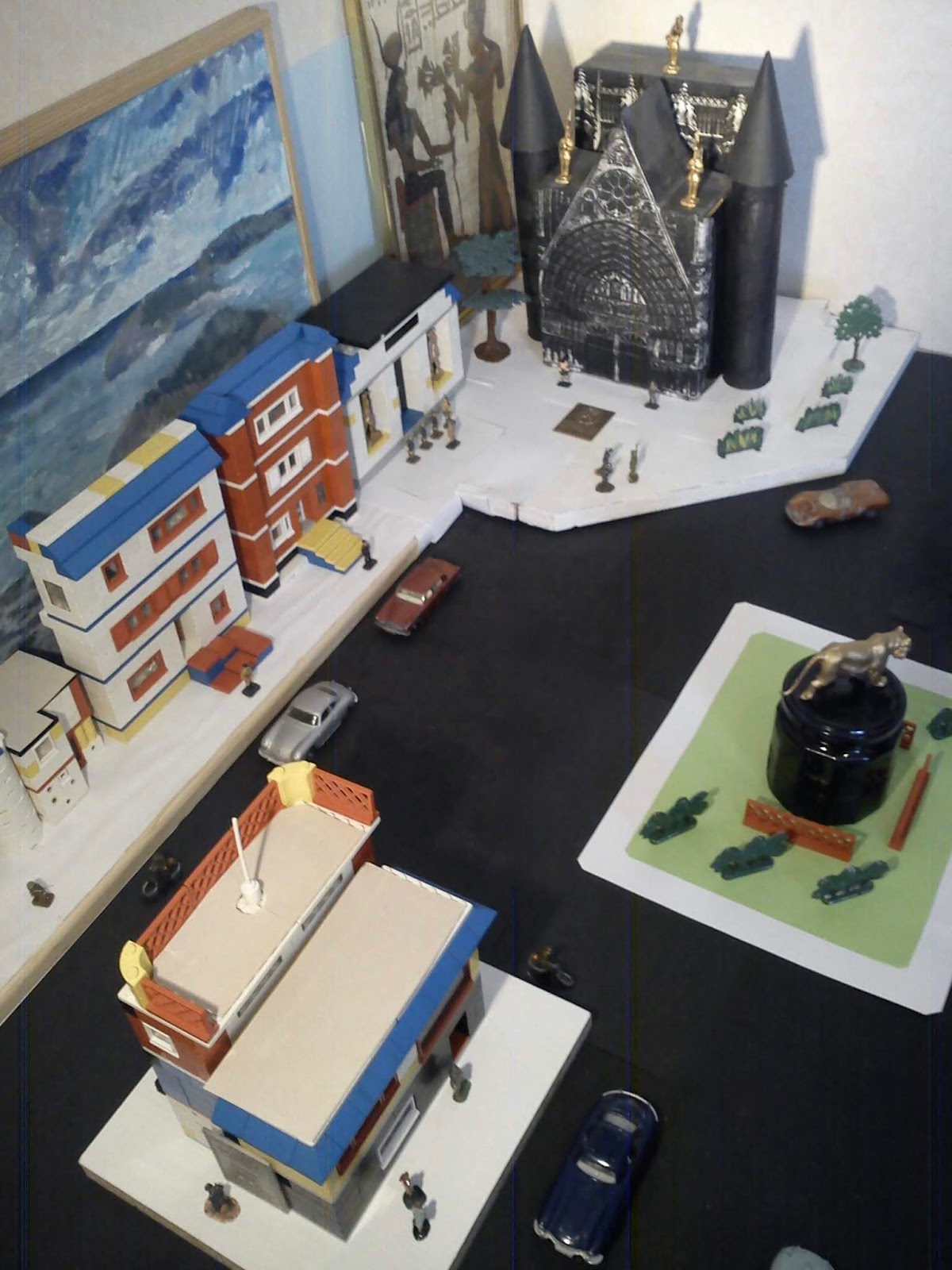
These are images from my own town... my model city, my private diorama. Call it Antropolis, call it Dharma Town, call it whatever. An earlier exposition was this one [text in Swedish].


So, what do we see...?

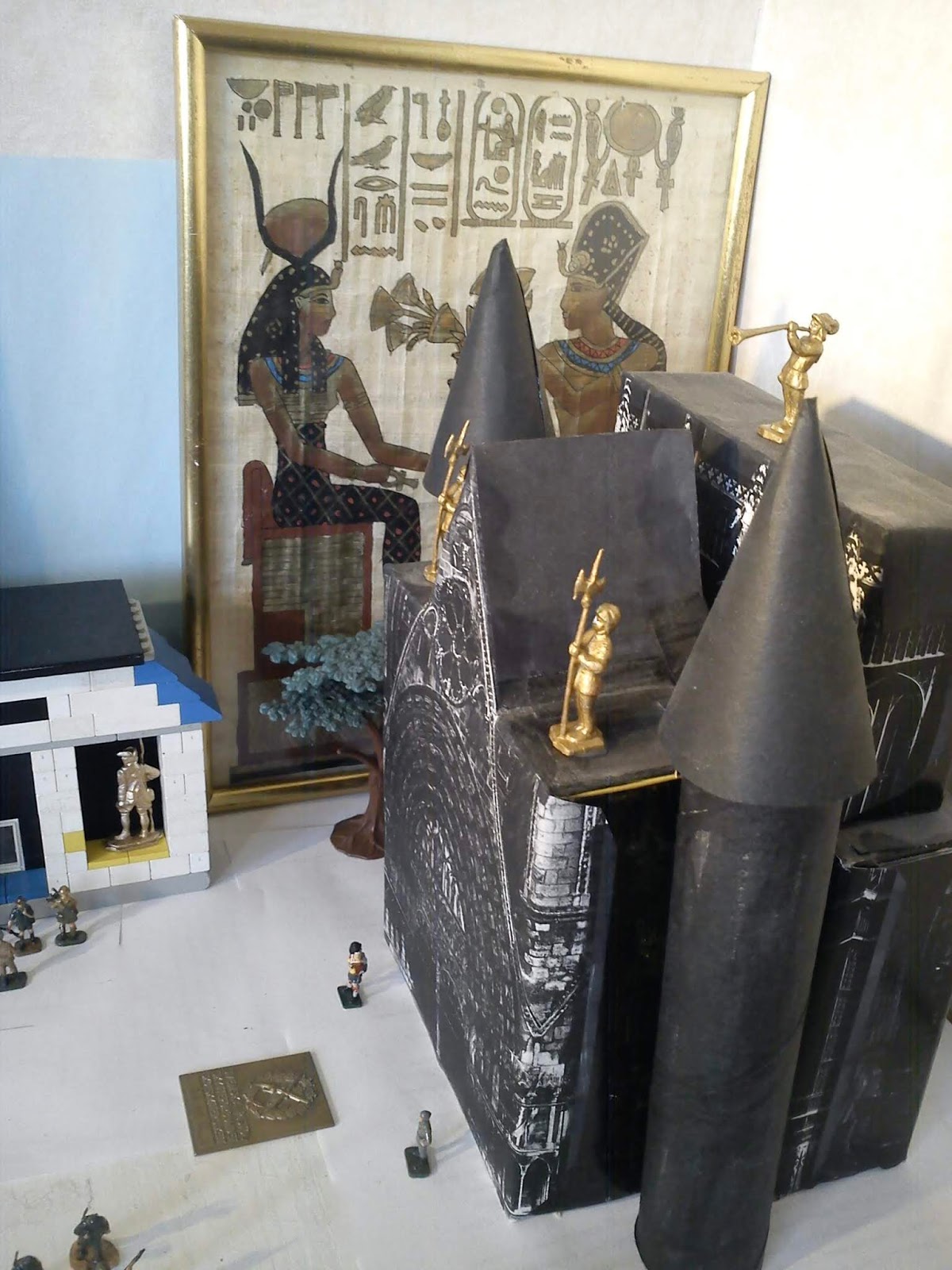
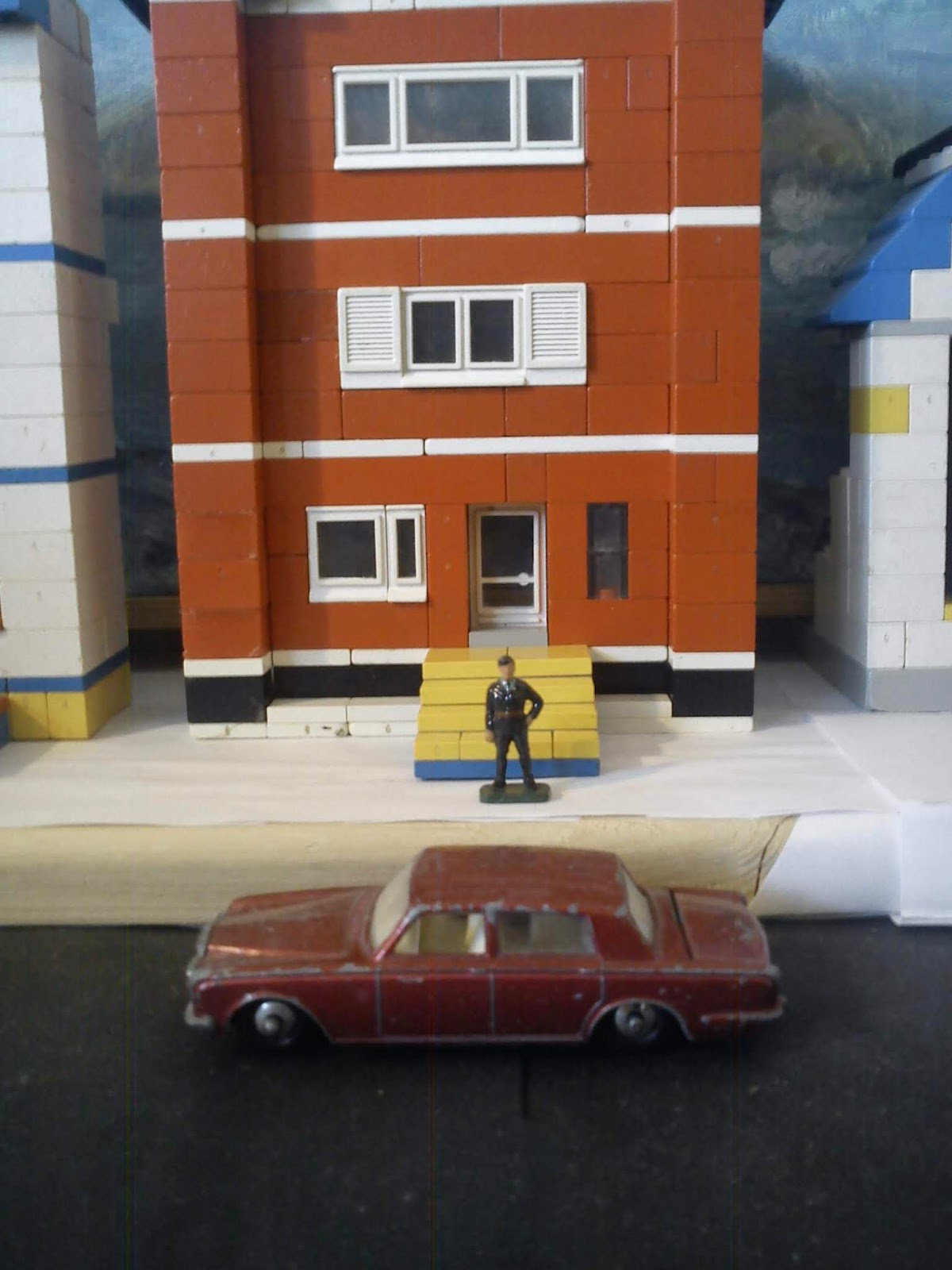
We see a cathedral. And a red palace and a white. Etc.

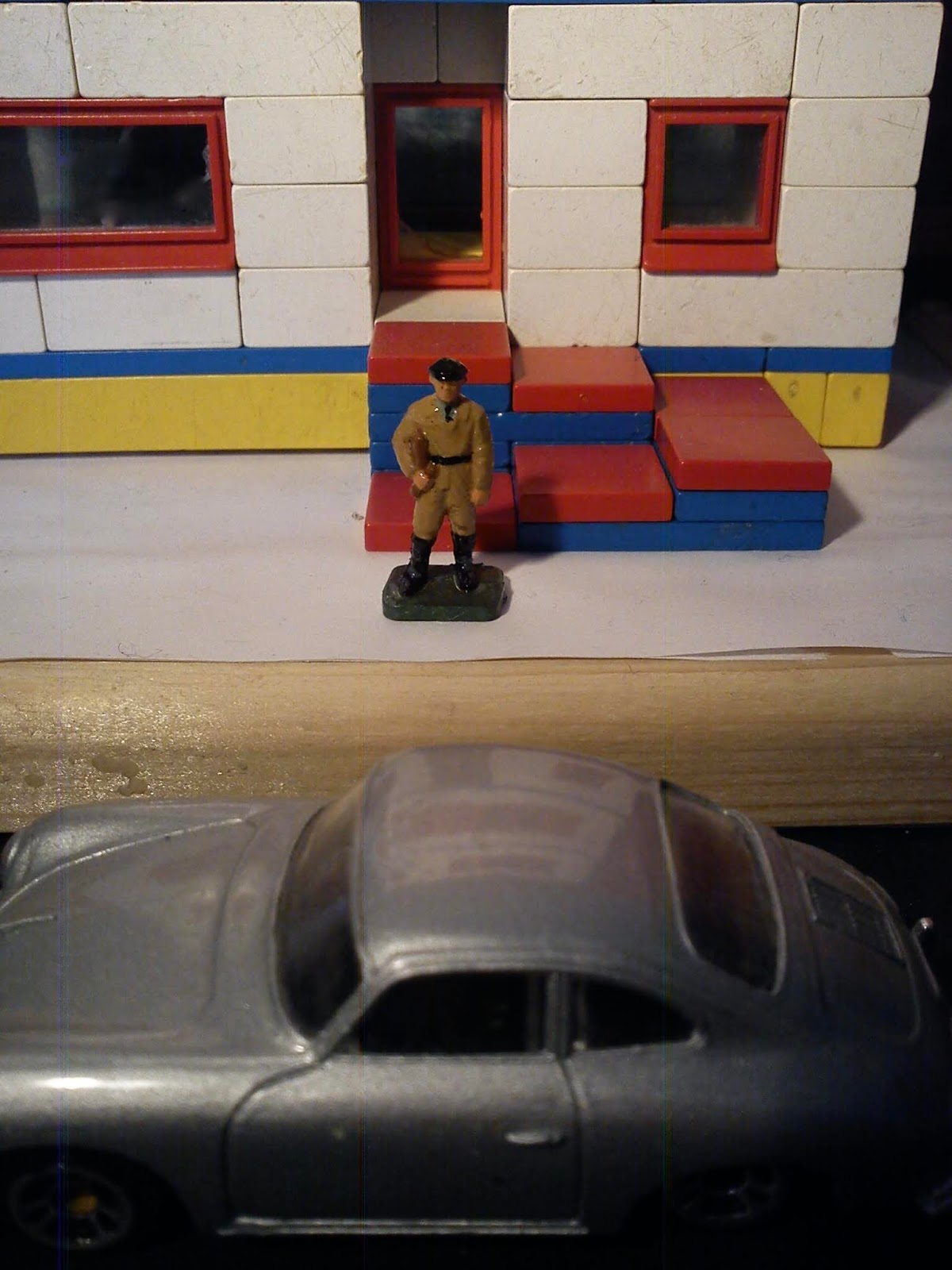
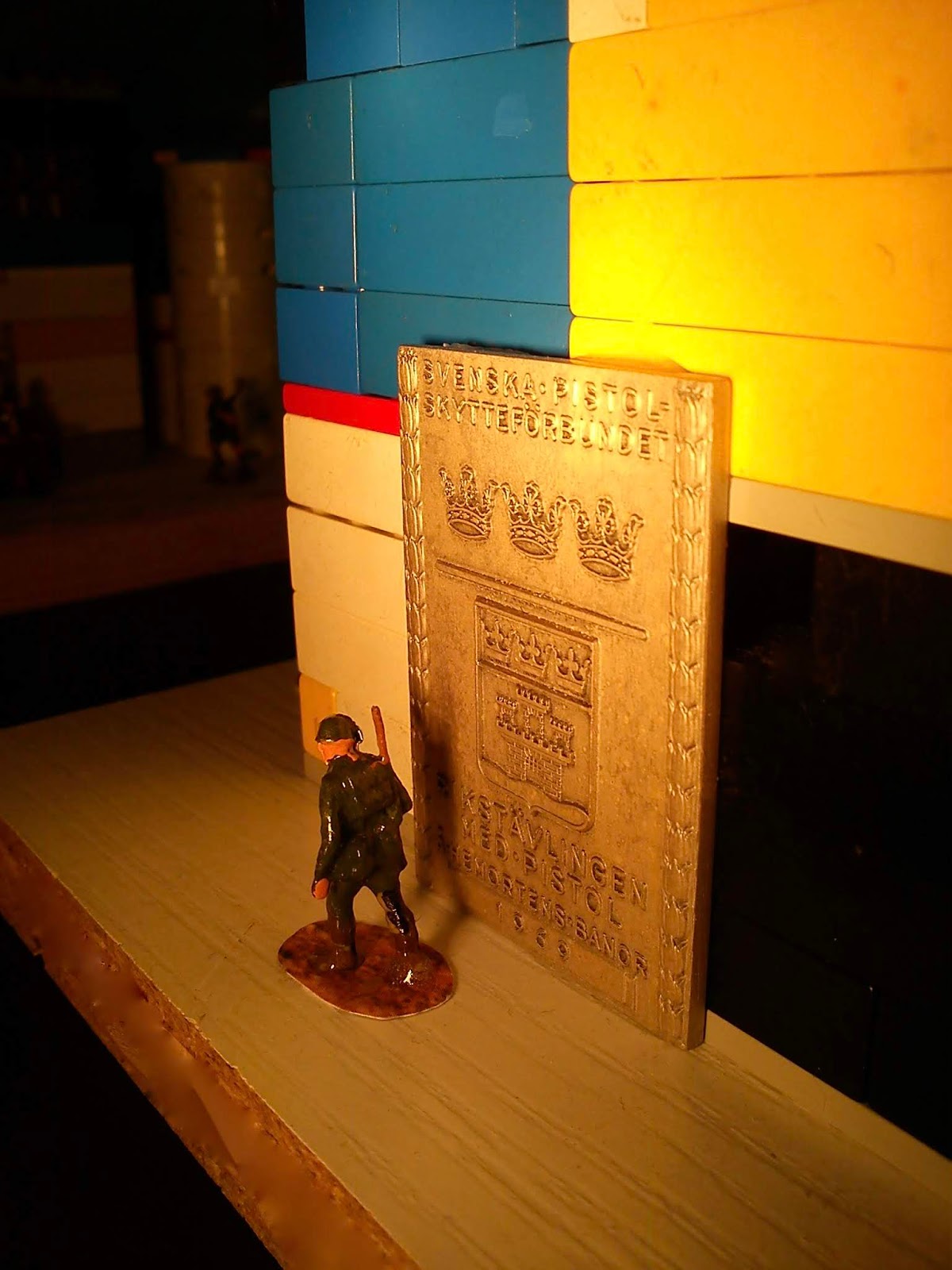
My town. Peopled by diverse figures. And trafficked by spiffy cars.

We also have a park with a tiger statue. Ride the Tiger in the spirit of Evola...! [Hereby a review in Swedish of Evola's book in question.]

Below, a gallery of pictures. With pertinent captions with links and stuff. Enjoy.


- - -


1-2. The cathedral of Dharma Town, dedicated to the worship of the Spiritual Superman.


3. Overview.


4. The architecture of this diorama goes from modernist to the left to increasingly traditionalist on the right. In pic we see Manderley, a modernist house.


5. Tiger Park [link to Swedish post] with palaces in the background.


6. In front of his White Palace, Ritter von Epp. Sports car aficionado, reader of early Heinlein.


7. Guards Barracks with mustering of guards detail.


8. Tiger Park [link to Swedish post].


9. Street scene.


10. This is Jack Steelnack, "the Steeler," a renowned Dharma Town citizen. And here is an interview with him.


11. To the left, the mysterious couple Signe and Orvar. They always prowl the cities of Dharma Town, unknown why. However, among other things I know that they are fans of the author Gordon Dickson.


12. Ride the Tiger monument [link to Swedish post].


13. Steelnack, red palace and red limo.


14. White Palace, premium car, Ritter von Epp.


15. Café Existence, a focal point for meetings and discussions over a cup of your favorite brew.


16-17. Manderley.


18-20. Views.


Related
Good Reads: Gordon R. Dickson etc.
Jack Steelnack Interview
Heinlein Revival
Antropolis: Place du Carrousel [lots of pictures, text in Swedish]
Evola: Ride the Tiger [review in Swedish]

torsdag 27 februari 2020

Story by Me Published


A new short story has been published in Terror House Magazine. It's a humorous take on going to Hell, a weird fantasy about deviltry and striving. And it's written by me. And here it is.


I often write about people going to Hell, meeting an infernal master. It's in my Swedish novel Till Smaragdeburg, it's in the English language Redeeming Lucifer.

And now, a short story of mine on the theme. Entitled A Trip to Hell.

It's kind of humorous. But it's not a complete send-up of occultism.

It isn't -- for it presupposes other realities than our ordinary, everyday world.

Enjoy.


Related
Redeeming Lucifer: A Novel
An Interview With Jack Steelnack
World History -- A Short Summary

fredag 14 februari 2020

Om Eld och rörelse


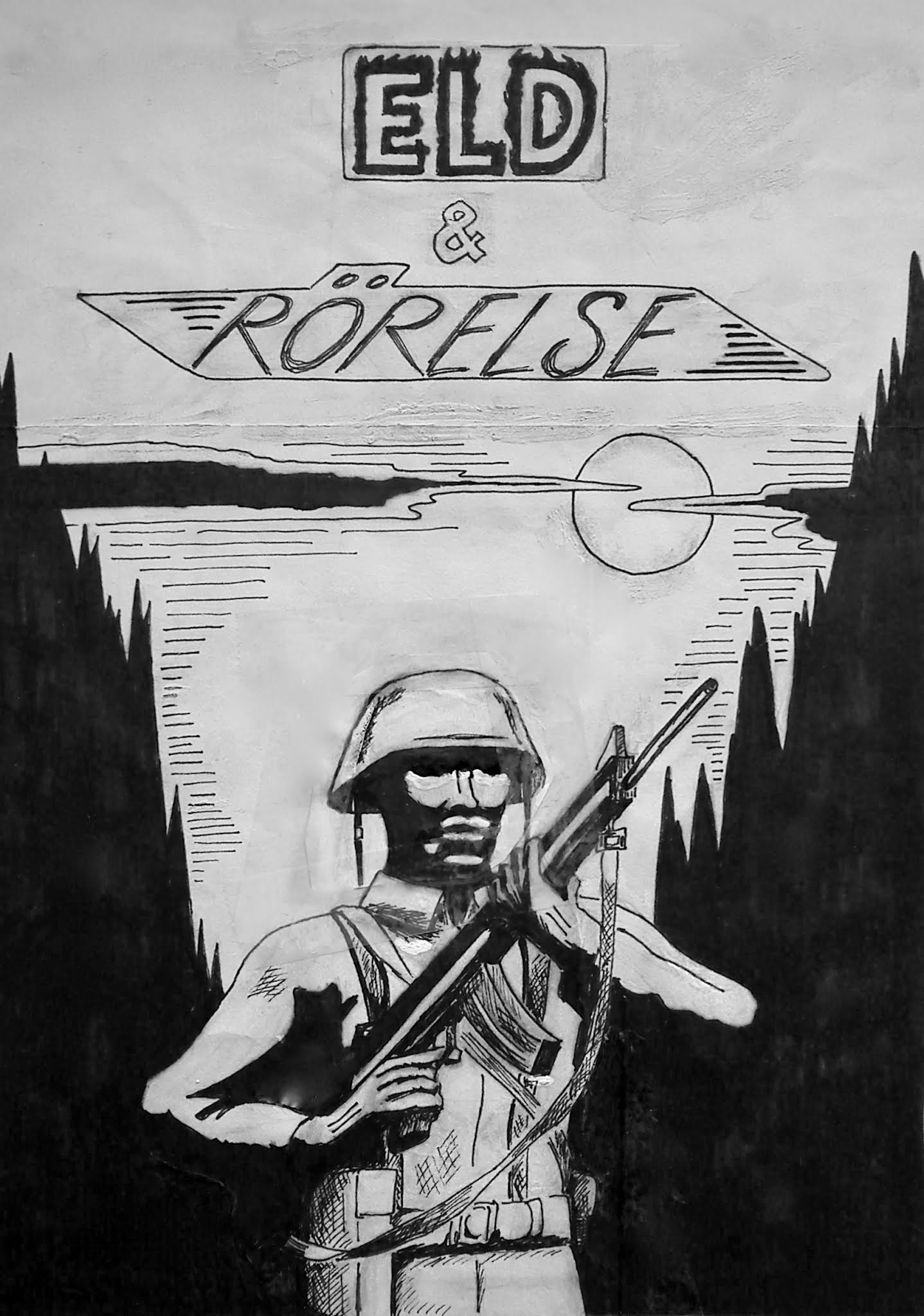
In Swedish, about my 2007 debut. -- För 13 år sedan gav jag ut min debutbok: Eld och rörelse.


Eld och rörelse innehåller noveller.

Jag gav ut verket på eget förlag 2007.

Hela boken presenteras här.

- - -

Vad har jag att tillägga i ämnet idag då?

Inget annat än att jag nu offentliggör det som först var tänkt att bli omslaget. Se ovan.

När det kom till kritan fixade jag ett annat omslag. Ett mer återhållet. Ett med mindre känsla av "död och natt och blod".

Men nu så... nu har jag äntligen fullbordat det ursprungliga omslaget. Så pass att det kan illustrera detta inlägg.

Bilden sammanfattar bokens titelberättelse ganska bra tycker jag. Vinterkrig, smyga i skogen, en något nihilistisk känsla över det hela. Yla i natten, pansar och blod...

- - -

I tillbakablickens karga sken är det ibland så att en författare inte längre står för sin debutbok. Särskilt om det är en egenutgiven sådan.

Men så är det inte med mig. Jag står ännu för mitt debutverk, ord för ord...!

Jag tycker till och med att det bara blir bättre med åren.

Men det är väl bara jag.


Relaterat
Mer om boken
Motpol recenserar
Min privata Operation Barbarossa
Reportage: kyrkogården
Edith Södergran: krigiskt sinnelag