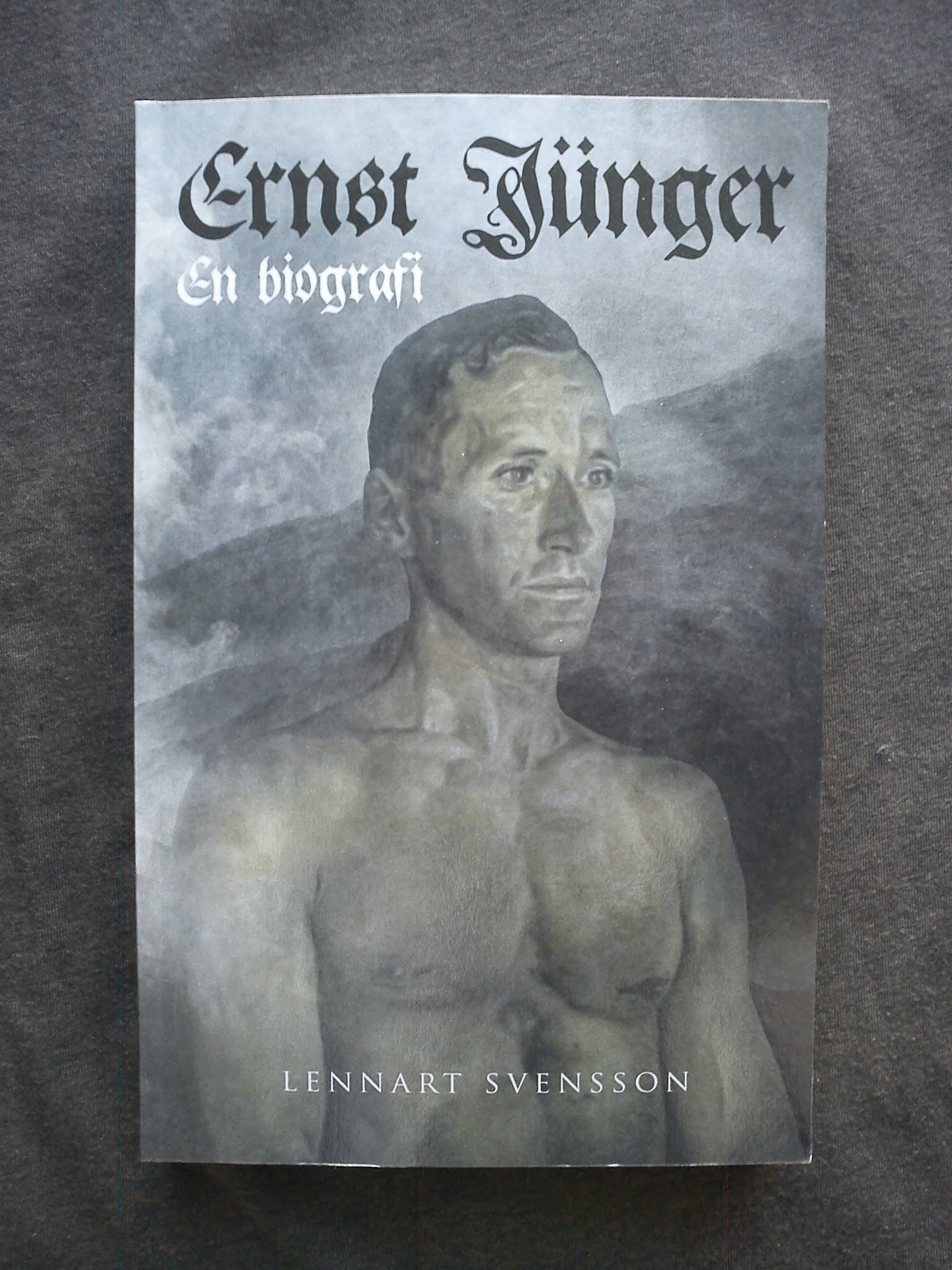
In Swedish. -- En ny podd med mig har lagts upp.
På Radio Svegot finns en podd. Om traditionell kultur. Den heter På gamla och nya stigar. Redaktör är Jalle Horn.
I det senaste avsnittet är jag gäst. Temat är Ernst Jünger.
Jag har ju skrivit en biografi om honom.
Så nu pratar Jalle och jag om Jünger. Med olika intelligenta infallsvinklar. I cirka 90 minuter. Du finner podden här.
Relaterat
En tidigare podd med mig hos Jalle: om Spengler
Ernst Jünger -- en biografi (2021)
Heliopolis (1949)
tisdag 22 februari 2022
torsdag 17 februari 2022
New book by me
Flash news...!
A new book by me is out.
It is called Rigorism.
And you must buy it...!
Because it is 160 pages jampacked with brilliance.
Buy the book on Amazon.com
Buy the book on Amazon.se
Related
Commanders
Mahâbhârata
Astral War
A new book by me is out.
It is called Rigorism.
And you must buy it...!
Because it is 160 pages jampacked with brilliance.
Buy the book on Amazon.com
Buy the book on Amazon.se
Related
Commanders
Mahâbhârata
Astral War
söndag 13 februari 2022
Ny roman recenserad
In Swedish. -- Spännande...!
Katerina Janouch är en regimkritisk författare. Hennes senaste roman kom förra året, 2021. Verket heter Ingen kvinnas land.
Det är en berättelse om hur svenskar, med fokus på kvinnor, vantrivs i mångkulturen. Det hela rubriceras som "spänningsroman" och det finns en hel del dramatik i boken.
Jag har recenserat boken i Nya Tider. Du finner texten här. Dock bara inledningen.
+++
Jag har i samma tidning, NyT, recenserat en fackbok nyligen. Det är en bok om Julian Assange (Nils Melzer: Fallet Julian Assange -- en historia om förföljelse).
Också denna text får ni bara inledningen av.
Melzers bok är för sin del intressant. Utan att avslöja för mycket om min NyT-text kan man säga: Assange är i stort sett historia nu. Men boken ifråga sammanfattar fallet rätt bra. Vi får t.ex veta att Assange nog aldrig kommer att utlämnas till USA (han kan till exempel vädja till folkrättsdomstolen i Strassbourg om detta skulle hota). Så de byråkratiska kvarnarna maler. Och vi lever i en hård samtid... Detta är intrycket man får av Melzers skildring; världen 2010-2021 skildras med Assange som ingångsvinkel. Det är en historia om nervkrig, domstolsprocesser, mediakrig, propagandakrig...
För att få tillgång till hela, kompletta NyT-artiklar kan du prenumerera här. NyT är värd sitt salt: en regimkritisk svensk tidning, publicerad sedan 2012. Och, som synes, ibland medverkar jag. Se även här.
Relaterat
Texter av mig i NyT
Turerna kring NyT och bokmässan 2016
När jag skrev om Nydahls Black Country i NyT
måndag 24 januari 2022
Svensson: Lyx (dikt)
In Swedish. -- Härmed en ny dikt. Den heter, som ni kan se, "Lyx".
Jag lever i lyx och sus och dus...
att leva i lyx är att leva i ljus --
"luxe, calme, et volupté"...
+++
Jag har ett guldhus och en guldbil --
ett marmorhus och en marmortron --
"se hur alla fälten har vitnat till skörd"...
+++
En grinande demon visar mig vägen till
underjordiska skatter -- genom faror och
vidrigheter går vägen till den dolda
skattkammaren, det hemliga valvet, där alla
ens önskningar går i uppfyllelse...
De tre vise männen gav det nyfödda
Jesusbarnet guld, rökelse, och myrra --
där myrra stod för VILJA, rökelse för
MEDKÄNSLA, och guld för TANKE -- så den
som är rik på guld är rik på ratio, han
är TANKFULL -- han är klurighetens kung, han
löser Klaus Schachts Knepiga Sidor, han
löser Dumnötens Tankenötter -- och i sin
ägo har han därtill en ekorre som knäcker andra
nötter, riktiga nötter är det men också
mycket märkliga nötter -- ty var nöt har i sig
en ädelsten -- så med denna ekorre i sin tjänst
blir man både rik och berömd.
+++
Guldhus med guldbil... guldhus med guldrum...
samt ett bärnstensrum, det är mycket lyxigt...
organiska ädelstenar såsom pärla, korall och
bärnsten är liksom toppen av allt, de slår
ibland de klassiska kristallerna av typ rubin,
safir och smaragd... nog för att jag har dem
också, lyxmannen har allt... så jag pryder mina
salar med färgstenar överallt, allting skiner
så man blir nästan galen, "embarasse de richesse"...
men så är det, man ska inte spara på lyxen, nej
man ska ge med slösande hand... ett guldhus måste
ha en passande interiör, det ska va färgprakt inuti
och guldskimmer utanpå... c'est la largesse,
the abundance, der Überfluss -- överflödet helt enkelt...
+++
Jag är så god som guld.
Relaterat
Byxdress i Düsseldorf
ÅVC
Svenska berättelser
onsdag 12 januari 2022
Great news
Great news, everyone...!
I am a writer. I write. Articles, for instance.
Now such an article -- by me -- has been published.
The site is the webzine Watkins MBS. It is a place for matters of "mind, body, spirit" (= MBS).
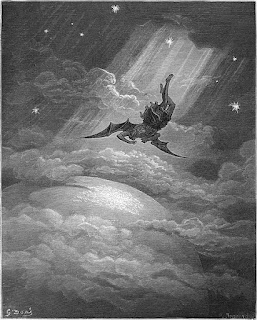
The title of my work is, Lucifer as Antihero (you must access it via my Twitter update; for some reason the link won't work directly here on Blogger). The article is about the way Lucifer became a sort of hero in John Milton's Paradise Lost. And after that lived on in artworks by William Blake, Byron, Gustave Doré, Odilon Rédon, etc.
You can find the text here.
+++
For a brief summary I'd say: it began with Milton's Paradise Lost. An epic poem about man's existence in paradise, and how he was driven out because of the shenanigans of Lucifer. And in painting the background to why Lucifer acts as he does Milton creates a rather memorable portrait. Later, William Blake read Paradise Lost and saw that Lucifer is the real hero of the book. As I say in the article:
The article can be found on the Watkins MBS site.
+++
Other than that, I spend these days building a golden palace.
Related
Lucifer as Antihero
Swedish Mystique
Actionism
Redeeming Lucifer
Illustration for John Milton's Paradise Lost by Gustave Doré (1866), showing Lucifer being thrown out of heaven
I am a writer. I write. Articles, for instance.
Now such an article -- by me -- has been published.
The site is the webzine Watkins MBS. It is a place for matters of "mind, body, spirit" (= MBS).
The title of my work is, Lucifer as Antihero (you must access it via my Twitter update; for some reason the link won't work directly here on Blogger). The article is about the way Lucifer became a sort of hero in John Milton's Paradise Lost. And after that lived on in artworks by William Blake, Byron, Gustave Doré, Odilon Rédon, etc.
You can find the text here.
+++
For a brief summary I'd say: it began with Milton's Paradise Lost. An epic poem about man's existence in paradise, and how he was driven out because of the shenanigans of Lucifer. And in painting the background to why Lucifer acts as he does Milton creates a rather memorable portrait. Later, William Blake read Paradise Lost and saw that Lucifer is the real hero of the book. As I say in the article:
Blake saw what we today see as obvious, that Lucifer is actually the hero – or is it antihero? – of Paradise Lost. In The Marriage between Heaven and Hell (1794), Blake suggests that Milton was restrained when depicting what is generally accepted as ‘good’ but far more free when depicting supposed ‘evil’.From there I go on to tell more about Blake's "fire-and-movement" ethos, about Byron's Cain (which also has Lucifer as a kind of hero), etc. etc.
The article can be found on the Watkins MBS site.
+++
Other than that, I spend these days building a golden palace.
Related
Lucifer as Antihero
Swedish Mystique
Actionism
Redeeming Lucifer
Illustration for John Milton's Paradise Lost by Gustave Doré (1866), showing Lucifer being thrown out of heaven
måndag 3 januari 2022
Steiner says: Kali Yuga ended in 1899
Good evening.
Our subject for today is only this short note.
It is about the Kali Yuga. This is mentioned quite a lot these days.
And some say that it will go on for rather a long time.
I disagree. Based on the below.
For Rudolf Steiner, for his part, meant: Kali Yuga ended in 1899.
And in various ways, this is supported by Paramahaṃsa Yogānanda and Drunvalo Melchizedek.
Now then, the sources for these three items so that you can check them up:
1. Steiner: Olav Hammer, Profeter mot strömmen, W&W 1999, p. 318.
2. Yogānanda: Paramahaṃsa Yogānanda, God Talks With Arjuna, Self-Realization Fellowship 1999, p. 733-735.
3. Melchizedek: Drunvalo Melchizedek, The Ancient Secret of the Flower of Life, Light Technology Publishing 1998, p. 101.
In other words: rejoice! We have the trials and tribulations of Kali Yuga behind us. According to Melchizedek (ibid) we are now in Dwapara Yuga, heading for Treta and Satya Yuga. Good times ahead!
Related
Primordial History: Hyperborea
Actionism
Biography of Svensson
torsdag 23 december 2021
Bertil Mårtensson -- några anteckningar
In Swedish. -- Härmed några anteckningar om Bertil Mårtensson. Jag har skrivit om honom förr: här har vi BM som kritiker... och här har vi hans fantasy ... och här hans sf. I dagens inlägg fyller jag främst i några tomma blad i ämnet; jag tar upp några hittills av mig negligerade aspekter.
1. Två sf-romaner
Bertil Mårtensson var en svensk fantastik-författare. Han levde 1945-2018. I mångt och mycket är han min favorit som svensk sf-person. När han var bra, då var han bra. Men han hade också sina brister.
Bilden som illustrerar detta inlägg visar romanen Samarkand 5617 (1976). Den kan stå som symbol för när Mårtensson inte riktigt övertygar. Denna bok må vara en nämnvärd uppvisning av en genre- och stilmedveten författare. Men att riktigt läsa och underhållas av den, se det är en annan sak... Romanens intrig är krånglig. Det hela utspelas på den avlägsna planeten Vilahall där diverse svårförklarliga saker händer. Detta är kruxet: man sitter som läsare hela tiden och gissar sig fram, man famlar liksom i blindo.
Denna bok må vara seriös och aktningsvärd. Stilen i sig är klar och transparent. Men intrigens komplexitet kräver antagligen flera genomläsningar innan man fattar galoppen.
Ska man läsa en sf-roman av Mårtensson där man åtminstone inte behöver gissa gåtor hela tiden är Jungfrulig planet (1977) bättre. Upplägget är inte så originellt (imperialistisk rovdrift hejdas av heroisk planetekolog) men utförandet är ganska snitsigt. Det är en galaktisk intrig, en främmande planet, rymdsamhällets vardag och rätt bra tecknade karaktärer därtill.
Intrigen i korthet: Ekologen Sefrem Ibrahim åker till planeten Batak för intriger och annat hejsan. Världarnas Förbund (= VF) är hans hårde uppdragsgivare –- men förmår han sätta hårt mot hårt? Eller vill han bara rulla runt i sänghalmen med Katten och Namiko Wrede?
Detta får i stort sett räcka om BM som romanförfattare. Mer om hans sf-romaner här, mer om hans fantasyroman här.
2. Novellisten Mårtensson
Vi går över till några nämnvärda noveller i sammanhanget.
I Nova SF hade BM ett flertal noveller. Fotot på den krumme figuren som ser en katedral i skyn är från Flygande katedraler i 3/1983. Som ofta i BM-sammanhang är det en huvudperson det är lite synd om. Denne figur finns där liksom alltid: dåren, den halvt misslyckade, ”the odd man out”. Det kan bli lite känslomanipulativt (man förutsätts automatiskt stå på denne figurs sida i hans strävanden i en hård värld) men så är det förvisso hos BM, detta inslag finns så gott som alltid i hans berättelser: stackaren är i fokus. Om någon däremot är framgångsrik ses denne som suspekt.
I ”Flygande katedraler” heter stackaren Jormas Alruna. I en galaktisk framtid finner han efter ett tag sin plats som orgeltrampare hos en kantor. Snart lär han sig spela orgel själv. -- Därtill styrs denna novell av djärva visioner. Ty rymdskeppen i denna kultur drivs av musik; i katedralformade skepp är det organisten som styr. Detta är en ganska läcker idé; det är musisk människa, sfärernas musik, till oändligheten på en Bach-melodi... Blotta idén med musikaliskt drivna rymdskepp hör till det bästa som BM åstadkom. Han kunde själv spela instrument och han hade sin stilistiska talang som författare, och i denna novell förenas allt till tidlös konst.
En annan bra Nova-novell av BM var Rock & Roll och marsianer (2/1982). Titeln låter kitschig och ”down-market” men det är en rätt övertygande sak om fluktuerande verklighet. Därtill med moraliserande över spritens skadeverkningar; det sista är en rätt obetydlig detalj men som fenomen intressant. Ty i detta ämne kan vi hos den i regel avspände och urbane BM ändå skymta en hart när puritansk hängivenhet, den om att påpeka det farliga i att dricka sprit.
Ännu en novell av BM som är nämnvärd är Det sista galaktiska kriget (först publicerad i Teknikmagasinet 3/1985, sedan i Nova 6/2005). Den kan beskrivas som en variant av Dicks Time Out of Joint, här med det Mårtenssonska subtemat som är “det är synd om författare”; alltid ska det vara denne stackare i huvudrollen... Men med det sagt så är denna text ändå en rätt snitsig sak på (återigen) temat fluktuerande verklighet.
3. Tragiken, funkar den...?
1986 gavs Ellerströms ut en booklet med tre Mårtensson-noveller, Förvandlas. Jag fokuserar här på en av texterna, Drömmen om jorden.
I en avlägsen framtid åker en grupp på turistresa till jorden. De ser ståtliga traditionella miljöer (New York, London osv.). Men människor finns ej ty de lämnade jorden på 2000-talet pga. miljöförstöring och radioaktiv besmittelse. Bara en människospillra finns kvar, han som guidat gruppen. –- Twisten är att detta är tragik, djup tragik. Och funkar det? –- Tragik i sf är ett svårt mål att uppnå. Öht. i litteratur är tragik en svår konst; hur ska man då lyckas med det i en egenartad genre som sf –- en genre som ju inte lånar sig till mycket annat än idédiskussion, invävt i rakt berättande.
Med andra ord: det var inte för tragikens skull jag började läsa sf. Det var istället för att serveras ”omöjliga äventyr”, äventyr som trotsade vardagens grå. Det var för att bjudas sinnesutvidgande idéer; det var för att erbjudas alternativa verkligheter, nya angreppsvinklar. Att i denna mix komma dragande med att det också bjuds tragik är lite missriktat. Därför är jag skeptisk till novellen Drömmen om jorden –- jag menar, visst är en rapsodi, även en seriös rapsodi över jordens historia i novellform, lovvärt som sf-idé. Men att sedan slänga in dårhus-pessimismen (= jorden förgiftades och människan lämnade den, en kliché i dåtida sf) och antyda att detta är tragik i högsta potens –- det rockar inte för mig.
Förvandlas är 62 sidor seriös sf signerad BM, ambitiös och med ställvis lätt handlag, men konceptuellt är detta inget för actionisten.
4. Aspekter
Steve Sem-Sandberg är en rätt nybliven akademimedlem. En gång i tiden skrev han sf. Resultatet ser man bl.a i den samling han och Mårtensson gav ut en gång, Vilse (1979). Vi förbigår SSS’ fantastik här, ja för övrigt hela SSS’ prosakonst, och koncentrerar oss på den BM som var hans parhäst i Vilse. Ty i denna bok övertygar skåningen här och där med sina alster. Såsom i Benedictus sällsamma himmelsfärd, där en människa förvandlas, höjer sig andligt – och blir en stjärna. Bokstavligt.
Det är övertygande, även ur ett esoteriskt perspektiv. Stjärnorna lever; alla har sin ande. Såsom Uriel i Paradise Lost. Och här i BM:s novell var det alltså en människa som eleverade sig mentalt till en sådan stellar spirit.
Ett nämnvärt verk av BM i Vilse är även Kvinna med diadem, om musikens makt att skapa verklighet. Det handlar om ett musikintresserat berättarjag, som ute på en skärgårdsö träffar ett geni och dennes experiment – med datorer och musik. Geniet heter Peter Gård och det hela utvecklas dramatiskt. Med alla sina uppslag och attityder är denna text som en hel roman på sina blott 16 sidor. Det är en episk novell.
I denna samling finns ett och annat, såsom BM:s bibliografiskt andra publicerade novell, nämligen Femte resan. Den kördes först i Häpna 2/1964 (debuten var i samma magasin med Urhemmet, 12/1963). Vad gäller Femte resan så är det psykologiskt tung-gung i ensam rymdfärd; tonen är pessimistisk och huvudpersonen är, hm, inte ”actionist” om ni fattar.
Mårtenssons generella fel var möjligen detta: att han var för seriös-pretentiös. Ungefär som Poul Anderson. Eller Ursula Le Guin. Dvs: alla dessa skribenter hade nog förmågan att skriva rak, underhållande fantastik. Men alltför ofta lockades de att istället skriva Stor, Odödlig Litteratur. Och visst, det finns sf-klassiker med tragik och djup. Men att alltid försöka höja sig till Den Odödliga Konstens domäner, det sätter hämsko på kreativiteten, det riskerar att göra texten stel och livlös.
Mårtensson har alltså skrivit en fantasyroman där ”allt stämmer”, Maktens vägar del 1. Här, anser jag, är den grundläggande attityden lekfull. Visst finns ett tema om maktkamp mm. men hela den struktur författaren här skapat åt sig medger oändliga möjligheter till fablande, prosapoesi, påfund och hugskott.
Så i denna episka fantasyform frodas han. I sf:en var han generellt lite stelare. Men se, det finns ett sätt att låta denna översikt utmynna i en positiv ton. För i sina kassettfanzines kunde han ha ovan antydda lekfulla attityd och triumfera – även i berättande, även i sf-epikens förtrollade värld...!
Det kan vara så att ”kassettfanzinet Ogre” inte hör till BM:s hävdvunna bibliografi. Eller diskografi. Men i de ex av Ogre jag äger finns å andra sidan ingen brasklapp som förbjuder mig att granska dem; därför måste jag ta med dem i denna kritiska översikt över BM:s författarskap.
Ogre började på 60-talet som ett pappersfanzine. Sedan, kanske från och med nr 6, kom det på kassett. Ville man ha ett ex sände man en tom kassett till BM; så kopierade han verket till det och man fick det hela i retur.
5. Musikern BM
Ogre 6 från tidigt 80-tal är förstås en salig blandning av ”fanniska upptåg” och ”BM leker med gitarren”. Men han kunde iaf. spela, både gitarr och dragspel, senare även synt. Och litterärt finns här en del. Såsom parodiska dikter; han kunde både dikta och deklamera dem; hans diktion är perfekt. Det är inte alla som har ”radioröst”. Jag ska inte citera något, men det vill jag ha sagt: lekfullhet hos en i övrigt seriös författare är det yttersta tecknet på mästerskap. ”Vill du se en mans sanna natur, betrakta honom då han leker” sa ju Goethe. Och svenska författare som även kunde skriva skämtdikter var för sin del Södergran, Heidenstam, Lindegren...
Ogre 6 har därtill en parodisk novell som BM läser upp: Möte i rymden, om en malmletande rymdman som blir galen i rymdens ensamhet. Hotet kommer i form av dragspel... som multimedia-verk (text, musik) är detta slående bra. BM kunde berätta både i skriven text och i ”spoken word”; diktionen, anslaget, tight-but-loose... mästerligt. Denna berättelse låter spontan men jag hävdar, utan bevis, att han läste efter manus.
Det totala mästerverket i denna genre var Ogre 8, med en hel rymdopera av BM: all musik var original, han uppförde den själv och berättade allt själv. Fingals fjäril heter opuset. På 90 minuter får man ouvertyr och tre akter (plus intermezzo), på temat en rymdmans sökande efter en försvunnen planet. Det visar sig att på planeten bor en rymdpirat som håller en kålmask fången; Fingal sätter sig i sinnet att befria denna mask.
Det hela är en parodisk historia men det känns ändå äkta. Jag dristar mig att säga: detta är tidlöst. Man bjuds BM:s berättande i ord vartill man får en diskret ljudmålning i bakgrunden, och man bjuds inskjutna sångnummer, dvs. ”arior” även om det förstås inte är symfoniska arior. Men ouvertyren är lätt symfonisk! – BM:s multitalang (ord och toner) förenas här i ett högre amalgam. Därtill finns moralismen också; att befria kålmasken så att denna kan bli, ni gissar det, fjäril, blir föremål för en stillsam moralisk lektion av typiskt BM-slag. Men man får kapitulera; allt spelar här med i helheten, även söndagsskolemoralen.
Även i Ogre 10: Invasion bjöds man på ett sf-äventyr. Berättelsen interfolieras av repriser ur BM:s musikproduktion, så kallade filksonger som jag kan vara utan (en filksong är en ”fannisk folksång”, en traditionell sång man ändrar texten på för att skoja till det på temat ”sf-fansens liv och leverne”). Så är det med Ogre 10: Invasion, här är det en myckenhet daterad filksongskultur – men kärnan i det hela, berättelsen som är ramverk, är lekfull, väl uppläst och ”spontan men ändå förberedd” – dvs. han läser ur manus. Men som Ingmar Bergman sa, endast den förberedde kan improvisera. Endast med en struktur som stöd kan man som konstnär känna sig fri.
6. Personliga hågkomster
Jag skulle kunna nämna mer om BM -- mycket mer. En i så fall enkel sak att nämna är hans deckare, av vilka jag inte läst någon. Men Jan Erelius’ äventyr ska visst ha varit inspiration för Mankells Wallander: gråväders-krimi i Skåne... så nu vet ni det.
I min privata mytologi framtonar BM rätt skarpt. Jag träffade honom IRL gång, på SweCon 83 i december 1983. Då hade vi redan brevväxlat en del; jag hade fått Ogre 6-8 och njutit av dem, och jag hade läst Maktens vägar 1 & 2, och sedan hade han fått de fanzines jag då börjat ge ut. Så vi kunde där i Villa Kaprifol prata lite löst om musik, bl.a om jazz. BM var en chosefri, trankil typ, lättpratad och tillgänglig.
Detta var enda IRL-mötet. Men vi upprätthöll en viss brevkontakt även framdeles, såsom att jag sände honom fanzines och fick kassettfanzines i retur. Såsom Munkarna i Toypé, ett meditativt syntverk, någonstans i skärningspunkten mellan Ralph Lundsten och Kitharo. Inramningen (kassettverk) är blygsam men konstnärligt är detta new age-musik av bästa sort.
BM:s musik förgyller, liksom i ett återsken, hela hans verk. Lättheten och lekfullheten på kassett skapar ännu en dimension till hans rent litterära verk. Det må vara att lekfullheten ibland fanns även i text (Dummast i universum, Nova 1/1985) och då körde i diket... nåja. BM:s hela opus har en musisk grundton; när allt stämmer, när moral, intrig, målerisk förmåga etc. underordnas helheten så står vi inför konstverk med odödligt, tidlöst skimmer, såsom Maktens vägar 1, Flygande katedraler och, jodå, Fingals fjäril.
Coda
BM var verksam som akademisk fackfilosof. Hans credo var ”reduktionistisk vetenskap”; det var inte esoteriskt-andligt. Det var skolfilosofiskt. Jag måste ibland påminna mig själv om det, eftersom jag har en förmåga att läsa in lite för mycket i hans gestalt. BM framstår ofta för mig som ”arketypisk författare typ 1A”... och då har jag även en tendens att se honom som ”den gamle vise mannen”. Nu har jag en annorlunda tro än skolfilosofisk reduktionism, mycket annorlunda... men med det sagt, när BM gör filosofiska anmärkningar så sker det ibland med ironisk attityd och musisk lätthet (såsom i hans bokrecensioner).
Ska man gå en kurs i rent akademisk vetenskapsteori, från Platon till Popper, vore BM en bra lärare. Han var beläst, och inte bara i vetenskapligt hänseende; troende var han inte men han hade läst Bibeln, det märks här och där; litterärt hade han absorberat något av detta verk. ”I Bibeln står det, att man ska ge, ej ta...” är en rad ur en filksong som fastnat; det är bara ett exempel. En glimt ur ett beläst sinne kallar jag det. BM kunde med musisk lätthet foga in traditionell konst och litteratur i sitt verk.
Slutkläm: BM kunde komponera många sorters musik, ja även popsånger. Här är inte platsen att prisa honom som popkung – men – visst var låtar som Slow Down och Morgonsång nämnvärda i denna genre. Och från den sistnämnda citerar jag nu en del av texten – ty detta är för mig BM i ett nötskal, ironisk men ändå seriös, allt med stilmässigt välbehag. Det är en amorös episod i den äkta sängen, kan man säga:
Relaterat
BM recenserar böcker
Maktens vägar
Mårtenssons sf
Nova SF
1. Två sf-romaner
Bertil Mårtensson var en svensk fantastik-författare. Han levde 1945-2018. I mångt och mycket är han min favorit som svensk sf-person. När han var bra, då var han bra. Men han hade också sina brister.
Bilden som illustrerar detta inlägg visar romanen Samarkand 5617 (1976). Den kan stå som symbol för när Mårtensson inte riktigt övertygar. Denna bok må vara en nämnvärd uppvisning av en genre- och stilmedveten författare. Men att riktigt läsa och underhållas av den, se det är en annan sak... Romanens intrig är krånglig. Det hela utspelas på den avlägsna planeten Vilahall där diverse svårförklarliga saker händer. Detta är kruxet: man sitter som läsare hela tiden och gissar sig fram, man famlar liksom i blindo.
Denna bok må vara seriös och aktningsvärd. Stilen i sig är klar och transparent. Men intrigens komplexitet kräver antagligen flera genomläsningar innan man fattar galoppen.
Ska man läsa en sf-roman av Mårtensson där man åtminstone inte behöver gissa gåtor hela tiden är Jungfrulig planet (1977) bättre. Upplägget är inte så originellt (imperialistisk rovdrift hejdas av heroisk planetekolog) men utförandet är ganska snitsigt. Det är en galaktisk intrig, en främmande planet, rymdsamhällets vardag och rätt bra tecknade karaktärer därtill.
Intrigen i korthet: Ekologen Sefrem Ibrahim åker till planeten Batak för intriger och annat hejsan. Världarnas Förbund (= VF) är hans hårde uppdragsgivare –- men förmår han sätta hårt mot hårt? Eller vill han bara rulla runt i sänghalmen med Katten och Namiko Wrede?
Detta får i stort sett räcka om BM som romanförfattare. Mer om hans sf-romaner här, mer om hans fantasyroman här.
2. Novellisten Mårtensson
Vi går över till några nämnvärda noveller i sammanhanget.
I Nova SF hade BM ett flertal noveller. Fotot på den krumme figuren som ser en katedral i skyn är från Flygande katedraler i 3/1983. Som ofta i BM-sammanhang är det en huvudperson det är lite synd om. Denne figur finns där liksom alltid: dåren, den halvt misslyckade, ”the odd man out”. Det kan bli lite känslomanipulativt (man förutsätts automatiskt stå på denne figurs sida i hans strävanden i en hård värld) men så är det förvisso hos BM, detta inslag finns så gott som alltid i hans berättelser: stackaren är i fokus. Om någon däremot är framgångsrik ses denne som suspekt.
I ”Flygande katedraler” heter stackaren Jormas Alruna. I en galaktisk framtid finner han efter ett tag sin plats som orgeltrampare hos en kantor. Snart lär han sig spela orgel själv. -- Därtill styrs denna novell av djärva visioner. Ty rymdskeppen i denna kultur drivs av musik; i katedralformade skepp är det organisten som styr. Detta är en ganska läcker idé; det är musisk människa, sfärernas musik, till oändligheten på en Bach-melodi... Blotta idén med musikaliskt drivna rymdskepp hör till det bästa som BM åstadkom. Han kunde själv spela instrument och han hade sin stilistiska talang som författare, och i denna novell förenas allt till tidlös konst.
En annan bra Nova-novell av BM var Rock & Roll och marsianer (2/1982). Titeln låter kitschig och ”down-market” men det är en rätt övertygande sak om fluktuerande verklighet. Därtill med moraliserande över spritens skadeverkningar; det sista är en rätt obetydlig detalj men som fenomen intressant. Ty i detta ämne kan vi hos den i regel avspände och urbane BM ändå skymta en hart när puritansk hängivenhet, den om att påpeka det farliga i att dricka sprit.
Ännu en novell av BM som är nämnvärd är Det sista galaktiska kriget (först publicerad i Teknikmagasinet 3/1985, sedan i Nova 6/2005). Den kan beskrivas som en variant av Dicks Time Out of Joint, här med det Mårtenssonska subtemat som är “det är synd om författare”; alltid ska det vara denne stackare i huvudrollen... Men med det sagt så är denna text ändå en rätt snitsig sak på (återigen) temat fluktuerande verklighet.
3. Tragiken, funkar den...?
1986 gavs Ellerströms ut en booklet med tre Mårtensson-noveller, Förvandlas. Jag fokuserar här på en av texterna, Drömmen om jorden.
I en avlägsen framtid åker en grupp på turistresa till jorden. De ser ståtliga traditionella miljöer (New York, London osv.). Men människor finns ej ty de lämnade jorden på 2000-talet pga. miljöförstöring och radioaktiv besmittelse. Bara en människospillra finns kvar, han som guidat gruppen. –- Twisten är att detta är tragik, djup tragik. Och funkar det? –- Tragik i sf är ett svårt mål att uppnå. Öht. i litteratur är tragik en svår konst; hur ska man då lyckas med det i en egenartad genre som sf –- en genre som ju inte lånar sig till mycket annat än idédiskussion, invävt i rakt berättande.
Med andra ord: det var inte för tragikens skull jag började läsa sf. Det var istället för att serveras ”omöjliga äventyr”, äventyr som trotsade vardagens grå. Det var för att bjudas sinnesutvidgande idéer; det var för att erbjudas alternativa verkligheter, nya angreppsvinklar. Att i denna mix komma dragande med att det också bjuds tragik är lite missriktat. Därför är jag skeptisk till novellen Drömmen om jorden –- jag menar, visst är en rapsodi, även en seriös rapsodi över jordens historia i novellform, lovvärt som sf-idé. Men att sedan slänga in dårhus-pessimismen (= jorden förgiftades och människan lämnade den, en kliché i dåtida sf) och antyda att detta är tragik i högsta potens –- det rockar inte för mig.
Förvandlas är 62 sidor seriös sf signerad BM, ambitiös och med ställvis lätt handlag, men konceptuellt är detta inget för actionisten.
4. Aspekter
Steve Sem-Sandberg är en rätt nybliven akademimedlem. En gång i tiden skrev han sf. Resultatet ser man bl.a i den samling han och Mårtensson gav ut en gång, Vilse (1979). Vi förbigår SSS’ fantastik här, ja för övrigt hela SSS’ prosakonst, och koncentrerar oss på den BM som var hans parhäst i Vilse. Ty i denna bok övertygar skåningen här och där med sina alster. Såsom i Benedictus sällsamma himmelsfärd, där en människa förvandlas, höjer sig andligt – och blir en stjärna. Bokstavligt.
Det är övertygande, även ur ett esoteriskt perspektiv. Stjärnorna lever; alla har sin ande. Såsom Uriel i Paradise Lost. Och här i BM:s novell var det alltså en människa som eleverade sig mentalt till en sådan stellar spirit.
Ett nämnvärt verk av BM i Vilse är även Kvinna med diadem, om musikens makt att skapa verklighet. Det handlar om ett musikintresserat berättarjag, som ute på en skärgårdsö träffar ett geni och dennes experiment – med datorer och musik. Geniet heter Peter Gård och det hela utvecklas dramatiskt. Med alla sina uppslag och attityder är denna text som en hel roman på sina blott 16 sidor. Det är en episk novell.
I denna samling finns ett och annat, såsom BM:s bibliografiskt andra publicerade novell, nämligen Femte resan. Den kördes först i Häpna 2/1964 (debuten var i samma magasin med Urhemmet, 12/1963). Vad gäller Femte resan så är det psykologiskt tung-gung i ensam rymdfärd; tonen är pessimistisk och huvudpersonen är, hm, inte ”actionist” om ni fattar.
Mårtenssons generella fel var möjligen detta: att han var för seriös-pretentiös. Ungefär som Poul Anderson. Eller Ursula Le Guin. Dvs: alla dessa skribenter hade nog förmågan att skriva rak, underhållande fantastik. Men alltför ofta lockades de att istället skriva Stor, Odödlig Litteratur. Och visst, det finns sf-klassiker med tragik och djup. Men att alltid försöka höja sig till Den Odödliga Konstens domäner, det sätter hämsko på kreativiteten, det riskerar att göra texten stel och livlös.
Mårtensson har alltså skrivit en fantasyroman där ”allt stämmer”, Maktens vägar del 1. Här, anser jag, är den grundläggande attityden lekfull. Visst finns ett tema om maktkamp mm. men hela den struktur författaren här skapat åt sig medger oändliga möjligheter till fablande, prosapoesi, påfund och hugskott.
Så i denna episka fantasyform frodas han. I sf:en var han generellt lite stelare. Men se, det finns ett sätt att låta denna översikt utmynna i en positiv ton. För i sina kassettfanzines kunde han ha ovan antydda lekfulla attityd och triumfera – även i berättande, även i sf-epikens förtrollade värld...!
Det kan vara så att ”kassettfanzinet Ogre” inte hör till BM:s hävdvunna bibliografi. Eller diskografi. Men i de ex av Ogre jag äger finns å andra sidan ingen brasklapp som förbjuder mig att granska dem; därför måste jag ta med dem i denna kritiska översikt över BM:s författarskap.
Ogre började på 60-talet som ett pappersfanzine. Sedan, kanske från och med nr 6, kom det på kassett. Ville man ha ett ex sände man en tom kassett till BM; så kopierade han verket till det och man fick det hela i retur.
5. Musikern BM
Ogre 6 från tidigt 80-tal är förstås en salig blandning av ”fanniska upptåg” och ”BM leker med gitarren”. Men han kunde iaf. spela, både gitarr och dragspel, senare även synt. Och litterärt finns här en del. Såsom parodiska dikter; han kunde både dikta och deklamera dem; hans diktion är perfekt. Det är inte alla som har ”radioröst”. Jag ska inte citera något, men det vill jag ha sagt: lekfullhet hos en i övrigt seriös författare är det yttersta tecknet på mästerskap. ”Vill du se en mans sanna natur, betrakta honom då han leker” sa ju Goethe. Och svenska författare som även kunde skriva skämtdikter var för sin del Södergran, Heidenstam, Lindegren...
Ogre 6 har därtill en parodisk novell som BM läser upp: Möte i rymden, om en malmletande rymdman som blir galen i rymdens ensamhet. Hotet kommer i form av dragspel... som multimedia-verk (text, musik) är detta slående bra. BM kunde berätta både i skriven text och i ”spoken word”; diktionen, anslaget, tight-but-loose... mästerligt. Denna berättelse låter spontan men jag hävdar, utan bevis, att han läste efter manus.
Det totala mästerverket i denna genre var Ogre 8, med en hel rymdopera av BM: all musik var original, han uppförde den själv och berättade allt själv. Fingals fjäril heter opuset. På 90 minuter får man ouvertyr och tre akter (plus intermezzo), på temat en rymdmans sökande efter en försvunnen planet. Det visar sig att på planeten bor en rymdpirat som håller en kålmask fången; Fingal sätter sig i sinnet att befria denna mask.
Det hela är en parodisk historia men det känns ändå äkta. Jag dristar mig att säga: detta är tidlöst. Man bjuds BM:s berättande i ord vartill man får en diskret ljudmålning i bakgrunden, och man bjuds inskjutna sångnummer, dvs. ”arior” även om det förstås inte är symfoniska arior. Men ouvertyren är lätt symfonisk! – BM:s multitalang (ord och toner) förenas här i ett högre amalgam. Därtill finns moralismen också; att befria kålmasken så att denna kan bli, ni gissar det, fjäril, blir föremål för en stillsam moralisk lektion av typiskt BM-slag. Men man får kapitulera; allt spelar här med i helheten, även söndagsskolemoralen.
Även i Ogre 10: Invasion bjöds man på ett sf-äventyr. Berättelsen interfolieras av repriser ur BM:s musikproduktion, så kallade filksonger som jag kan vara utan (en filksong är en ”fannisk folksång”, en traditionell sång man ändrar texten på för att skoja till det på temat ”sf-fansens liv och leverne”). Så är det med Ogre 10: Invasion, här är det en myckenhet daterad filksongskultur – men kärnan i det hela, berättelsen som är ramverk, är lekfull, väl uppläst och ”spontan men ändå förberedd” – dvs. han läser ur manus. Men som Ingmar Bergman sa, endast den förberedde kan improvisera. Endast med en struktur som stöd kan man som konstnär känna sig fri.
6. Personliga hågkomster
Jag skulle kunna nämna mer om BM -- mycket mer. En i så fall enkel sak att nämna är hans deckare, av vilka jag inte läst någon. Men Jan Erelius’ äventyr ska visst ha varit inspiration för Mankells Wallander: gråväders-krimi i Skåne... så nu vet ni det.
I min privata mytologi framtonar BM rätt skarpt. Jag träffade honom IRL gång, på SweCon 83 i december 1983. Då hade vi redan brevväxlat en del; jag hade fått Ogre 6-8 och njutit av dem, och jag hade läst Maktens vägar 1 & 2, och sedan hade han fått de fanzines jag då börjat ge ut. Så vi kunde där i Villa Kaprifol prata lite löst om musik, bl.a om jazz. BM var en chosefri, trankil typ, lättpratad och tillgänglig.
Detta var enda IRL-mötet. Men vi upprätthöll en viss brevkontakt även framdeles, såsom att jag sände honom fanzines och fick kassettfanzines i retur. Såsom Munkarna i Toypé, ett meditativt syntverk, någonstans i skärningspunkten mellan Ralph Lundsten och Kitharo. Inramningen (kassettverk) är blygsam men konstnärligt är detta new age-musik av bästa sort.
BM:s musik förgyller, liksom i ett återsken, hela hans verk. Lättheten och lekfullheten på kassett skapar ännu en dimension till hans rent litterära verk. Det må vara att lekfullheten ibland fanns även i text (Dummast i universum, Nova 1/1985) och då körde i diket... nåja. BM:s hela opus har en musisk grundton; när allt stämmer, när moral, intrig, målerisk förmåga etc. underordnas helheten så står vi inför konstverk med odödligt, tidlöst skimmer, såsom Maktens vägar 1, Flygande katedraler och, jodå, Fingals fjäril.
Coda
BM var verksam som akademisk fackfilosof. Hans credo var ”reduktionistisk vetenskap”; det var inte esoteriskt-andligt. Det var skolfilosofiskt. Jag måste ibland påminna mig själv om det, eftersom jag har en förmåga att läsa in lite för mycket i hans gestalt. BM framstår ofta för mig som ”arketypisk författare typ 1A”... och då har jag även en tendens att se honom som ”den gamle vise mannen”. Nu har jag en annorlunda tro än skolfilosofisk reduktionism, mycket annorlunda... men med det sagt, när BM gör filosofiska anmärkningar så sker det ibland med ironisk attityd och musisk lätthet (såsom i hans bokrecensioner).
Ska man gå en kurs i rent akademisk vetenskapsteori, från Platon till Popper, vore BM en bra lärare. Han var beläst, och inte bara i vetenskapligt hänseende; troende var han inte men han hade läst Bibeln, det märks här och där; litterärt hade han absorberat något av detta verk. ”I Bibeln står det, att man ska ge, ej ta...” är en rad ur en filksong som fastnat; det är bara ett exempel. En glimt ur ett beläst sinne kallar jag det. BM kunde med musisk lätthet foga in traditionell konst och litteratur i sitt verk.
Slutkläm: BM kunde komponera många sorters musik, ja även popsånger. Här är inte platsen att prisa honom som popkung – men – visst var låtar som Slow Down och Morgonsång nämnvärda i denna genre. Och från den sistnämnda citerar jag nu en del av texten – ty detta är för mig BM i ett nötskal, ironisk men ändå seriös, allt med stilmässigt välbehag. Det är en amorös episod i den äkta sängen, kan man säga:
Du ligger vid min sida, när jag ser dig är jag nöjd,
med kärleken du skänker mig en tröst.
Jag drar mitt svärd ur skida, för vår kärlek är jag böjd,
åt mina känslor måste jag ge röst...
Relaterat
BM recenserar böcker
Maktens vägar
Mårtenssons sf
Nova SF
onsdag 15 december 2021
Svensson: Uppsala Dome (poem)
Sing praise for the Northern temple on the hill... that's how this poem begins. Then it evolves into an all-encompassing tapestry, bringing in the Wild Hunt, Horgalåten, the Valerian album "Birds of the Master," and more... a lot more.
It's time for a poem... by me... for I'm a musical man, eine musische Mensch, and you can't stop me from singing... especially not on this my blog.
The poem you're about to read plays in the Uppsala dome in central Sweden. In Swedish, "Uppsala domkyrka". The largest temple in Scandinavia, with some competition from the Trondheim dome in Norway.
Here goes, then, my poem for today. Uppsala Dome.
Related
Another poem: Science Fantasy Superman
Yet another poem: Comfortably Strong
Astral War -- some remarks
A presentation of this blog
Horgalåten = "the Horga Song", very fine archaic Swedish folk song, mentioned in the poem; here on Youtube
Same song, musically a little more tame as the previous version, however, this one has the classical lyrics too
Picture from the Svensson archive of, you guessed it, the Uppsala dome.
It's time for a poem... by me... for I'm a musical man, eine musische Mensch, and you can't stop me from singing... especially not on this my blog.
The poem you're about to read plays in the Uppsala dome in central Sweden. In Swedish, "Uppsala domkyrka". The largest temple in Scandinavia, with some competition from the Trondheim dome in Norway.
Here goes, then, my poem for today. Uppsala Dome.
I am dancing around in the Uppsala dome,
going clockwise, as we do in the west, as we do in the east --
in Christian churches, around Hindu temples --
clockwise honoring the divine,
circum-ambulating the god.
Dancing around in the Uppsala dome, going
round the altar, going round the ambulatory --
spiral movement forever, like the vortex
creating reality -- for I am the vortex master,
master of storms, king of tornados -- and
the storm begins here, with me, in the dome.
There's a storm coming up and I AM the storm,
creating it by making rounds round the altar,
by going round and round, maddeningly like a flock
of crows in the sky -- or rather jackdaws,
that's the Uppsala variety of passerine --
round and round the church towers they fly --
a vortex of birds, like "Birds of the Master"
in the Valerian adventure... a vortex in the sky,
look at them and go mad, see the twirl and
you're caught in the movement -- like the
dancers having to dance to the Horgalåten,
the evil fiddler forcing them to dance to
their death, forever whirling to the music,
round and round they went, until only their
skulls were rattling around on the ground.
Vortex of dancers, vortex of birds,
vortex of clouds, vortex of stars --
yea, verily, I sing of stars, a vortex of stars --
for the Milky Way, our galaxy, is also such a vortex,
spiral, twirl... a four-armed fylfoot going round
and round in the eternity of space...
And I am all of this...
I am the cloud spiral, the vortex of birds and the
Horga dancers -- and the spiral movement
round the Uppsala altar.
I'm the nexus of the crisis
and the origin of storms...
I'm the whirpool, the maelstrom,
Charybdis, eddy, tornado, taifun...
I'm the rider of the storm, the Wild Hunt,
the Yuletide chase in the sky, led by
the Wild Hunter, Odin, god of storms...
Pagan and Christian I am, heathen and high-church --
I am high in the church as I crazily go round
the altar, creating a vortex, creating a new
world, a new reality -- a new way of looking
at ourselves and the world -- a Pagan-Christian
synthesis, a merger, a new shiny amalgam
of spiritual splendor... the only way to fight
the Astral War, the only way to end the Astral War.
Related
Another poem: Science Fantasy Superman
Yet another poem: Comfortably Strong
Astral War -- some remarks
A presentation of this blog
Horgalåten = "the Horga Song", very fine archaic Swedish folk song, mentioned in the poem; here on Youtube
Same song, musically a little more tame as the previous version, however, this one has the classical lyrics too
Picture from the Svensson archive of, you guessed it, the Uppsala dome.
onsdag 8 december 2021
Deliberation
Good evening and welcome to this blog post.
I sometimes sit down and meditate. I bring down the pace of respiration. I concentrate the look on a certain point before me. I settle down, I come to rest.
I meditate, I become the center of the world. As can you, if you have the will to meditate.
I meditate, I mobilize my will. I want to be calm, I want the world to see the light that I see.
Join me in the light...
In 2011 Earth ascended. The positive forces are gaining ground.
Angels coming down...
Celestial music playing...
Gods and devas soaring down from the sky...
Golden halos radiating higher...
+++
Sky processions, we are watching you arrive...
I stand starstruck...
Evil people can’t endure in the light that is spreading after Earth’s ascension.
We’re in for a coming Golden Age. But first some elite club elements must go.
+++
This awaits to be done. It will be a long process. The linchpin of elite club rule might be the US. Therefore, a restored American republic, based on the Constitution and the Bill of Rights, would be the first step to end elite club or "Cabal" rule.
There are many a good details pertaining to this. There are constitutional issues, there is the question of revaluation of currencies, and there is a vision of grand scale reform. However, we will not go into all this. Instead, we will focus on one aspect of the emerging US governance: the role of the military.
+++
When the Cabal took over the US it succeeded rather well in gaining control over the media, the academy, the industrial-financial sector, the judiciary, and the political sector at large. However, the armed forces were not so thoroughly co-opted.
Historically, the Cabal didn’t manage to infiltrate the military as much as it did with all the other branches of government. Therefore, the US Military might play a role in a restored government to replace the one having usurped it, the so-called US, Inc., the “deep state,” the Cabal co-opted American governance.
You could say that the US defense forces carry the sword of justice. A theory maintains that Pentagon now is ruled by good guys, so-called “white hats”.
The theory is that Pentagon doesn’t any longer obey the commands of US, Inc. We saw this already in September 2016 when (according to NYT, 30/9) Secretary of State John Kerry couldn’t convince the military to back up his threats against the restarted Russian offensive against IS in Syria. It wasn’t spelled out, it was to be read between the lines – but it was in the cards, the syndrome of the US military not doing the Cabal’s bidding any more.
It was like a discreet coup, a kind of “veto coup”. The US military wouldn’t any longer fight the Cabal’s illegal wars; instead, it would defend the Constitution against its enemies, foreign and domestic.
+++
How did this start? How did the US military stop being led by the noose to fight imperialistic wars, how did it put down the foot and start defending the Constitution? This development is in a grey area right now. For instance, you can’t go to the Pentagon website, to Stars and Stripes or whatever to read up on “White Hats History”... But there are clues here and there. For instance, in 2012 David Wilcock (1973-, author of The Synchronicity Key and The Source Field Investigations) said that predominantly, Pentagon now was led by positive forces. The awakening among the crucial leadership is said to have come about after 9/11, with officers noticing how dark forces were at play, with machinations going on putting them outside of the ordinary reporting channels. Then these side-stepped officers are said to have started a subtle (and sometimes not so subtle) resistance movement working for the good, for the Constitution they are sworn to defend and against the madmen ruling the US after 9/11 and before, in short, US, Inc. = the Cabal.
As Wilcock says in the blog post: “Our brave and valiant soldiers have taken an oath: To protect the Constitution of the United States, and its people, against all enemies – foreign AND domestic. – They did not pledge their lives – their blood – to keep a handful of sociopathic, genocidal bankers in control of the planet, its people and its resources.”
The US military is one of the few legitimate governmental elements left, there to protect the Constitution. In this, they have the assistance of police, Federal Marshals, retired military and maybe even responsible civilians.
The linchpin in taking down the Cabal is this legitimate defender of the Constitution, the military. There has to be an executive element in defeating this evil. It can’t just be done by “RV,” the as such sorely needed revaluation of currencies, putting them on a gold backing. What is needed is executive force, performed under the Law, and the US military, police and Federal Marshals are here to do just that. To defeat the Cabal we need Responsible Men, men combining authority with responsibility, and the military might be the place to look out for such men.
For instance, in August 2016, the US Navy and the Marines had an aircraft carrier sent to Libya to bomb IS bases. Most probably this was a White Hat operation, not ordered by Obama or Kerry. Then, in September, came the above mentioned refusal to “go bomb Syria,” to counteract Russia’s new Syrian offensive. This Pentagon would not do and it seems to be part of the same pattern, that of the White Hats not any longer doing the NWO’s bidding.
It is true that since then, President Trump has put “boots on the ground” in Syria, executing a kind of intervention with US troops. But the troop contingent is small, oh so small, and its operations aren’t “hot,” it is mostly a game of watching and overseeing things. A grey area war. All told, major war is still NOT in sight.
+++
To conceive of the military as “the good guys” might be hard for some. In general, after the Vietnam War era “Pentagon” is not a symbol of goodness. But that is because it was infiltrated by evil forces and led astray to fight imperialistic wars. At its core the life of a soldier is about loyalty to the Constitution, to serve; it is not about indulging in death and destruction.
Generals don’t start wars; politicians do. The political leadership decides on policy and who the enemies of the Constitution and the realm are. Now, it seems like the military has seen through the current, evil, Cabal-concocted policy and said no to further imperialistic wars. And in all this there is a tangibly spiritual element. Positive aliens are in on the deal. Archangel Michael wields the sword of justice and, on Earth, positive military and White Hats might be doing the same. On the web, you can for instance find this, a channeling of the selfsame Archangel Michael by Ron Head. In this post, there are some lines about “spiritual military leadership”, like this:
Does indeed the Pentagon White Hats and all have divine backing? In the above-mentioned post from 2012 David Wilcock intimates it:
+++
In this post, it is speculated how the US military seems to be in for a political role. For its part, this will not mean the declaring of Martial Law. For, it is said, such a move would spoil the good cause forever. Rather, what we might be seeing now is a “benevolent and silent coup d’état”. If so, it would – as intimated above – be a discreet “veto coup,” a case of the military putting down the foot to the forces of evil, saying, “No more of your shenanigans, now we’ll ensure a restoration of Constitutional rule”.
This should be the road ahead. But things can't be done discreetly forever. At some point in time a Responsible Man must go in and take action. However, for certain “image reasons” it isn’t so easy. As we just intimated (no declaring of Martial Law) the military can’t just go in and take over; that would meet public resistance. In “Matthew’s Messages” of 1 October 2021 the problem is addressed in this way:
In short, the US Military needs to become more popular before it can assist positive forces in taking down the Cabal... and this “image-brush up” might take some time.
Related
No Risk for Major War
Commanders (2018)
Burning Magnesium (2018)
Ernst Jünger -- A Portrait (2014)
I sometimes sit down and meditate. I bring down the pace of respiration. I concentrate the look on a certain point before me. I settle down, I come to rest.
I meditate, I become the center of the world. As can you, if you have the will to meditate.
I meditate, I mobilize my will. I want to be calm, I want the world to see the light that I see.
Join me in the light...
In 2011 Earth ascended. The positive forces are gaining ground.
Angels coming down...
Celestial music playing...
Gods and devas soaring down from the sky...
Golden halos radiating higher...
+++
Sky processions, we are watching you arrive...
I stand starstruck...
Evil people can’t endure in the light that is spreading after Earth’s ascension.
We’re in for a coming Golden Age. But first some elite club elements must go.
+++
This awaits to be done. It will be a long process. The linchpin of elite club rule might be the US. Therefore, a restored American republic, based on the Constitution and the Bill of Rights, would be the first step to end elite club or "Cabal" rule.
There are many a good details pertaining to this. There are constitutional issues, there is the question of revaluation of currencies, and there is a vision of grand scale reform. However, we will not go into all this. Instead, we will focus on one aspect of the emerging US governance: the role of the military.
+++
When the Cabal took over the US it succeeded rather well in gaining control over the media, the academy, the industrial-financial sector, the judiciary, and the political sector at large. However, the armed forces were not so thoroughly co-opted.
Historically, the Cabal didn’t manage to infiltrate the military as much as it did with all the other branches of government. Therefore, the US Military might play a role in a restored government to replace the one having usurped it, the so-called US, Inc., the “deep state,” the Cabal co-opted American governance.
You could say that the US defense forces carry the sword of justice. A theory maintains that Pentagon now is ruled by good guys, so-called “white hats”.
The theory is that Pentagon doesn’t any longer obey the commands of US, Inc. We saw this already in September 2016 when (according to NYT, 30/9) Secretary of State John Kerry couldn’t convince the military to back up his threats against the restarted Russian offensive against IS in Syria. It wasn’t spelled out, it was to be read between the lines – but it was in the cards, the syndrome of the US military not doing the Cabal’s bidding any more.
It was like a discreet coup, a kind of “veto coup”. The US military wouldn’t any longer fight the Cabal’s illegal wars; instead, it would defend the Constitution against its enemies, foreign and domestic.
+++
How did this start? How did the US military stop being led by the noose to fight imperialistic wars, how did it put down the foot and start defending the Constitution? This development is in a grey area right now. For instance, you can’t go to the Pentagon website, to Stars and Stripes or whatever to read up on “White Hats History”... But there are clues here and there. For instance, in 2012 David Wilcock (1973-, author of The Synchronicity Key and The Source Field Investigations) said that predominantly, Pentagon now was led by positive forces. The awakening among the crucial leadership is said to have come about after 9/11, with officers noticing how dark forces were at play, with machinations going on putting them outside of the ordinary reporting channels. Then these side-stepped officers are said to have started a subtle (and sometimes not so subtle) resistance movement working for the good, for the Constitution they are sworn to defend and against the madmen ruling the US after 9/11 and before, in short, US, Inc. = the Cabal.
As Wilcock says in the blog post: “Our brave and valiant soldiers have taken an oath: To protect the Constitution of the United States, and its people, against all enemies – foreign AND domestic. – They did not pledge their lives – their blood – to keep a handful of sociopathic, genocidal bankers in control of the planet, its people and its resources.”
The US military is one of the few legitimate governmental elements left, there to protect the Constitution. In this, they have the assistance of police, Federal Marshals, retired military and maybe even responsible civilians.
The linchpin in taking down the Cabal is this legitimate defender of the Constitution, the military. There has to be an executive element in defeating this evil. It can’t just be done by “RV,” the as such sorely needed revaluation of currencies, putting them on a gold backing. What is needed is executive force, performed under the Law, and the US military, police and Federal Marshals are here to do just that. To defeat the Cabal we need Responsible Men, men combining authority with responsibility, and the military might be the place to look out for such men.
For instance, in August 2016, the US Navy and the Marines had an aircraft carrier sent to Libya to bomb IS bases. Most probably this was a White Hat operation, not ordered by Obama or Kerry. Then, in September, came the above mentioned refusal to “go bomb Syria,” to counteract Russia’s new Syrian offensive. This Pentagon would not do and it seems to be part of the same pattern, that of the White Hats not any longer doing the NWO’s bidding.
It is true that since then, President Trump has put “boots on the ground” in Syria, executing a kind of intervention with US troops. But the troop contingent is small, oh so small, and its operations aren’t “hot,” it is mostly a game of watching and overseeing things. A grey area war. All told, major war is still NOT in sight.
+++
To conceive of the military as “the good guys” might be hard for some. In general, after the Vietnam War era “Pentagon” is not a symbol of goodness. But that is because it was infiltrated by evil forces and led astray to fight imperialistic wars. At its core the life of a soldier is about loyalty to the Constitution, to serve; it is not about indulging in death and destruction.
Generals don’t start wars; politicians do. The political leadership decides on policy and who the enemies of the Constitution and the realm are. Now, it seems like the military has seen through the current, evil, Cabal-concocted policy and said no to further imperialistic wars. And in all this there is a tangibly spiritual element. Positive aliens are in on the deal. Archangel Michael wields the sword of justice and, on Earth, positive military and White Hats might be doing the same. On the web, you can for instance find this, a channeling of the selfsame Archangel Michael by Ron Head. In this post, there are some lines about “spiritual military leadership”, like this:
Now it is time for us to speak to you about military matters. You will see almost all of your star brothers and sisters wearing a uniform of some sort. During your long history of conflict, you have learned that to mean conquest. In more peaceful societies, it means service.This has to be underlined: a soldier’s uniform is the symbol of his willingness to serve. It is not about dominance and haughtiness per se. This is symbolic of the emerging role of “white hats” military we see, backed by spiritual forces.
Does indeed the Pentagon White Hats and all have divine backing? In the above-mentioned post from 2012 David Wilcock intimates it:
Top insiders have now confirmed that everyone in the Pentagon is now aware that some form of Divine Intervention is happening – regardless of what side they are on. – Most of them don’t know who is responsible. Even the ‘bad guys’ are now saying it could be ‘Angels or Aliens’ doing this stuff.As for indicia of positive aliens being around on Earth since time immemorial, see the previous chapters of this study. Divine presence is no news to the well-read mystic. Thus, we could now be witnessing the Heavenly Host backing up military forces in cleaning out the Cabal. We are seeing “war in Heaven, war on Earth” in our very lifetimes.
+++
In this post, it is speculated how the US military seems to be in for a political role. For its part, this will not mean the declaring of Martial Law. For, it is said, such a move would spoil the good cause forever. Rather, what we might be seeing now is a “benevolent and silent coup d’état”. If so, it would – as intimated above – be a discreet “veto coup,” a case of the military putting down the foot to the forces of evil, saying, “No more of your shenanigans, now we’ll ensure a restoration of Constitutional rule”.
This should be the road ahead. But things can't be done discreetly forever. At some point in time a Responsible Man must go in and take action. However, for certain “image reasons” it isn’t so easy. As we just intimated (no declaring of Martial Law) the military can’t just go in and take over; that would meet public resistance. In “Matthew’s Messages” of 1 October 2021 the problem is addressed in this way:
The ... Deep State [is] operating the government; and the military forces, which pledge to serve the Constitution, are holding them at bay, so to say. While it’s clear to most of the commanders and knowledgeable others that the country cannot continue in this dysfunctional manner, it is not yet clear how to change it with the least amount of disruption and confusion and avoid cries of ‘military coup.’This has to be mentioned for the record. The US military, with the army in focus, right now has image problems. With a little historical overview you could say: after WWII the goodwill of the US military soared sky high; after Vietnam it surged low. In the 80s and 90s it had a resurgence but this was spoiled after Iraq 2.0 and the Wikileaks film, “Collateral Murder”. Now the US military has retreated from Iraq; at home it sometimes rattles its arms along with the police, rendering it a not-so-favorable image in the public eye. These actions may be lawful and constitutional – but are they popular, are they given the right propagandistic “spin”...?
In short, the US Military needs to become more popular before it can assist positive forces in taking down the Cabal... and this “image-brush up” might take some time.
Related
No Risk for Major War
Commanders (2018)
Burning Magnesium (2018)
Ernst Jünger -- A Portrait (2014)
måndag 22 november 2021
Fjortonårsjubileum
In Swedish. -- Idag är det fjortonårsjubileum för bloggen.
Denna blogg startades 22 november 2007.
Och idag är det 22 november 2021.
Med andra ord: idag är det fjortonårsjubileum.
+++
Avsikten med bloggen var från början detta: promota mina böcker.
Men jag förstod tidigt att, för en effektiv promotion, så måste man varva reklamen med andra inlägg.
Och denna affärsidé har stått sig. Bloggen innehåller, nu som förr, promo blandat med "allt annat".
Nedan ges några länkar till bloggen genom åren. Det blir ett och annat promotion-inlägg. Plus "allt annat".
+++
2007: bloggrelaterat: första inlägget
2008: Uppsala: prosaskiss
2009: följetong: Gripenbergs sol
2010: "flash fiction": kortnovell
2011: memoar: Christina Lindberg
2012: recension: Metropolis
2013: råd: hur man botar oro och ångest
+++
2014: promo: Eld och rörelse
2015: lästips: antiken
2016: dikt: Tomma rum i tomma hus
2017: modellbygge: Antropolis
2018: promo: sf-bok presenterad på svenska
2019: lästips: blandat
2020: sf-historia: Nova SF
2021: tradition: nationaldagspredikan
+++
Det om detta. Välkommen att följa bloggen i framtiden. Bloggen kommer nog att fortsätta. Dvs., om Gud så vill.
Nåja, det har ju gått bra i fjorton år; det ska förhoppningsvis fortsätta som förr. Generellt kan jag säga: nu som förr har bloggen ingen masterplan. Allt går i stort sett hipp som happ. Förutom "promo varvat med övrigt material" så har jag ingen strikt vision för det hela.
Och det har, på sätt och vis, varit bloggens styrka. Det har aldrig varit ett enstaka syfte med bloggen. Mix, blandning, hodge-podge, bouillabaisse: detta har varit det oskrivna idealet. Detta skapar en alkemisk reaktion som, om inte direkt leder till guld, är rätt tilltalande. Denna mix har gett bloggen en obeskrivlig karaktär.
Relaterat
Det flammande svärdet
Omstridda fenomen
Svenska berättelser
söndag 14 november 2021
Boknytt: Ernst Jünger -- en biografi (Svensson 2021)
In Swedish. -- Nu har min Jüngerbok kommit i en svensk version. Titeln är Ernst Jünger -- en biografi. Förlaget är Logik.
Köp boken på Amazon.se
Äntligen är det alltså dags för en svensk version av min Jüngerbok. Den kom, som alla vet, först på engelska 2014 som Ernst Jünger -- A Portrait. Denna svenska version återger allt som den engelska versionen säger, plus en del till. Såsom information om den speciellt svenska receptionen.
I ankdammen Sverige är Jünger den värsta bad boy som tänkas kan. Patrik Ehn blev ju utesluten ur SD pga. att han vurmade för Jünger (se bokens kapitel 4). Och tidigare i år, 2021, myntades begreppet "yxhögern" av en f.d. socialdemokratisk minister sedan en SvD-skribent citerat Jünger.
Med andra ord: Jünger är och förblir kontroversiell i detta land. Det bara är så.
Hur som helst: nu får Sverige sin första Jüngerbiografi någonsin. Heidegrens bok om Jüngers roll i Weimarrepubliken, samt den om Ernst och brodern Fritz, täcker en del. Men inte allt. Summa summarum, detta är den första heltäckande biografin över Jünger på svenska. En bok som Sverige av idag behöver, menar vi blygsamt.
+++
Boken inleds med ett biografiskt kapitel. Sedan följer kapitel om den kontroversielle Jünger, lika med nationalisten och militaristen. Sedan gås centrala verk såsom romaner och diverse essäer igenom. Sedan följer specialkapitel inriktade på ämnen som historia, konst, religion etc, allt ur Jüngers synvinkel.
För att annars karaktärisera denna bok, hur göra? Tja, man kan till exempel citera ett lovord den engelska versionen fått på Amazon.com: "Köp!"
Kort sagt, nu är den här, en epokgörande Jüngerbok på svenska. Med sitt exklusiva omslag av Jünger som tidlös gestalt i ett heroiskt landskap. Och med ett register; detta fanns inte i den engelska utgåvan.
Som sagt: Sverige behöver en Jüngerbok som denna, så är det bara. Jüngers centrala verk har översatts till svenska från 1950 och framåt. Han har en rätt stor skara fans i detta land. Och ska man läsa en biografi över mannen finns annars bara tyska böcker. Och väldigt få i detta land läser tyska. Så du som gillar Jünger och vill veta mer, du är i stort sett hänvisad till Ernst Jünger -- en biografi, utgiven på Logik i detta nådens år 2021.
Köp boken på Amazon.se
Relaterat
Den engelska versionen
Smakprov: Om romanen Heliopolis
Smakprov: Om romanen På Marmorklipporna
Smakprov: Jünger och religionen
Köp boken på Amazon.se
Äntligen är det alltså dags för en svensk version av min Jüngerbok. Den kom, som alla vet, först på engelska 2014 som Ernst Jünger -- A Portrait. Denna svenska version återger allt som den engelska versionen säger, plus en del till. Såsom information om den speciellt svenska receptionen.
I ankdammen Sverige är Jünger den värsta bad boy som tänkas kan. Patrik Ehn blev ju utesluten ur SD pga. att han vurmade för Jünger (se bokens kapitel 4). Och tidigare i år, 2021, myntades begreppet "yxhögern" av en f.d. socialdemokratisk minister sedan en SvD-skribent citerat Jünger.
Med andra ord: Jünger är och förblir kontroversiell i detta land. Det bara är så.
Hur som helst: nu får Sverige sin första Jüngerbiografi någonsin. Heidegrens bok om Jüngers roll i Weimarrepubliken, samt den om Ernst och brodern Fritz, täcker en del. Men inte allt. Summa summarum, detta är den första heltäckande biografin över Jünger på svenska. En bok som Sverige av idag behöver, menar vi blygsamt.
+++
Boken inleds med ett biografiskt kapitel. Sedan följer kapitel om den kontroversielle Jünger, lika med nationalisten och militaristen. Sedan gås centrala verk såsom romaner och diverse essäer igenom. Sedan följer specialkapitel inriktade på ämnen som historia, konst, religion etc, allt ur Jüngers synvinkel.
För att annars karaktärisera denna bok, hur göra? Tja, man kan till exempel citera ett lovord den engelska versionen fått på Amazon.com: "Köp!"
Kort sagt, nu är den här, en epokgörande Jüngerbok på svenska. Med sitt exklusiva omslag av Jünger som tidlös gestalt i ett heroiskt landskap. Och med ett register; detta fanns inte i den engelska utgåvan.
Som sagt: Sverige behöver en Jüngerbok som denna, så är det bara. Jüngers centrala verk har översatts till svenska från 1950 och framåt. Han har en rätt stor skara fans i detta land. Och ska man läsa en biografi över mannen finns annars bara tyska böcker. Och väldigt få i detta land läser tyska. Så du som gillar Jünger och vill veta mer, du är i stort sett hänvisad till Ernst Jünger -- en biografi, utgiven på Logik i detta nådens år 2021.
Köp boken på Amazon.se
Relaterat
Den engelska versionen
Smakprov: Om romanen Heliopolis
Smakprov: Om romanen På Marmorklipporna
Smakprov: Jünger och religionen
fredag 12 november 2021
Astral War -- some informal remarks
We have spoken about "Astral War" before on this blog. Like here and here. Now for some more deliberations on the subject. -- Edit 2023: the ideas discussed below is now part of a book, aptly called Astral War.
As we have said before, "Astral War" can be defined as "propaganda war," "psychic war," "Kulturkampf," et cetera. It is a rather silent, rather discreet kind of war.
In this post we will look at diverse aspects of the Astral War. We will begin with the angle of Astral War Today, continue with Astral War Myths, and close with Astral War Tactics.
+++
The Astral War has raged since the beginning of time, when man’s souls were enveloped in materiality, in corporeal bodies, in the 3d duality of mine-yours; body-mind, good-bad, me here-God there, etc.
Parallel to this, there has always been a striving back to spiritual realms, Nirvana, and godhead. A special terminology pertains to this: the fall into corporeality is the involution, the way back to godhead is the true evolution.
This might sound easy and clear-cut but there are aspects of it that needs to be discussed. For instance, will all of humanity evolve, raise out of materiality and strive for heaven? We surmise that this will not be the case. A large part of humanity is not disposed for spiritualism. They are stuck in atheistic, STS negativity. [STS = "Service to Self" = mindless egotism.]
Thus, you could say that humanity is facing “the great divide”. On the one hand, we have STO ["Service to Others" = mindfulness] disposed mystics acknowledging that they have a soul and that reality is structured in layers from 3d and up, being more immaterial and more real as up we go. On the other hand, we have atheist STS people denying the spiritual side of reality, only seeing 3d reality, only seeing material reality, reducing everything to what we see with our material senses, denying the capacity of intuition.
However, “great divide” or not, you might say that human civilization with time has gained an increased element of “idealism, conceptuality, mentality”. Ideas and abstract concepts play a larger role today than yesterday. At least, we see this in the realm of warfare, which is the subject of this chapter. Reading the Wikipedia side on “Fourth-generation Warfare” we are presented with the theory that today’s conflicts are not merely focused on regular forces in combat, it is also about “psychological warfare, especially through media manipulation and lawfare” [sic]. The last concept is about using law as a weapon, like delegitimizing the enemy through a legal process. And “media manipulation” is of course giving the events a certain spin, it is about propaganda, about portraying blue forces as saints and red forces as demons from hell.
If Fourth-Generation Warfare is the war of today, it also has tangible elements of terrorist attacks, guerillas and such. But the propaganda war element is the most important one, we suggest. In the successive major, all-out wars from the 30 Year’s War through the Coalition Wars and WW1 and WW2, the propaganda element has played an increasing role. Then, as we propose in Actionism, today there will not be any more major shooting wars like WW2. After 1945 the trend goes down, both regarding longevity of conflict and the number of dead. However, the propaganda war today is more intense than ever.
The wars fought today are rather low-intense but every single shot is mythologized beyond belief, given media spin so that the common news consumer thinks that Harmageddon is nigh. Of course, there will not be a major warlike cataclysm, it can’t be after Earth ascended in 2011. But try to tell that to the media-drugged, materialist zombie.
This is the modern war, this is propaganda war, this is the astral war today regarding world events of a warlike kind. It is not about what tangibly happens, it is about what people believe happens.
So, how to rectify this? How to turn people away from letting their souls be the battlefield of this war?
As intimated it is nearly useless to say to people that a single 7.62 cartridge fired in a MENA desert doesn’t mean that WW3 is looming.
Again, it is about the Great Divide. Negative people will always be hooked to this kind of news. However, finally, when mankind at large is ready for creating “paradise on Earth,” then these other, STS people might be given the opportunity to translocate to a grand-scale, parallel world VR simulation to live out the remains of their negativism, duality and fear. The rest of mankind, STO disposed, of positive and spiritual mindset, can then create their spiritual civilization undisturbedly.
+++
Now for the subject of Astral War Myths.
To a modern mind, “myth” means “a lie, something made up”. However, in a more archaic, holistic vein, “myth” is golden. You could say that a story being labeled as myth has “graduated” – it has become immortal, an astral world narrative, a dreamworld story. A legend.
In this respect myths are 4d stories, stories with soul. Conversely, stories merely pertaining to 3d are conditioned, “all too human,” banal.
So, in search of stories pertaining to the astral war, what do we find? Inspiring stories, morally guiding stories? Stories about the forces of light fighting the Demiurge? – To begin with, we find this story by Robert A. Heinlein, the novella Lost Legacy (anthologized in Assignment in Eternity, 1953). It is about a group of academics feeling fenced in by reductionist psychology. They discover anomalies in the concept and then become spiritual adepts fighting the cabal of materialist, nihilist operators ruling the land.
The group in question challenges behaviorism, the “man machine” paradigm. Next, they venture into esotericism, they learn about will controlling thought, and they become spiritual supermen. It is a bit simplistic – but – we’d say, show us another SF story telling about this in such a succinct and readable manner. In Science Fiction Seen From the Right we said that Heinlein, with this story,
In Science Fiction Seen From the Right we said this of Lewis’s book, for instance holding it above 1984 and Brave New World, two other British novels discussing the nature of nihilism. We said that these two novels…
The vertical dimension is always important. To acknowledge that reality is structured from “less real” to “more real” is essential for any worldview. If not, then everything gets embroiled in relativism, in the social, horizontal dimension, the realm of “human, all too human”.
As we saw above, the Heinlein and Lewis stories in question had this perspective. Their heroes fought the Demiurge with an ontologically footed ethic.
They were, indeed, astral warriors.
What more examples of such astral war myths do we have?
You might think of some stories of Philip K. Dick. He didn’t tell about such clear-cut astral fights as the above but he did approach other key elements of the struggle. Like acknowledging the Gnostic perspective of souls being caught in the material world, acknowledging esotericism, acknowledging God.
Dick’s opus is complex and we portrayed it from the view of esotericism in Science Fiction Seen from the Right. And this excerpt captures the gist of it, of Dick first writing the novel Galactic Pot-Healer in 1968, about an unhappy man being approached by a god. Then virtually the same thing happens in Dick’s everyday reality, in 1974, portrayed in the novel VALIS (1981). This novel gives you a theophany, a vision of God.
This is authoritative esotericism. This is Swedenborg in his Dream Diary, “The Ecstasy of Saint Teresa,” Isaiah seeing “new heavens and a new Earth”. It is incomparable in its vision of the divine, of Being, of That Which Is, that which ontologically can’t be questioned. It is supreme bliss and rest.
VALIS is a relatable theophany. The best of Dick’s opus was “serious fiction in popular form” and this gloriously applies to VALIS, a book in under 300 pages giving us both a story and a mystic’s vision of the world. The appendix has a 52-paragraph, 15-page philosophical statement, the summary of Dick’s Gnostic studies and divine experience.
VALIS underlines this: that the battlefield of the astral war is you and your soul. VALIS is the story of a man in agony; the divine experience doesn’t enlighten and enliven him, not at first. Rather, he regrets having been illuminated by the divine light and then being left out in the cold, the divine experience cooling off, as it were. With time, after Dick had digested his 1974 experience more fully, he became more placid and tranquil, more “spiritual”.
That said, VALIS can be a trying read, of going through all of Dick’s interpretations and misinterpretations of his experience – but – all things considered, it has value as such, as a document of a divine experience. Again, it is like Swedenborg’s Dream Diary which also was about a man in agony, haunted by visions that, in the end, illuminated and elevated its recipient.
+++
Now, on to Astral War Tactics...
The concept of “astral war” doesn’t occur in this author’s recent essay, Actionism – How to Become a Responsible Man. We used the term “frequency war;” this is the same as astral war. So – for all its worth, Actionism can be seen as a virtual astral war handbook for the keen individual. It is a pre-school in astral warfare.
“How shall I live?” This is the timeless question of morality. Actionism tries to give an answer to this. It paints the same ontological background as the book you’re now reading, that of God being a fusion of light-imbued will, thought, and passion. As fragments of the divine light we soul-endowed humans must sum up our will and let it guide thought. Additionally, we must affirm the role of passion to give the whole operation color and pizazz, warmth, and compassion.
The role of the will is important. Hitherto, excepting Nietzsche, it has been virtually eradicated from the realm of ethics as a central concept. Actionism wants to change this, by stressing that will, pure will, always is free. It spontaneously chooses light. Conversely, “a bound will” is equal to desire and indulging in darkness.
So, stop deliberating on “whether there is a free will or not”. By having the perspective of “a hierarchy of realities,” ethics is put on its feet. Will is free, will is divine. Sum up your will and let it guide thought, let will fuse with thought into a higher amalgam of Will-Thought.
Do this, and you will become a spiritual superman. This is the virtual astral war armor.
So then, what more to say on “astral war armor, astral war tactics, astral war survival for the common operator”? – You might need to remark on the latter wording and stress that in this war there are no “common operators,” no “random observers” and the like. Conscious presence is the only ideal, mindful engagement is the only way. To sit by and think that things will rectify themselves is not an option. The battlefield is you, stick to the program.
A general advice when operating conceptually, when fighting a frequency war, is this one from Saul Alinsky: a good tactic is one that you and your friends enjoy. This highlights the element of inspiration; some kind of creative joy, of spiritual uplift, must be present when fighting the astral war, when fighting the Demiurge, when fighting for the light against the dark. Conversely, activities that drain you or energy must be avoided.
Details aside, since the battlefield is you, every emotion, every breath, every single nano-second of your existence counts. Sum up your will, take a deep, gentle, breath, say I AM – and so you’re ready for anything.
This author’s creed can be summarized as holism, intuition, will-driven ethics. As for the first term, holism, it is about seeing wholes, the big picture. For its part, Borderline was an essay exploring holistic science, art, and ethics – and, conversely, advocating against reductionism on the scientific level. To reduce phenomena into cases possible to study in a controlled situation might give us mastery of material nature, 3d reality, but it will not give us an ontologically viable world-view.
Aspects like these (holistic science, art and ethics) were covered in Borderline. Then, to take the reductionist-holistic dichotomy into the realm of astral war, our advice is: when venturing into mythical realms, into subjects of gods, myths and legends, don’t fall into reductionist patterns. To reduce, say, a god into “social factors” is madness; it is applying a horizontal, human, conditioned perspective on a phenomenon that is vertical, essentially real and unconditioned. It is seeing the astral from a material point of view. It is reductionism gone awry.
Related
Astral War -- Your Soul Is the Battlefield (2023)
Propaganda War as Total War
Actionism
Science Fiction Seen From the Right
The Coming Race
Pic: Astral War Decorations
As we have said before, "Astral War" can be defined as "propaganda war," "psychic war," "Kulturkampf," et cetera. It is a rather silent, rather discreet kind of war.
In this post we will look at diverse aspects of the Astral War. We will begin with the angle of Astral War Today, continue with Astral War Myths, and close with Astral War Tactics.
+++
The Astral War has raged since the beginning of time, when man’s souls were enveloped in materiality, in corporeal bodies, in the 3d duality of mine-yours; body-mind, good-bad, me here-God there, etc.
Parallel to this, there has always been a striving back to spiritual realms, Nirvana, and godhead. A special terminology pertains to this: the fall into corporeality is the involution, the way back to godhead is the true evolution.
This might sound easy and clear-cut but there are aspects of it that needs to be discussed. For instance, will all of humanity evolve, raise out of materiality and strive for heaven? We surmise that this will not be the case. A large part of humanity is not disposed for spiritualism. They are stuck in atheistic, STS negativity. [STS = "Service to Self" = mindless egotism.]
Thus, you could say that humanity is facing “the great divide”. On the one hand, we have STO ["Service to Others" = mindfulness] disposed mystics acknowledging that they have a soul and that reality is structured in layers from 3d and up, being more immaterial and more real as up we go. On the other hand, we have atheist STS people denying the spiritual side of reality, only seeing 3d reality, only seeing material reality, reducing everything to what we see with our material senses, denying the capacity of intuition.
However, “great divide” or not, you might say that human civilization with time has gained an increased element of “idealism, conceptuality, mentality”. Ideas and abstract concepts play a larger role today than yesterday. At least, we see this in the realm of warfare, which is the subject of this chapter. Reading the Wikipedia side on “Fourth-generation Warfare” we are presented with the theory that today’s conflicts are not merely focused on regular forces in combat, it is also about “psychological warfare, especially through media manipulation and lawfare” [sic]. The last concept is about using law as a weapon, like delegitimizing the enemy through a legal process. And “media manipulation” is of course giving the events a certain spin, it is about propaganda, about portraying blue forces as saints and red forces as demons from hell.
If Fourth-Generation Warfare is the war of today, it also has tangible elements of terrorist attacks, guerillas and such. But the propaganda war element is the most important one, we suggest. In the successive major, all-out wars from the 30 Year’s War through the Coalition Wars and WW1 and WW2, the propaganda element has played an increasing role. Then, as we propose in Actionism, today there will not be any more major shooting wars like WW2. After 1945 the trend goes down, both regarding longevity of conflict and the number of dead. However, the propaganda war today is more intense than ever.
The wars fought today are rather low-intense but every single shot is mythologized beyond belief, given media spin so that the common news consumer thinks that Harmageddon is nigh. Of course, there will not be a major warlike cataclysm, it can’t be after Earth ascended in 2011. But try to tell that to the media-drugged, materialist zombie.
This is the modern war, this is propaganda war, this is the astral war today regarding world events of a warlike kind. It is not about what tangibly happens, it is about what people believe happens.
So, how to rectify this? How to turn people away from letting their souls be the battlefield of this war?
As intimated it is nearly useless to say to people that a single 7.62 cartridge fired in a MENA desert doesn’t mean that WW3 is looming.
Again, it is about the Great Divide. Negative people will always be hooked to this kind of news. However, finally, when mankind at large is ready for creating “paradise on Earth,” then these other, STS people might be given the opportunity to translocate to a grand-scale, parallel world VR simulation to live out the remains of their negativism, duality and fear. The rest of mankind, STO disposed, of positive and spiritual mindset, can then create their spiritual civilization undisturbedly.
+++
Now for the subject of Astral War Myths.
To a modern mind, “myth” means “a lie, something made up”. However, in a more archaic, holistic vein, “myth” is golden. You could say that a story being labeled as myth has “graduated” – it has become immortal, an astral world narrative, a dreamworld story. A legend.
In this respect myths are 4d stories, stories with soul. Conversely, stories merely pertaining to 3d are conditioned, “all too human,” banal.
So, in search of stories pertaining to the astral war, what do we find? Inspiring stories, morally guiding stories? Stories about the forces of light fighting the Demiurge? – To begin with, we find this story by Robert A. Heinlein, the novella Lost Legacy (anthologized in Assignment in Eternity, 1953). It is about a group of academics feeling fenced in by reductionist psychology. They discover anomalies in the concept and then become spiritual adepts fighting the cabal of materialist, nihilist operators ruling the land.
The group in question challenges behaviorism, the “man machine” paradigm. Next, they venture into esotericism, they learn about will controlling thought, and they become spiritual supermen. It is a bit simplistic – but – we’d say, show us another SF story telling about this in such a succinct and readable manner. In Science Fiction Seen From the Right we said that Heinlein, with this story,
… can be seen as an informal teacher of esotericism – indeed, even better, a myth-maker for the coming golden age of spirituality, depicting as he does how the group our trio joins gets embroiled in a psychic struggle all over the land, a fight between the forces of Light and Dark. This is unique – because, fiction on the theme of spiritual elevation and the fight between willpowered Light and desire-driven Darkness, is a rare thing indeed, in and out of the SF field. However, maybe Edward Bulwer-Lytton in The Coming Race (1871) and Frederick S. Oliver in A Dweller on Two Planets (1905) come close to the dramatic spirituality of Lost Legacy.If we should mention another, equally pertinent story it will be C. S. Lewis’s That Hideous Strength (1947). It has the same theme of determined Responsible Men fighting chauvinist nihilism. And, as well as Lost Legacy was footed in post-war USA, That Hideous Strength captures post war England with some charm. It is about a university being forced to give way to a modern research institute, it is about an old wood, Merlin and a spiritual leader in the form of the space-farer Elwin Ransom, known from Lewis’s sf sagas Out of the Silent Planet and Perelandra, to which That Hideous Strength forms a finale.
[Svensson 2016, p 24-25]
In Science Fiction Seen From the Right we said this of Lewis’s book, for instance holding it above 1984 and Brave New World, two other British novels discussing the nature of nihilism. We said that these two novels…
… tend to indulge in the evil, antagonistic sides of the plot while Lewis’s novel along with showing us evil shows us a way out. Lewis has balanced the incredible with the eminently relatable. Orwell’s and Huxley’s novels were dramatically credible in stressing how “the enemy is well organized” but Lewis, in showing the power of The Common People, of the echo in medieval vaults and of acknowledging the Light, is more relevant to the era of Sat Yuga we live in today, the Era of Truth following on the Iron Age of Kali Yuga having just ended.This is very important. In fighting evil, you can’t just indulge in the fight per se. You have to have a vision of what to replace it with. To merely fight evil and praise victory over it is equal to power positivism, to acknowledge nothing beyond 3d realities. This merely leads you to become another tyrant.
[Svensson 2016, p. 57]
The vertical dimension is always important. To acknowledge that reality is structured from “less real” to “more real” is essential for any worldview. If not, then everything gets embroiled in relativism, in the social, horizontal dimension, the realm of “human, all too human”.
As we saw above, the Heinlein and Lewis stories in question had this perspective. Their heroes fought the Demiurge with an ontologically footed ethic.
They were, indeed, astral warriors.
What more examples of such astral war myths do we have?
You might think of some stories of Philip K. Dick. He didn’t tell about such clear-cut astral fights as the above but he did approach other key elements of the struggle. Like acknowledging the Gnostic perspective of souls being caught in the material world, acknowledging esotericism, acknowledging God.
Dick’s opus is complex and we portrayed it from the view of esotericism in Science Fiction Seen from the Right. And this excerpt captures the gist of it, of Dick first writing the novel Galactic Pot-Healer in 1968, about an unhappy man being approached by a god. Then virtually the same thing happens in Dick’s everyday reality, in 1974, portrayed in the novel VALIS (1981). This novel gives you a theophany, a vision of God.
This is authoritative esotericism. This is Swedenborg in his Dream Diary, “The Ecstasy of Saint Teresa,” Isaiah seeing “new heavens and a new Earth”. It is incomparable in its vision of the divine, of Being, of That Which Is, that which ontologically can’t be questioned. It is supreme bliss and rest.
VALIS is a relatable theophany. The best of Dick’s opus was “serious fiction in popular form” and this gloriously applies to VALIS, a book in under 300 pages giving us both a story and a mystic’s vision of the world. The appendix has a 52-paragraph, 15-page philosophical statement, the summary of Dick’s Gnostic studies and divine experience.
VALIS underlines this: that the battlefield of the astral war is you and your soul. VALIS is the story of a man in agony; the divine experience doesn’t enlighten and enliven him, not at first. Rather, he regrets having been illuminated by the divine light and then being left out in the cold, the divine experience cooling off, as it were. With time, after Dick had digested his 1974 experience more fully, he became more placid and tranquil, more “spiritual”.
That said, VALIS can be a trying read, of going through all of Dick’s interpretations and misinterpretations of his experience – but – all things considered, it has value as such, as a document of a divine experience. Again, it is like Swedenborg’s Dream Diary which also was about a man in agony, haunted by visions that, in the end, illuminated and elevated its recipient.
+++
Now, on to Astral War Tactics...
The concept of “astral war” doesn’t occur in this author’s recent essay, Actionism – How to Become a Responsible Man. We used the term “frequency war;” this is the same as astral war. So – for all its worth, Actionism can be seen as a virtual astral war handbook for the keen individual. It is a pre-school in astral warfare.
“How shall I live?” This is the timeless question of morality. Actionism tries to give an answer to this. It paints the same ontological background as the book you’re now reading, that of God being a fusion of light-imbued will, thought, and passion. As fragments of the divine light we soul-endowed humans must sum up our will and let it guide thought. Additionally, we must affirm the role of passion to give the whole operation color and pizazz, warmth, and compassion.
The role of the will is important. Hitherto, excepting Nietzsche, it has been virtually eradicated from the realm of ethics as a central concept. Actionism wants to change this, by stressing that will, pure will, always is free. It spontaneously chooses light. Conversely, “a bound will” is equal to desire and indulging in darkness.
So, stop deliberating on “whether there is a free will or not”. By having the perspective of “a hierarchy of realities,” ethics is put on its feet. Will is free, will is divine. Sum up your will and let it guide thought, let will fuse with thought into a higher amalgam of Will-Thought.
Do this, and you will become a spiritual superman. This is the virtual astral war armor.
So then, what more to say on “astral war armor, astral war tactics, astral war survival for the common operator”? – You might need to remark on the latter wording and stress that in this war there are no “common operators,” no “random observers” and the like. Conscious presence is the only ideal, mindful engagement is the only way. To sit by and think that things will rectify themselves is not an option. The battlefield is you, stick to the program.
A general advice when operating conceptually, when fighting a frequency war, is this one from Saul Alinsky: a good tactic is one that you and your friends enjoy. This highlights the element of inspiration; some kind of creative joy, of spiritual uplift, must be present when fighting the astral war, when fighting the Demiurge, when fighting for the light against the dark. Conversely, activities that drain you or energy must be avoided.
Details aside, since the battlefield is you, every emotion, every breath, every single nano-second of your existence counts. Sum up your will, take a deep, gentle, breath, say I AM – and so you’re ready for anything.
This author’s creed can be summarized as holism, intuition, will-driven ethics. As for the first term, holism, it is about seeing wholes, the big picture. For its part, Borderline was an essay exploring holistic science, art, and ethics – and, conversely, advocating against reductionism on the scientific level. To reduce phenomena into cases possible to study in a controlled situation might give us mastery of material nature, 3d reality, but it will not give us an ontologically viable world-view.
Aspects like these (holistic science, art and ethics) were covered in Borderline. Then, to take the reductionist-holistic dichotomy into the realm of astral war, our advice is: when venturing into mythical realms, into subjects of gods, myths and legends, don’t fall into reductionist patterns. To reduce, say, a god into “social factors” is madness; it is applying a horizontal, human, conditioned perspective on a phenomenon that is vertical, essentially real and unconditioned. It is seeing the astral from a material point of view. It is reductionism gone awry.
Related
Astral War -- Your Soul Is the Battlefield (2023)
Propaganda War as Total War
Actionism
Science Fiction Seen From the Right
The Coming Race
Pic: Astral War Decorations
Prenumerera på:
Inlägg (Atom)
Etiketter
A-Z
(3)
aktuellare böcker
(139)
aktufall
(67)
alga
(3)
Antropolis
(17)
apatia
(5)
ar
(7)
att vara Svensson
(139)
Ballard
(10)
begr
(6)
berättelser från Rokkana
(4)
Bhagavad-gîtâ
(1)
bilbabbel
(11)
bild
(23)
bing
(105)
biografi
(6)
bloggish
(21)
Castaneda
(12)
conspi
(11)
Dick
(3)
Eld och rörelse
(26)
en gatas melankoli
(4)
En novell om Babylon
(5)
esoterica
(55)
etni
(6)
fantasi-fantaså-fantasy
(5)
film och TV
(6)
Gripenbergs sol
(4)
historia in nuce
(43)
hårdrocken rockar hårt
(13)
ipol
(13)
Jünger
(12)
konsten att slå en tennisserve
(5)
lite litteratur
(67)
Lovecraft
(10)
Melinas resa
(8)
memoarer
(11)
natio
(58)
ondit
(16)
ori ett lag
(31)
poesy
(37)
politikka
(42)
pr
(64)
Priest
(10)
sanskrit
(14)
sf man minns
(69)
small candies
(94)
Smaragdeburg
(5)
speng
(1)
Stratopias gåta
(50)
sve
(4)
tempel
(18)
topp5
(6)
typer
(15)
USA
(6)
uselt
(6)