torsdag 27 februari 2020

Story by Me Published


A new short story has been published in Terror House Magazine. It's a humorous take on going to Hell, a weird fantasy about deviltry and striving. And it's written by me. And here it is.


I often write about people going to Hell, meeting an infernal master. It's in my Swedish novel Till Smaragdeburg, it's in the English language Redeeming Lucifer.

And now, a short story of mine on the theme. Entitled A Trip to Hell.

It's kind of humorous. But it's not a complete send-up of occultism.

It isn't -- for it presupposes other realities than our ordinary, everyday world.

Enjoy.


Related
Redeeming Lucifer: A Novel
An Interview With Jack Steelnack
World History -- A Short Summary

fredag 14 februari 2020

Om Eld och rörelse


In Swedish, about my 2007 debut. -- För 13 år sedan gav jag ut min debutbok: Eld och rörelse.


Eld och rörelse innehåller noveller.

Jag gav ut verket på eget förlag 2007.

Hela boken presenteras här.

- - -

Vad har jag att tillägga i ämnet idag då?

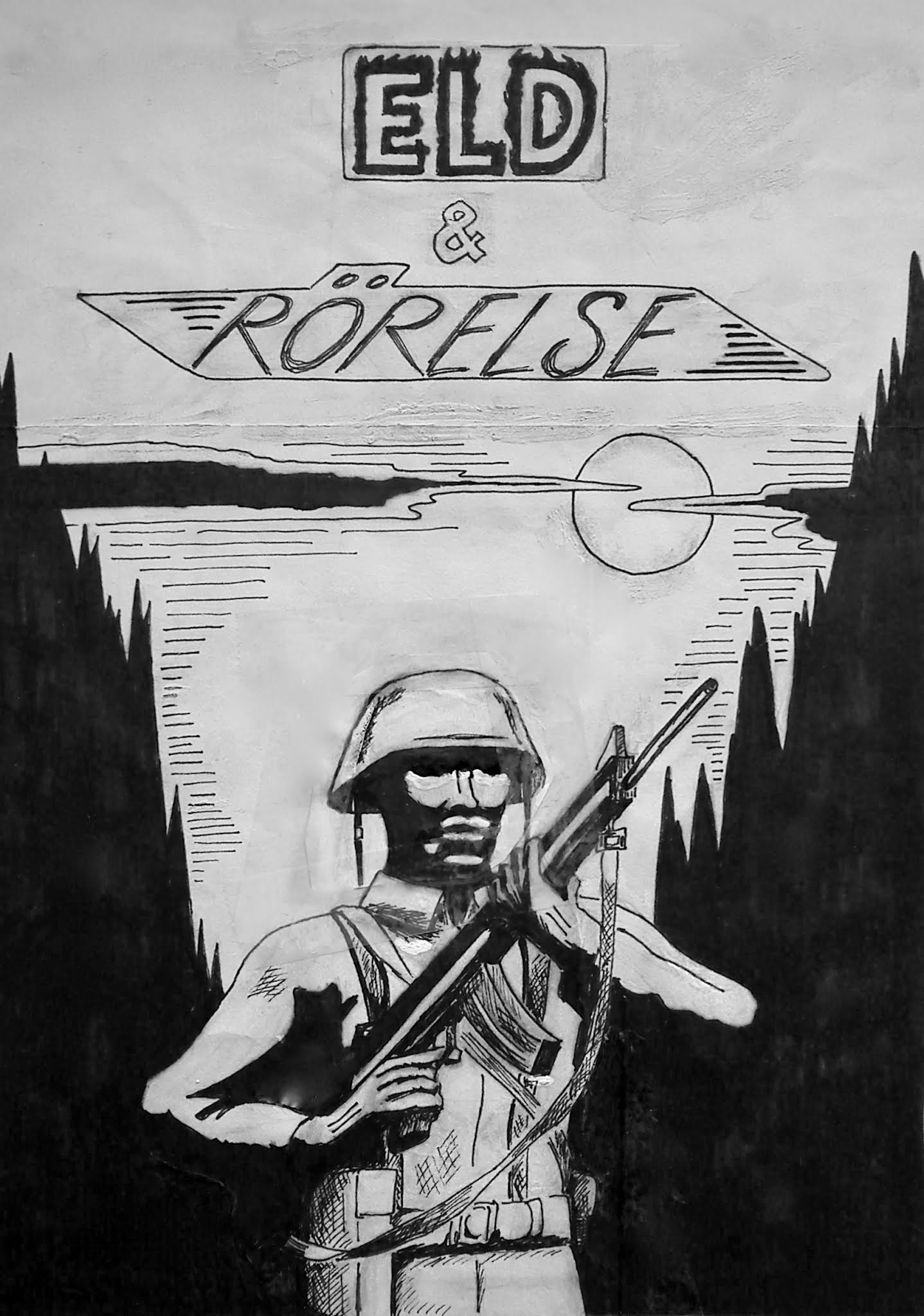
Inget annat än att jag nu offentliggör det som först var tänkt att bli omslaget. Se ovan.

När det kom till kritan fixade jag ett annat omslag. Ett mer återhållet. Ett med mindre känsla av "död och natt och blod".

Men nu så... nu har jag äntligen fullbordat det ursprungliga omslaget. Så pass att det kan illustrera detta inlägg.

Bilden sammanfattar bokens titelberättelse ganska bra tycker jag. Vinterkrig, smyga i skogen, en något nihilistisk känsla över det hela. Yla i natten, pansar och blod...

- - -

I tillbakablickens karga sken är det ibland så att en författare inte längre står för sin debutbok. Särskilt om det är en egenutgiven sådan.

Men så är det inte med mig. Jag står ännu för mitt debutverk, ord för ord...!

Jag tycker till och med att det bara blir bättre med åren.

Men det är väl bara jag.


Relaterat
Mer om boken
Motpol recenserar
Min privata Operation Barbarossa
Reportage: kyrkogården
Edith Södergran: krigiskt sinnelag

tisdag 4 februari 2020

A Dream


I sometimes dream at night...


A dream. I am visiting my brother Robert in Uppsala. It’s a kind of dorm house, many people sharing it. They point down a meadow or lawn, go there they say, the door over there goes to Rob’s room. So I go down this slope, greensward in the sun and a door ahead, nice to meet your brother...

The next scene I’m in the room and there’s a complete change of atmosphere. The room is empty, it isn’t even a room, just an empty space of scaffolding. Dark, stormy skies all around. It all says “empty, nobody home” like nothing on earth. Bringing this message home: “Your brother is dead, you can’t visit him anymore. You can’t go to Uppsala and see him.”


Related
My Portrait of Rob
Timeline Secret History
Heinlein and SF
The dreamy pic illustrating this is of course painted by Rob... and more of his fantasy art can be found in this post.

söndag 12 januari 2020

An Interview with Jack Steelnack, Part II


I recently published an interview with "Jack Steelnack, the Steeler". Now for Part II of this talk with a New Age superman.


Q: Describe yourself in one sentence.

A: I walk around town with a body language that says, "I'm the man"...

Q: Really...?

A: Really. 

Q: OK.

A: I'm the king of it all, that's just it. The king of swing of Enköping. I envision grandeur, striving, man's going off to create an empire among the stars. Like terraforming and colonizing Mars.

Q: Space is the place...!

A: It is; a unique endeavor for white man, Faustian man.

Q: I see. Now, further... you speak about Will-Thought, you speak about willpower and vision. However, others have done that before you.

A: Name one.

Q: OK, I can't expressly do that. 

A: Ha-ha. But I do admit that I have forebears in the rigorist realm. I stand on the shoulders of giants. Like Jünger.

Q: They call you superman.

A: And I am. With willpower and vision I shape reality. Reality obeys the will of a dedicated man.

Q: Indeed?

A: Indeed. I'm a myth, not a man; I'm spirit, not matter. I walk the hard road, not the soft and easy road.

Q: You're superman, then... a virtual god...!

tisdag 7 januari 2020

An Interview with Jack Steelnack, aka. "the Steeler," aka. "Superman in a Sidecap"


We all know Jack Steelnack: "The Steeler," "superman in a sidecap"... that's how we know him, that's some of the nicknames he goes by. And we've all seen him drive around town in his red limo, and we've all seen him standning in his red mansion looking out over the urban vistas; see the pic above...! That's him alright. So, we know him that much. But -- for a deeper probing of him and his worldview, hereby an interview with this living legend. -- Part Two of the interview is here.


We've had the honor of interviewing Jack Steelnack, superman of the new age and an upcoming politician with his Steely ideology. The text will be reproduced below in Q/A form; needless to say, "Q" means our question, "A" means Mr. Steelnack's answer.

- - -

Q: Starting at the beginning, at the nexus of all realities, I'd say: what’s your opinion of God?

A: I worship God. I live with his light before my eyes. 

Q: You do?

A: Yes. God is within me, before me... He's always there. You could say: from his Unfathomable Being a light shines forth, illuminating my mind. Giving me a path to follow.

Q: So faith in God is a centerpiece of your creed?

A: It is. My creed is called Steelism. It shimmers like blue steel in the night -- a hard creed -- a rigorous creed. Fight, strive... life is about being active, conducting operations. Action brings knowledge; conversely, to just sit and think doesn't lead to true understanding. Contemplation must be balanced by action.

Q: Then Steelism, to me, seems like a hard creed, a creed for the active man... but there's faith in God in it, too...?

A: There is. Walking this hard road you can always draw strength from the Source, from God.

Q: Would you label yourself a shaman?

A: I would. A kind of magician, an alchemist; an active idealist, a fighter for truth.

Q: Fight to the death, eh...?

A: Fight for the fight itself. Keep always on the move. Never stop the action...

Q: Who are the worst enemies of the Western world?

A: Defeatism. Dejection. Weakness of will.

Q: You speak of will. Is will-worship compatible to God-worship?

A: It is. Will is always pure. It is desire we must avoid. Desire is materialistic. Will is spiritual.

Q: So Steelism is a kind of voluntarist theism?

A: Put academically -- yes.

[And that closes the first part of the talk. Here is Part II.]


Related
Part Two of the Interview
Astral War
Johnnie Holt -- First on Mars (short story)
Actionism -- the Next Big Thing

måndag 9 december 2019

Timeline: Secret History of Man


What of the history of Man, the history you don't hear at school or in MSM...? Well, hereby a suggestion for a secret history outline. It's given in the form of timeline.


6 Million Years Ago: Mankind created in the Lyra constellation of the Vega system. Mankind then evolves in the Pleiades (qv. Sheldan Nidle).

900,000 BCE: Settling of a human colony on Earth on Lemuria (qv. Nidle, Blavatsky).

500,000 BCE: Lemurians founding Atlantis (qv. Nidle).

450,000 BCE: Annunaki arrive in the Middle East, according to Sitchin. About 300,000 BCE they create a variety of man.

100,000 BCE: Hyperborea, symbol of the Golden Age, thriving. Annunaki getting friendly with earthly women (qv. Genesis 6:1-2).

50,000 BCE: Lemuria has its heyday. Atlantis evolves. Hyperborea submerged (qv. the Eddas on the submerging of Midgard).

50,000 BCE: Atlantis. Thriving of this culture as intimated by Cayce, Melchizedek, Plato. Age of Patriarchs in Bible probably set on Atlantis (= antediluvian man, long-lived according to his spiritual advancement).

30,000 BCE: last remains of Lemuria sinking beneath the waves.

10,000 BCE: the Deluge. Atlantis submerged; refugees escaping in diverse vessels, overlaying existing cultures in America, Europe, Egypt, the Middle East and India.

7893-5733 BCE: "Ancient Indian epoch" (Steiner).

5733-2970 BCE: "Ancient Persian epoch" (Steiner).

2970-747 BCE: "Egypto-Chaldeic Epoch" (Steiner), the thriving of this culture even acknowledged by exoteric history, in the form of "Dynastic Egypt".

After this we have the progress of recorded history in Greece and Rome, Europe, the (re)discovery of the New World etc., up to the present.


Literature
Cayce, Edgar: Edgar Cayce on Atlantis. New York: Little, Brown and Company, 1988
Melchizedek, Drunvalo: The Ancient Secret of the Flower of Life. Vol 1. Sine loco, 1998
Nidle, Sheldan: Your First Contact. Blue Lodge Press, 2000
Sitchin, Zecharia: The 12th Planet. New York: Stein and Day, 1976
-. Genesis Revisited. New York: Avon Books, 1990
Steiner, Rudolf: An Outline of Esoteric Science, 1910 (German original, Die Geheimwissenschaft im Umriss, 1910)
Wilgus, Neil: The Illuminoids. London: New English Library, 1980


Related
The Secret History of Our Current Age
Propaganda War as Total War
[In Swedish:] Jordkrönikan, del 3: Aspekter på den äldsta jordhistorien
[In Swedish:] Jordkrönikan, del 4: Egypten
[In Swedish:] Jordkrönikan, del 5: Gudarnas återkomst
Painting by Robert Svensson

fredag 22 november 2019

Tolvårsjubileum


Denna blogg startades för idag exakt tolv år sedan.


Det råkar vara så -- att denna blogg -- startades 22 november 2007.

Och idag är det 22 november 2019.

Med andra ord är det idag tolvårssjubileum för bloggen.

Så trevligt...

- - -

Bloggen har gått genom eld och vatten under dessa tolv år. Men essensen förblir: texter som jag LS känner för att publicera.

Allt genomsippras av stilen som är jag.

Så detta är något av en egotripp.

Men det är inte bara att dra åstad och köra när man skriver inlägg.

Bloggen kräver en viss inlevelse av en viss typ. Den har sina egna villkor, sin egen form.

Dvs., till vardags är jag skribent i tidningar etc.

Men bloggen får i kontrast till det inte bara bli lek och avkoppling.

Man kan säga: "inget är gratis". Vill man ha en blogg med atmosfär att tala om, en blogg med inlägg som attraherar läsare, måste man lägga ner lite möda.

En bokrecension som citerar och granskar sitt objekt; ett resereportage; en epokgörande novell. -- Texter som dessa kräver en del ansträngning av dig som skribent. Men det betalar sig vad gäller bloggens renommé. Det är texter som går att promota långt efter det de publicerats.

Bloggens hela väsen, dess under åren uppbyggda stilvärld och atmosfär, förpliktar. Man måste som skribent matcha plattformen och nå upp till den stil som Galaxen kräver.

Men det får inte bli för hårda krav. Det måste finnas lättillgängliga inlägg jämte de tyngre posterna. Annars kan det bli trögläst.

Jag vill hävda att jag under åren lyckats balansera mixen i denna blogg rätt väl. Korta (men i sig välmotiverade) inlägg har varvats med längre och mer genomarbetade. Och ämnesområdena skiftar från sf och annan litteratur över historia och esoterism till nationalism och porträtt.

- - -

Härmed några nedslag i bloggens arkiv av inlägg. Slumpvist valt, mer eller mindre:
. 2017: mina minnen av tiden som sf-fan på 80- och 90-talen.
. 2013: en titt på läget i utgivningen av svenska vecko- och månadstidningar.
. 2011: recension av Hassels Döden på larvfötter.
. 2010: en reflektion över att hantverk inte ska bedrivas för perfekt, perfektionismen får inte härska oinskränkt.
. 2010: en skiss över rockgruppen Judas Priest.
. 2009: en hyllning till bilföretaget Koenigsegg.
. 2008: en titt på Bertil Mårtenssons sf-kritik.
. 2008: en samling stories om typer i vårt avlånga land.
- - -

Jag har ett gott öga till traditionella aspekter på Sverige. Nationalism helt enkelt. Härmed lite av den varan på bloggen.

Vi börjar med "Reflektioner på nationaldagen 2017". Det handlar bland annat om varför Gustav Vasa är så viktig för oss, än idag.

Och här har vi en recension av Per Engdahls Fribytare i folkhemmet. Nationalisten Engdahl (1909-1994) hade sina poänger när det gällde en alternativ, traditionellt förankrad syn på detta land (låt vara att jag inte är 100%-ig anhängare av allt han ansåg).

Här är ett referat av en recension som förekom i Nya Tider i våras. Det gällde min bok Ett rike utan like. Och recensenten tycks ha gillat den.

Och härmed en följetong, en politisk thriller. Den handlar om Melina Starr, agent i befrielsen av Sverige.

- - -

Härmed några fler länkar till bloggens förflutna. Först fyra inlägg om mina böcker:

. Science fiction från höger.
. "Actionism" -- presentation på svenska.
. "Eld och rörelse" åter tillgänglig.
. [på engelska:] "Redeeming Lucifer".

Härmed fyra texter om svensk kulturhistoria:

. Reportage: kyrkogården här i stan.
. Edith Södergran: krigiskt sinnelag.
. Bertil Malmberg hedras i Härnösand.
. Boye: Kallocain (1940).

Slutligen dessa fyra inlägg om diverse, speciellt utvalda av mig eftersom de representerar bloggen ganska bra:

. Det blir inte storkrig: debattinlägg från 2013, ännu aktuellt i den krigsnoja som tycks råda...
. Äreminne över Starship Troopers, en radikalhögerbibel för vår tid.
. Esoterisk krönika kring det gamla Egypten.
. Ett reportage från när jag besökte Leningrad 1987.

- - -

Mer finns att länka till på denna blogg. Men då fick jag hålla på länge.

Jag nöjer mig därför med det ovan sagda. Och hälsar er välkomna att följa bloggen även i fortsättningen.


Relaterat
Botniabanan
Lindbohm: Frostens barn (1980)
Ett rike utan like
Redeeming Lucifer
Bild: Robert Svensson

söndag 17 november 2019

Botho Strauss: "Vi måste återupprätta Eros och Soldaten"...

Botho Strauss (1944-) är en tysk författare.


Det var i början av 90-talet. I Tyskland fanns det en författare vid namn Botho Strauss. Han var relativt uppburen inom facket "finkulturell, kvasireligiös författartyp". Dvs. typen som kommer ut på finförlag och recenseras i systemmedia. I bagaget hade han titlar som Tillägnan och Buller, sparsmakad men innebördsrik efterkrigsprosa av gråväderstyp.

Men så, i nådens år 1993, blev han mer än bara en erkänd författare. Han blev kontroversiell. För i och med stridsskriften Anschwellender Bockgesang tog det hus i helvete. Han sa bland annat att dagens kulturliv var urvattnat och nihilistiskt, inriktat på materialism och banalitet. Det behövde en injektion av allvar, av uppriktighet, av traditionalism.

Gott så. Men att säga det var inte lätt. Ty för vänsterismen i den tidens tyska kulturliv var detta lika med hädelse.

Så Strauss blev sedd som en paria. Men han fortsatte att ge ut en eller annan bok på finförlag. Såsom Kopistens misstag (2000), en rapportbok från hans vardag på forna östtyska landsbygden, med fortsatt kritik av Tyskland moraliska och kulturella elände.

- - -

I sin debattskrift från 1993 sa Strauss bland annat: "Vi måste återupprätta Eros och Soldaten". I denna riktning åberopades bland annat Ernst Jüngers skrifter om striden som mental höjare och katharsis.

Och i all blygsamhet har jag själv lyft Eros och Soldaten i mina skrifter.

Eros har fått sitt i alla mina romaner, kanske mest i Antropolis, Till Smaragdeburg och Redeeming Lucifer.

Och Soldatens filosofiska innebörd ligger till grund för både Eld och rörelse och Burning Magnesium. Och den speglas en del i biografin över Ernst Jünger.

- - -

Som ni kan se har artikeln nu, i stort sett, slutat handla om Botho Strauss.

Den fortsätter istället på vad han sa om Soldaten... den fortsätter alltså på temat Soldatenleben.

Texter om soldater... Det finns förvisso andra soldatiska författare i det här landet. Jag kommer bland annat att tänka på Staffan H. Westerbergs Fågelbröstet (1995). Den skildrar en svensk som går med i Airborne Rangers och sätts in på Grenada 1983. Det är OK skildrat men något i sak nytt har han inte att komma med. Det där filosofiska djupet finns inte. Men visst, boken levererar i stort sett litterärt.

Fler svenska fictiontexter om krig kommer jag inte på. Olov Jonasons Parabellum (1947) är nog bra i sin art, i genren "stilmedveten kortprosa". Det är svensk beredskap 1939-1945. Men det är ingen soldatisk zenbuddhism vi får.

För rena krigsmemoarer, nämnvärd svensk sakprosa, har vi såklart en sådan bok som När Finlands sak var min av Orvar Nilsson (2002). Skildringen av de hårda striderna i Finland 1944 är "över medel".

Vi har även Det röda massanfallet (1951) av Gösta Borg. Borg spränger ställvis gränserna för sakprosa och ger oss östfronten i impressionistiska bilder.

Soldaten är i detta verk återupprättad, vill jag mena.


Relaterat
Eld och rörelse
Jonason: Parabellum
Burning Magnesium recenserad på Motpol
Det röda massanfallet
Min bok om Ernst Jünger
[På engelska:] Redeeming Lucifer
[På engelska:] War as Being

tisdag 12 november 2019

Fire: Some Informal Remarks


"Fire, I'll take you to burn / fire, I'll take you to learn..."


Fire yoga... to be willfully consumed by the fire from within.

This is about burning up, leaving no trace. Like the seers of the magic ring Castaneda belonged to.

These Amerindian seers could choose the moment and the way of departure from this world. How? -- By being “consumed by a fire from within”. They mysteriously vanished from the face of the earth in this way (Castaneda, The Fire from Within, 1984, p 13).

With willpower-and-vision they evoked the interior flame, burning their bodies to ashes, freeing the soul.

- - -

The old Hindu hero Dhṛtarāṣṭra also perishes in this way, by internal fire. This we read in Bhāgavata Purāṇa, 1.13.

As a meditating recluse this king has gone through all the stages of dhyana yoga. Primarily, this means withdrawing your senses from the world. It also means meditating on the nature of God, fusing your soul spark with the eternal light.

Finally, the king burns his body to ashes by a willfully evoked magic fire – from within.

- - -

Merge with the sacred fire! Meditate on the hidden flame in the heart!

Akin to this might be the Buddhist method of kasina tejo. Kasina means method, tejo means fire.

According to a friend this is about concentrating all one’s thought on the concept of fire. Then, a fire should arise in the body which literally could consume you.

- - -

In other words, I guess you could say: I am the fire from within, burning up this mortal coil... / I am the eternal golden flame, burning all materialism to ashes – / consuming everything, leaving nothing behind, / blown away, outta sight, in one stroke... / Matter is energy, E=MC2.

- - -

My nature is fire. Details aside, I'm kinda flaming, shiny, ardent.

Like: my debut in 2007 was entitled Eld och rörelse, meaning Fire and Movement [link to Swedish post].

Then it was Burning Magnesium (2018).

And this year, 2019, I published the poem I Am the Holy Flame (in We've Seen the Same Horizon, the Red Salon anthology of 2019):
I am the Holy Flame,
I am the Holy Fire...

I am the flash in the firepan,
fire and movement preaching man.

Burning all materialism to ashes.

I will burn it to ashes, then burn the ashes.
- - -

Fire is my favorite element.

Fire is my element.

My star sign is Sagittarius. Whose characteristics are fire and movement. It is a mutable fire sign.

William Blake was also Sagittarius. And in his art there was a lot of flames and movement.

- - -

One of the first pop songs I remember hearing was Fire with Arthur Brown (1968):
Fire, I'll take you to burn
Fire, I'll take you to learn
I'll see you burn

You fought hard and you saved and earned
But all of it's going to burn...
This haunting song made an impression on the young me.

Or, you could say: I was already aflame. The song spoke to my latent, fiery nature. It confirmed my fiery being.


Related
Castaneda: Words and Concepts
Burning Magnesium
We've Seen the Same Horizon
In Swedish: Eld och rörelse
Painting: Robert Svensson

söndag 3 november 2019

Intervju med mig i Nya Tider


In Swedish. -- Det finns nu en intervju. Med mig. I Nya Tider. Ämnet är Ett rike utan like. Dvs. historien om Sverige som de etniska svenskarnas land. En bok med detta upplägg är som alla förstår helt unik i dagens kulturklimat. Du finner intervjun här.


Jag minns det som igår. Tidigt 2010-tal. Svenskfientligheten grasserade. Antivita krafter härjade.

Det var dags att göra något. Säga stopp! Säga att vi svenskar existerar och har rätt till detta land.

Jag satte mig därför ner och skrev. En historia. Och inte vilken historia som helst. Nej, en SVENSK historia skulle det bli.

Med tiden var manuset klart. Och 2017 gavs boken ut av Logik.

Mer om min bok, vad den betyder och varför du som pro-aktiv svensk bör läsa den, kan du inhämta i en intervju i Nya Tider.

Ett smakprov ur intervjun:
Svensson säger att han som författare vill försöka ge liv åt historien:

– Jag vill ju att det ska vara inspirerande att läsa. Jag har ena foten i akademiska världen. All historia vilar ju i mångt och mycket på torra saker och rapporter, men man ska inte göra det för långt. Jag har skrivit från mitt hjärta. Vad är det som får mig att bli inspirerad av Sveriges historia? Det är krigshistoria, kungar, inspirerande personligheter inom litteratur och konst... Jag har gjort ett egensinnigt urval. Jag tycker att det är en bok som står sig läsmässigt. Läsvänligheten får avgöra ibland vad man fokuserar på och inte, vad man tar med och vad man utelämnar.
Du finner intervjun här.


Relaterat
NyT:s intervju med mig
Mer om boken
Edith Södergrans sinnelag
Gedin: Verner von Heidenstam -- ett liv (2006)

fredag 18 oktober 2019

Snart är det tolvårsjubileum


Denna blogg har varit igång ett tag.


Denna blogg startades i november 2007. 22/11 var det exakta startdatumet.

Och än är det bara oktober.

Än är det lite tid kvar till bloggens årsdag. Till vad som nu blir TOLVÅRSJUBILEET.

Men i väntan på det kan jag ge er detta inlägg. Med diverse smakprov ur bloggens innehåll.

- - -

Denna blogg har allt. Litteratur, polemik, reportage mm.

Till polemiken hör sådant som detta debattinlägg om en svensk kulturikon, Åsa Linderborg och hennes vurm för Lenin. Det handlar om hur hon ansåg att "Lenin öppnade för en ny kultur."

Själv tar jag ställning mot vänsterism, för en progressiv nationalism. Det visas till exempel i mitt årliga nationaldagstal. Länken går såklart till 2019 års tal.

Jag är också runt och bevistar event i landet. Som denna historiekväll på Svenskarnas hus i år.

- - -

Jag far runt och gör saker. Jag åker Botniabanan. Jag går på sf-kongress. Jag bevistar kyrkor.

- - -

Jag recenserar även böcker. Här är till exempel mina lästips för antiken.

- - -

Det finns bortåt tusen inlägg på bloggen. Så ni har lite att browsa runt i. Mycket nöje.

Och, som sagt, 22/11 är det tolvårsjubileum... mer rotande i bloggens förflutna blir det då.


Relaterat
Min bok om science fiction: presentation på svenska
Min fantasyroman Redeeming Lucifer
Länkar till noveller här på bloggen
Tolkiens verk
Lovecraft-böcker på svenska
Tidslinje: konservativ fantastik
Illustration Robert Svensson

tisdag 8 oktober 2019

Good Reads, September 2019


Hereby some short and fast reading tips. This time, we give you "four fantasies" followed by "three realities". A similar post is this one.


C. S. Lewis. The Silver Chair (1953). -- One of the best Narnia books. Superficially it's a bit flimsy and lightweight; yet, seen as a whole, it's rather well-crafted and well-paced. A comparatively serious fantasy in popular, easy-read style. -- The plot is about a quest by two kids, heading for the north of the Narnian world, a quest accompanied by a "marsh-wiggle". They meet giants, they come to a mysterious city of ruins. And they go underground. And they finally meet the man chained to "the Silver Chair"... a very telling denoument of an elegant, witty novel.

Ursula Le Guin. The Tombs of Atuan (1970). -- I had low hopes for this one; however, it was as good as its predecessor, A Wizard of Earthsea (1968). Atuan has a female hero, a priestess ruling over a certain system of caves. A lot of the action is about lurking in these caves, which "drama-wise" might sound odd but it's actually rather exciting. Le Guin has a gift for the fantastic, even for things religious; that is, this isn't exactly an apology for being a trad-style priestess, rather the contrary, but the religious life as such is well depicted.

Roger Zelazny. Nine Princes in Amber (1970). -- A "tough guy" fantasy -- or, an outing into "active nihilism," so to speak. People in fancy renaissance garb battle for power in Amber, a higher realm, the only "real" realm; our world (and other, parallel worlds) are mere shadows of it. This ontological strain gives the book its edge. You might tire of the nihilism and cynicism but the whole of it is rather alluring. -- Zelazny reads like an American Moorcock; and, beyond that, the Yank is overall rather more energetic than the often dejected Brit.

Roger Zelazny. Lord of Light (1967). -- This is an oddity: settlers from Earth create a high-tech civlization on a remote planet, a world where they can style themselves as Hindu gods. How? With the aid of machines of course... So there is no holism, no will, no astral reality in this concept; instead, it's based on the operation of serially working machines. -- To the traditional mind this sounds like an abomination. Why read of plastic gods when you can have "the real thing" in Purânas and Mahabhârata? However, from a literary point of view the story unfolds rather well. It comes to occupy a grey-area of myth and SF, a mix of the archaic and the modern. The mere stylish ability of Zelazny paints an alluring, magical world. So this is a kind of religious fantasy, having the SF basis as a mere, outer framework. -- To depict gods in latter-day fiction is hard. Wagner kind of succeeded in his Nibelungen opera, even though there was always the risk of dragging the figures down into "everydayness". Zelazny runs the same risk here but he kind of pulls it of -- at times. An odd novel, there aren't many like it.

Correlli Barnett (ed). Hitler's Generals (1989). -- Not exactly original but it was OK. It's a "polygraphy" = a collection of bios, written by several authors. On 550 pages we get to hear about cirka 20 German WWII generals. And there is some repetition and some divulging of not so sensational facts. However, some things were new even to me and I liked to read about these guys: Ludwig Beck, Franz Halder, Alfred Jodl, Walter von Reichenau, Erich von Manstein, Kurt Student.

Nick Carter. The Treason Game (1982). -- Of course the author isn't "Nick Carter". This is one of the modern Nick Carter novels, the "Killmaster" working for the fictitious US agency AXE. The author of the book is (according to this source) said to be one Joseph L. Gilmore. The book is rather unusual; it plays in the US (Washington DC; Utah; and not some in exotic outpost), and as the title intimates it's about treason. This time, Carter can't just operate and fulfill his task, no; due to infiltration of the US government Carter finds himself alone and double-crossed in his own land. But he keeps his honor clean, does some mopping up in the treacherous ranks and succeeds in saving the US in the end. Overall rather tight and comparatively credible. And, it's told in the first person; that's how Nick Carter novels should be. The third-person narrative just doesn't work so well in this series, giving a comparatively weaker and more pallid impression. -- In James Bond terms, this novel presents a philosophically interesting "license revoked" situation. Cf. the 1989 Bond film, "License to Kill," whose working title was "License Revoked". And I figure that, overall, a comparison with Bond is apt because Nick Carter was a viable American counterpart to James Bond. Carter was created with JB in mind (secret agent licensed to kill, the boss of the agency is a kind of father figure, some beautiful women are encountered during the operations, the Cold War is a constant reference etc.). Bond is British and Carter is American; Bond has his unique style, Cartes has his.

Bryan Cooper (text) and John Batchelor (illustrations). The Story of the Bomber 1914-1945 (1974). -- The prominent feature of this book is the illustrations. Except for a handful of photos every picture in this book is hand-drawn; profiles, perspective drawings, cut-away drawings, all done especially for this volume. In both black-and-white and color. This makes the book a good read in the realm of large format fact books. The text is also OK, telling the story of bomber aircraft from before WWI and up and until the end of WWII. The most interesting part was reading about the inter-war years, when in the 30's a great step toward modern aircraft construction was made by having all-metal monoplanes, symbolised by American designs like Lockheed Electra and Douglas DC-2. Before that the norm was (kind of) double-deckers of wood clad in doped fabric.


Related
Good Reads, May 2019
The Faustian Era Goes Ever On